How Kuehne+Nagel's Logistics Boosts Iceland’s Export Growth
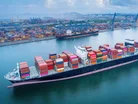
Kuehne+Nagel is launching its first independent office and warehouse in Iceland, setting up operations in the harbour town of Hafnarfjörður.
The move comes as the country’s logistics industry faces mounting regulatory challenges, with competition policy under the microscope and infrastructure demands rising due to export growth and tourism.
The World Bank’s 2022 Logistics Performance Index (LPI) rates Iceland at 3.6 out of 5. This score reflects how efficiently the country handles customs, infrastructure, pricing for shipments, logistics services quality, shipment tracking and delivery reliability. The index is compiled from wide-ranging surveys of international freight forwarders and supported by official data sources.
For a country of just more than 370,000 people, that rating puts Iceland in a good position globally, though not without its limitations.

The regulatory picture
The OECD Economic Surveys: Iceland 2025 points to a mixed picture. While Iceland’s transport market is technically open to competition, barriers remain in place for those wanting to set up operations in both water and land transport.
The report notes: "Entry regulation is more stringent than the Nordic average in the water and land transport sectors.
"In these sectors, the market is open to competition but the establishment of a business is subject to obtaining a licence in passenger water transport, freight road transport services and long-distance domestic passenger transport services by coach."
This licensing requirement adds friction for new market entrants and feeds into wider concerns about the dominance of a few players.
The report goes on: "Enforcement of competition law is key to ensuring a level playing field in a market where dominant incumbents possibly abuse their dominant position. In this sector, two large companies dominate the market... The Icelandic Competition Authority recommends that the port authorities guarantee the use of port facilities for new competitors when deciding on the issuance of new agreements."
That recommendation highlights the strategic role of port access, especially for foreign logistics firms attempting to compete in a tight market.
While Iceland's geography naturally limits overland options, it increases the importance of efficient sea and air logistics - areas where Kuehne+Nagel sees clear opportunity.
Kuehne+Nagel: A long presence now made permanent
Kuehne+Nagel, one of the world’s largest logistics providers, has been active in the Icelandic market for years, but never with a fully independent setup. That changes with the new office and warehouse in Hafnarfjörður, a move described as long overdue by company leaders.
Helgi Ingólfsson, Cluster Manager for Sweden and Iceland, makes the case clear: “Iceland is a high-potential market and we are committed to supporting customers in Iceland reach their growth potential as they can benefit from our expertise in navigating and planning their supply chains.
"While we have had a presence in Iceland for decades, this is the first time we have a fully independent operation and I am proud to announce the opening today, adding to the global network of Kuehne+Nagel.”
Local leadership also echoes that enthusiasm. Valdimar Óskarsson, the company's Managing Director for Iceland, says: “Having been active in the Icelandic market for many years, we are happy to join the Kuehne+Nagel family.
"Together with my team of industry experts within sea and air logistics and customs, we look forward to contributing to Iceland’s import and export sector.”
With 13 specialists based at the new site, the team plans to support both sea and air freight alongside customs services. Their position at the harbour gives them easy access to Iceland’s key maritime routes and direct links into Europe.
Iceland’s evolving logistics demands
Iceland’s economy, while small in global terms, shows growing demands in its logistics footprint. Tourism continues to grow and places pressure on general imports, while aquaculture emerges as a cornerstone export sector.
In 2024, Iceland’s fish farming industry produced 54,800 tonnes of fish. This output is expected to increase and much of that volume needs to be shipped in temperature-controlled conditions to European and global markets.
Kuehne+Nagel’s strategy matches that trend. In sea logistics, the company will operate services from Denmark, Sweden, Belgium and The Netherlands, covering both Less-than-Container-Load (LCL) and Full-Container-Load (FCL) shipments.
Exports will focus mainly on temperature-controlled containers, known in the trade as “reefers”, designed to meet the handling demands of the fish sector.
On the air logistics side, the company adds Iceland to its wider perishables network, with direct access to London, Amsterdam and Liège. These three hubs handle global exports of short-shelf-life products, with Iceland’s growing farmed fish industry a key contributor.
While the World Bank ranks Iceland well for its logistics capacity, the local market still faces challenges.
Regulatory licensing and market concentration leave little room for complacency. Kuehne+Nagel’s independent step into Iceland marks not only a business expansion but a test of whether the country’s logistics sector can open further while maintaining efficiency.
For now, the company appears confident. With infrastructure in place and market experience on their side, they are banking on Iceland’s growth - and on the doors being open.
Company portals

Executives
Helgi Ingólfsson
Cluster Manager Sweden+Iceland
Valdimar Óskarsson
Managing Director, Iceland