
Iraq Development Road: A Game-Changer for Global Trade?
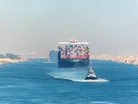
As global shipping reels from regional instability and chokepoints like the Suez Canal, Iraq is quietly redefining its role in international trade.
The nation's Development Road Project – a US$17bn infrastructure corridor stretching from the Grand Faw Port in southern Iraq to the Turkish border – is emerging as a strategic alternative that could eventually reshape Eurasian logistics.
So groundbreaking is the scheme that it has been labelled "one of the most important infrastructure projects in Iraq since the 1920s".
A timely solution to supply chain fragility
The global importance of Iraq’s Development Road has already become evident amid the ongoing Red Sea Crisis, triggered by wider conflict in the Middle East and exacerbated by the more focused war involving Israel and Iran.
With Houthi attacks deterring shipping, insurance premiums spiking and vessels rerouted around Africa, freight delays have been mounting. However, against this backdrop, Iraq’s land corridor offers an unexpected lifeline.
In recent days, Polish and German truck drivers have completed journeys from Europe to the Gulf in as little as 10 days via Iraq – less than half the time required by sea through the Suez Canal. The route from Turkey to Kuwait now takes only seven days and digital border crossings have slashed wait times by 92%.
What's more, the TIR system, which ensures secure and efficient trans-border freight movement, is already operational.
"The Development Road is set to become a vital trade corridor, not only for Iraq but for the entire region," said Dr Ahmed Al-Hakim, Transport Infrastructure Expert at the University of Baghdad, speaking to the Middle East Observer earlier this year.
"By connecting the Gulf with Europe via Turkey, it will serve as a new Silk Road, reviving ancient trade routes and fostering economic integration."

The backbone of a new Iraq
At the heart of the Iraq Development Road Project lies the Grand Faw Port, currently under construction in Al Faw.
This deepwater port, with its 14.5km breakwater – the longest in the world – is expected to handle 7.5m containers annually and accommodate the world’s largest container ships.
The port, alongside a 1,200km road and rail line to Turkey, is the southern anchor of the Development Road and is projected to be fully operational by 2028.
Beyond transport, the project includes plans for at least 10 new cities along the rail corridor, not to mention numerous industrial zones and logistics hubs.
Regional alliances and strategic stakes
More than simply a logistics project, the Development Road also represents a geopolitical pivot.
It symbolises Iraq’s transformation from a war-torn nation into a regional connector. The initiative is backed by Turkey, Qatar and the UAE, all of whom recognise its potential to bolster regional trade and reduce reliance on vulnerable maritime routes.
"The Development Road Project represents a crucial step towards establishing a more stable and prosperous Iraq, built on a diversified economy and strengthened regional collaboration with neighbouring nations," says Nechirvan Barzani, President of the Kurdistan Region of Iraq.
Turkey’s role in the scheme is particularly vital. As the northern terminus, it connects the corridor to Europe via Mersin and Istanbul. And yet, Turkey’s involvement is complicated by its military operations against the Kurdistan Workers’ Party (PKK) in northern Iraq and ongoing tensions with Iranian-backed militias.
Still, its leadership in the Project could strengthen its hand in both the India-Middle East-Europe Economic Corridor (IMEC) and China’s Belt and Road Initiative (BRI), both of which intersect regionally.
Looking beyond the Suez Canal
While the Suez Canal has long been the backbone of East-West trade, Iraq is now positioning itself as a viable overland alternative.
The Development Road is not designed to replace the Suez, but does challenge the notion that global logistics should rely on a single route.
According to Ranj Alaaldin, Fellow at the Middle East Council on Global Affairs, the project "provides a driver for economic prosperity that could benefit the entire region. It taps into synergies and connectivity with existing ports and infrastructure."
As the global trade system seeks resilience in an era of geopolitical uncertainty, Iraq is proving it can offer not just a back-up plan, but perhaps a new main artery for trade.
If completed as scheduled by 2050, the Development Road could stand as a legacy project for Iraq’s post-conflict renaissance, linking Asia and Europe in ways not seen for centuries.