Can Supply Chain Solve Intel's Production Puzzle?
Despite Intel's Q4 earnings exceeding expectations, the company's modest forecast and ongoing supply chain challenges have shaken investor confidence.
The tech giant's shares dropped 13%, even as progress in chip manufacturing and AI-driven sales provided some positive momentum.
Intel projected weaker results for the current quarter, with revenue between US$11.7bn and US$12.7bn and breakeven earnings, falling short of analysts' expectations.
According to CFO David Zinsner, the soft outlook is partly attributed to supply chain constraints: "We don't have the supply we need for Q1, but that should improve by the second quarter," he told CNBC.
This exposes a theme that has troubled Intel for years; uneven execution in chip production as it races to reclaim manufacturing leadership from rivals like TSMC and Samsung.
These supply chain bottlenecks could reflect broader issues in Intel's manufacturing operations, as the company works to scale production of its next-generation technologies while managing demand across multiple product lines.
New leadership faces supply challenges
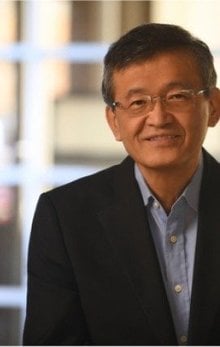
Since Lip-Bu Tan became CEO of Intel in March 2024, the company's focus has shifted to regaining market share, revamping its foundry business and competing more aggressively across the markets in which it operates. This earnings call marked the first major test for the new chief executive.
Lip-Bu acknowledged that while production efficiency, or chip "yield", was improving, it still fell short of his targets.
"Our yields are in line with our internal plans," he said, "but they're still below what I want them to be." This admission could suggest that Intel's supply chain challenges are rooted not just in capacity constraints but also in manufacturing efficiency issues that require time to resolve.
Despite the recent change in leadership, investors had high hopes heading into the report. Between February 2024 and February 2025, Intel's stock had more than doubled, largely as a result of optimism surrounding its next-generation 18A manufacturing technology and the possibility of landing anchor customers for its expanding foundry business.
All sustainability, net zero and sustainable procurement leaders should attend:
- Procurement & Supply Chain LIVE: The Net Zero Summit - QEII Centre, London, March 4-5
- Procurement & Supply Chain LIVE: The US Summit - Navy Pier, Chicago, April 21-22
Co-located with Sustainability LIVE, these events brings together CPOs, CSCO, CSOs, ESG leaders and senior decision-makers at a moment when sustainability, supply chains and commercial performance are increasingly interconnected.
Tickets can be booked online today for The Net Zero Summit and The US Summit. Group discounts available.
However, that optimism has turned to anxiety as Lip-Bu stopped short of naming new foundry partners, instead emphasising that Intel was "working aggressively" to boost supply to meet demand. The absence of concrete foundry partnerships could indicate that supply chain stabilisation remains a work in progress.

Data centre demand
Not all the signals were negative. Revenue from Intel's Data Center and AI group climbed 9% year-over-year to US$4.7bn, following an uptick in demand for server chips designed to power AI infrastructure.
Intel's Xeon processors are a key beneficiary of the global boom in AI-driven computing, yet the company's supply chain limitations could prevent it from fully capitalising on this opportunity.
For Lip-Bu, this segment's growth trajectory is not to be overlooked: "Our central processing units are becoming more critical to systems built for AI." This positioning, blending CPU performance with specialised AI acceleration, could prove pivotal as cloud providers and enterprises seek more energy-efficient compute platforms.
However, the ability to deliver these products at scale will depend heavily on Intel's success in resolving its supply chain bottlenecks. Weakness in the company's more traditional Client Computing Group, which includes laptop chips, offset those gains.
Sales in this area fell 7% year-on-year to US$8.2bn, demonstrating how the consumer PC market remains under pressure even as corporate and AI-driven demand rises. This divergence could suggest that Intel's supply chain resources are being stretched across competing priorities, potentially limiting its ability to serve all market segments effectively.
The coming months could define Intel's trajectory. Improving chip yields and securing foundry partners are critical milestones if Lip-Bu's comeback strategy is to pay off.
However, for now, soft guidance and ongoing production challenges suggest that Intel's supply chain recovery could take a while longer yet.
Company portals

Executives

David Zinsner
Chief Financial Officer
Lip-Bu Tan
Chief Executive Officer