Will Suppliers Face Pressure in Novo Nordisk’s Climate Plan?

Novo Nordisk is placing its supply chain – where more than 95% of its environmental impact originates – at the centre of its climate action,
The Danish pharmaceutical company has launched its 'Suppliers for Zero' programme to engage partners across the value chain, aligning them with its climate and nature goals by 2045. The strategy makes clear that, in order to meet ambitious targets, it needs suppliers to weigh in.
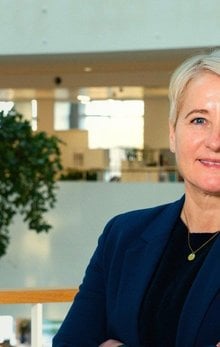
"With more than 95% of our environmental impact coming from our supply chain, working closely with our suppliers and CMOs is essential," explains Dorethe Nielsen, Vice President at Novo Nordisk.
Supply chain under scrutiny
The focus of ‘Suppliers for Zero’ is Scope 3 emissions, covering indirect emissions that occur outside a company’s own operations, such as those created during the production of purchased goods, business travel or waste disposal.
In Novo Nordisk’s case, this includes a broad network of suppliers, contract manufacturers (CMOs) and logistics providers.
The programme looks at three areas: climate action, nature protection and plastic reduction.
- Climate action includes greenhouse gas emissions and energy use.
- Nature protection refers to managing water use and land impact.
- Plastic reduction focuses on improving material circularity and packaging options.
Novo Nordisk avoids a one-size-fits-all approach. Instead, it collaborates with partners ready to match its environmental standards. Every supplier and CMO is expected to follow the company’s Responsible Sourcing Standard and commit to using renewable electricity for any goods and services delivered to Novo Nordisk.
To guide implementation, the company has issued an Environmental Guide for Suppliers and CMOs. Local procurement and category managers lead coordination. The guide gives suppliers a framework, but much of the work happens through individual engagement, where progress and expectations are discussed directly.
"Building on our Circular for Zero strategy, Suppliers for Zero aims to support the dialogue on our key environmental challenges with suppliers and CMOs and is a necessary tool in executing on our environmental roadmaps," adds Dorethe.

Supply chain innovation
Novo Nordisk highlights examples from its current operations to show how suppliers are already adjusting.
Since 2021, the company has cut CO₂ emissions by up to 84% on some shipping routes through the use of lower-carbon fuels within the Maersk network. This reduction is measured on a “well-to-wake” basis, which means it covers the full lifecycle emissions from production to use.
The company is now working with European Energy and the LEGO Group to explore e-methanol through Power-to-X technology. This method converts electricity, usually from renewable sources, into liquid fuel. E-methanol offers a fossil-free path that could eventually replace the plastics currently used in insulin pens and medical devices.
In another area, Novo Nordisk has started sourcing glucose from regenerative agriculture. This approach improves soil health and biodiversity while reducing greenhouse gas emissions and water pollution.
So far, more than 10% of its glucose supply comes from these practices. By 2033, it aims to make that figure 100%.
Novo Nordisk’s goals demand coordination across sectors. The company recognises that different suppliers are at different stages of readiness.
In its official statement, it states: "We acknowledge that fulfilling our expectations will be a journey – some suppliers and CMOs have made significant progress, while others are just beginning."
Still, progress is expected. Suppliers must show they are moving in line with targets set for 2033. The company says the programme’s priorities will adapt as new solutions develop and higher-impact opportunities emerge.
Collaboration over command
Dorethe makes it clear that partnership is the guiding principle: "Years of collaboration with like-minded partners have gotten us far, but we want to take the collaboration across our entire value chain even further."
"Let's face it: we get nowhere alone."
To support supplier action, Novo Nordisk participates in three major initiatives;
- The Energize programme supports renewable electricity adoption among pharmaceutical suppliers.
- The Pharmaceutical Supply Chain Initiative promotes sustainability standards across the industry.
- The Sustainable Markets Initiative fosters environmental progress through coordinated market leadership.
By placing supply chain engagement at the core of its sustainability approach, Novo Nordisk makes clear that suppliers should be valued as collaborators in its path to net zero.
Through dialogue, data and shared goals, the 'Suppliers for Zero' campaign aims to reshape how environmental progress is measured and delivered.
Company portals


Executives
Dorethe Nielsen
Vice President - Corporate Environmental Strategy