Reinventing Supply Chains with IFS and Boston Dynamics
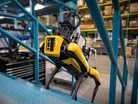
IFS and Boston Dynamics are pairing AI with robotics to reshape supply chains in asset-heavy sectors. Their partnership introduces a fully-autonomous system that blends inspection, decision-making and execution for field operations.
In industries where downtime and disruption carry high costs, this solution arrives with a focus on reliability, safety and resource optimisation.
By combining IFS.ai with Boston Dynamics’ mobile robots, the two companies are linking physical environments directly with enterprise data systems.
As supply chain complexity increases and labour and skills shortages persist, the new platform helps organisations respond faster to operational needs on the ground.

Automation responds to workforce gaps
For many procurement and operations leaders, field work remains a constant source of risk and inefficiency.
The demands of maintaining physical infrastructure – in utilities, energy, manufacturing and mining – are growing, but skilled workers are in short supply. Robots and AI offer a way to supplement field teams without sacrificing operational performance.
Christian Pedersen, Chief Product Officer at IFS, says: "Asset-intensive organisations face unrelenting pressure to improve operational performance.
"Together with Boston Dynamics, we're delivering a truly autonomous system that connects the physical and digital worlds for the first time."
By integrating Spot, Boston Dynamics’ autonomous mobile robot, with IFS.ai, the system turns observations from the field into enterprise-level decisions.
The robot carries out inspections, using tools like thermal imaging to detect temperature anomalies, acoustic sensors to find gas or air leaks and image recognition to monitor gauges and indicators. This data enters IFS.ai, which processes it through autonomous agents that trigger preventative or corrective actions.
Christian continues: "IFS.ai and IFS Loops turn robot observations into enterprise action, from preventative maintenance scheduling to predictive failure analysis and automated anomaly detection. Data flows from the field into enterprise systems, decisions are made autonomously and actions are executed back in the field, all within a single integrated platform."
This model, described at Industrial X Unleashed in New York, is designed to create a continuous feedback loop. By linking inspection with execution, IFS and Boston Dynamics are eliminating the delays between problem detection and resolution.
Robots on the supply chain frontline
The solution has particular relevance for sectors where field operations dominate supply chain activity. Manufacturing plants, utilities infrastructure and mining sites all require regular inspections to prevent breakdowns.
Here, automation addresses multiple points in the chain – from inspection and monitoring to decision and dispatch.
Merry Frayne, Director of Product at Boston Dynamics, adds: "This collaboration represents the future of industrial operations. Our robots excel at navigating complex environments and gathering critical data.
"Combined with IFS' agentic decision-making capabilities, we're enabling organisations to achieve levels of operational excellence and safety that simply weren't possible before."
Spot’s capabilities are not limited to observation. By collecting real-time, on-site data, the robot feeds critical information back into the enterprise, improving response time and eliminating blind spots.
The IFS-Boston Dynamics platform effectively becomes a closed-loop control system for supply chains, enabling a level of predictive oversight that most organisations have struggled to implement at scale.
The approach is also designed for the large proportion of the global workforce not operating at a desk. With 70% of workers falling into this category, the opportunity to optimise field operations through AI becomes essential rather than optional.
Boosting performance
Beyond field inspections, the collaboration targets three core metrics in supply chain performance: safety, efficiency and uptime. These are recurring challenges in asset-intensive industries where even short-term failures can result in costly downtime.
Autonomous inspections reduce human exposure to hazardous environments and enable frequent, consistent checks. The AI component ensures faster decision-making and response, keeping critical systems online. With predictive analytics guiding the process, resources are allocated with greater precision.
"As the largest New England energy provider managing critical infrastructure across multiple states, this integration has the potential to radically transform our operations," says Ron Utterbeck, Chief Information Officer at Eversource, an IFS customer.
"As our grid continues to advance we need to utilise not only traditional data gathering but more advanced data gathering and modelling.
"To meet the reliability and the energy demands for our customers, we look forward to the opportunity in utilising advanced industry technology such to enable data collection at a different level that can support routine inspections of substations and facilities with automatically prioritising and dispatching our crews.
"This will allow our highly-skilled crews to be focused on the right priorities at the right time and ensure mission-critical work is completed. It's a genuine shift from reactive to predictive maintenance."
Through this collaboration, IFS and Boston Dynamics aim to reframe how businesses manage assets in the field. The integration of robots and AI doesn’t just offer a solution for supply chain pressure – it creates a platform for long-term operational resilience.
Company portals


Executives
Christian Pedersen
Chief Product Officer
Merry Frayne
Director of Product

Ron Utterbeck
Vice Chair Board of Directors