Will Solving Supply Chain Issues Save $11bn for Airlines?
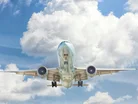
Global airlines now face a collective cost burden of more than US$11bn in 2025, as disruption across the aerospace supply chain drags on.
A joint report by the International Air Transport Association (IATA) and Oliver Wyman breaks down the financial toll and ongoing risks, calling the situation one of the most urgent issues for commercial aviation today.
The report, Reviving The Commercial Aircraft Supply Chain, marks the first detailed attempt to quantify how supply bottlenecks are straining airline operations.
It outlines the consequences of production delays, aircraft shortages and higher maintenance costs and sets out a path to restoring resilience across the industry.
In it, the IATA describes supply chain challenges as "one of the most pressing issues facing the commercial aviation industry today".

Mounting costs and ageing fleets
The projected US$11.3bn in added cost comes from four core pressures, the report finds:
- Airlines are flying older jets longer than planned due to slow aircraft production, which creates knock-on effects across fuel, maintenance and leasing costs.
- Fuel inefficiency alone accounts for around US$4.2bn, as new aircraft deliveries stall and airlines are forced to rely on older, less efficient models. These older aircraft also require more frequent maintenance, adding US$3.1bn to the annual total.
- Engine leasing adds another US$2.6bn, with engines spending more time in maintenance due to long turnaround times (TATs). TATs for engine shop visits have jumped from 30–60 days to more than 75 days, with some cases stretching up to 300 days. Aircraft lease rates have risen 20–30% compared with 2019.
- Spare part availability remains unpredictable, pushing airlines to hold more inventory. That alone adds another US$1.4bn in inventory holding costs as airlines buffer against delays.
"Airlines depend on a reliable supply chain to operate and grow their fleets efficiently," explains Willie Walsh, IATA’s Director General. "Now, we have unprecedented waits for aircraft, engines and parts and unpredictable delivery schedules.
"Together, these have sent costs spiralling by at least US$11bn for this year and limited the ability of airlines to meet consumer demand."
Passenger demand adds more urgency to the issue.
In 2024, global demand rose by 10.4%, outpacing capacity growth of 8.7% and pushing load factors – the percentage of available seats filled – to a record 83.5%. That demand trend has continued into 2025 and, with no slowdown in sight, airlines are struggling to meet it.
Backlogs and bottlenecks
Aircraft production remains constrained, with more than 17,000 commercial aircraft now in backlog – equal to around 12.7 years of output at current rates.
In 2024, Airbus delivered 766 aircraft and Boeing 348, both falling short of pre-pandemic levels, while average delivery lead times stretched to 6.8 years, up from 4.5 years in 2018.
The current aerospace economic model places pressure on original equipment manufacturers (OEMs) to derive a larger share of profit from aftermarket services – spares, repairs and licensing – often limiting airline access to independent maintenance providers.
"The overall aerospace economic model has resulted in an unbalanced situation where OEMs aim to generate a larger portion of their profitability in the aftermarket," the report explains.
At the same time, overlapping shocks have hit the supply chain. Certification delays, geopolitical uncertainty, raw material constraints – especially titanium and other specialty alloys – and logistics bottlenecks slow everything down. Defence and business aviation sectors are also competing for resources, adding pressure.
Workforce issues add another layer as accelerated retirements, a slow pipeline of new aircraft maintenance technicians (AMTs), rising labour costs and under-resourced regulators all contribute to longer lead times.
Maintenance labour rates grew 6.6% in 2024, against expected 5.8%, while the shortfall in AMTs across North America hit 17,800 in 2025 and is projected to rise to 22,000 by 2027.
On top of this, the average age of the global commercial fleet is now 16.3 years, up 16% from 2019, increasing both fuel burn and maintenance demand.
Actions to restore stability
The report outlines steps the industry can take to improve resilience. Top of the list is opening up the aftermarket to improve access to spares and services, including greater use of used serviceable material (USM), parts manufacturer approval (PMA) parts and designated engineering repairs (DER).
Improving supply chain transparency is also vital as airlines need better visibility of delays and backlogs so they can plan maintenance, leasing and operations more effectively. The report calls for mapping multi-tier suppliers and digitising parts tracking to improve forecasting and reduce delays.
Matthew Poitras, Partner at Oliver Wyman, adds: "We see an opportunity to catalyse an improvement in supply chain performance that will benefit everyone, but this will require collective steps to reshape the structure of the aerospace industry and work together on transparency and talent."
Collaboration across airlines, OEMs, lessors and maintenance providers is another priority.
Sharing data on inventory, maintenance cycles and bottlenecks can help reduce redundancy and waste. Expanding workforce pipelines through coordinated training and incentives also forms part of the plan.
In short, airlines face a supply chain gridlock costing billions – and the cost goes far beyond the balance sheet. The industry must act fast or risk falling further behind the curve of passenger demand.
Company portals


Executives
Matthew Poitras
Partner
Willie Walsh
Director General