
How will Mitsui’s Port Purchase Reshape Supply Chains?
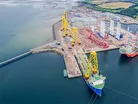
Mitsui & Co and Mitsui O.S.K. Lines (MOL) agree to acquire the Port of Nigg in northeast Scotland. The purchase includes steel processing, equipment manufacturing and base port operations that support offshore wind as well as oil and gas.
The transaction creates a new operating platform called Global Energy Service Holding (GESH), based in Inverness, with Mitsui owning 51% and MOL 49%.
The Port of Nigg sits on the North Sea coast, close to the world’s largest offshore wind development zone. Its location positions it as a key hub for staging, assembling and servicing large renewable energy projects.
The port also maintains its role in oil and gas, ensuring continuity during the energy transition.
Mitsui sells back its shares in the other businesses of GEG (Holdings) Limited to the company’s founder as part of the deal.
Through combining Mitsui’s global industrial reach with MOL’s maritime and port expertise, the acquisition is structured to strengthen local fabrication, modernise port services and integrate supply chains for faster renewable deployment.

Strengthening offshore wind supply chains
The UK aims to reach net zero by 2050 and improve energy security, but delivering these targets requires faster development of offshore wind and resilient supply chains.
Expanding Nigg’s port and fabrication capacity is expected to reduce bottlenecks in project delivery.
Local heavy fabrication and assembly mean fewer long transport routes and lower logistics emissions. Integrated port operations should improve throughput and reliability across the offshore wind value chain, from component delivery to installation.
Mitsui also identifies potential for operational decarbonisation within the port, which includes using renewable electricity, electrifying equipment, optimising vessel schedules and adopting shore power to cut emissions from ships at berth.
Tetsuya Shigeta, Representative Director, Executive Vice President and CFO of Mitsui, says: “While efforts towards decarbonisation seems to be slowing down currently, I believe the initiatives themselves are irreversible, which seems to be the consensus.
“If wind power generation slows down, we believe business viability can be secured by providing services for other businesses.”
Material efficiency, design optimisation and higher recycled content in steel processing are identified as further steps to cut embodied carbon in components. These measures tie into Mitsui’s focus on sustainable energy supply, responsible development and marine stewardship.
Environmental management, biodiversity protection and transparent reporting will be key to maintaining community trust as activity at the port increases.
Local workforce and governance impact
GESH launched as a dedicated operator on 7 February 2024 with 248 employees and representation by Yoshihiro Hayakawa.
Clear ownership and governance structures are expected to support safe and efficient operations while attracting investment for port development.
For the Highlands region, the expansion creates opportunities for high-quality jobs and transition pathways for workers moving from oil and gas to offshore wind and advanced manufacturing.
Partnerships with colleges and training bodies are set to expand the local skills base, while collaboration with local authorities and grid operators will be needed to align infrastructure upgrades with project demand.
The acquisition has potential to make the Port of Nigg a central hub for the North Sea energy transition, integrating logistics, manufacturing and maritime operations under one supply chain framework.
Delivery and long-term benefits
Completion of the acquisition is planned for summer 2025. Following this, Mitsui and MOL intend to integrate port operations and fabrication to provide offshore wind developers with reliable, lower-carbon services.
Progress will be measured in outcomes such as increased offshore wind capacity, improved project delivery times, reduced Scope 1 and 2 emissions from operations and positive social indicators including local employment, training and safety.
Through aligning Mitsui’s industrial networks with MOL’s shipping expertise, the Port of Nigg deal positions the UK to scale offshore wind supply chains more efficiently.
It supports national energy security, advances net zero commitments and generates community benefits rooted in a competitive, low-carbon industrial base.