How is HeroWear Reducing Injuries in Distribution Centres?
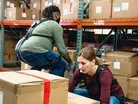
An industry-first study relying on the implementation of exoskeletons across distribution centres attempts to address the concern of strain-related worker injury.
The warehouse workers wearing the exosuit in a US trial found a 62% reduction in back injury, including sprains caused by heavy lifting.
This increased operational efficiency and worker safety, as well as reducing costs and time spent on employees unable to work.

Mitigating worker risk
HeroWear is a wearable technology company which aims to reduce injury risk, improve quality of life and boost worker productivity through the introduction of its exosuit solutions. For workers in physically demanding jobs, HeroWear offers a comfortable solution, taking the strain off the individual and allowing them to work much more safely.
Its customisable exosuits help workers across retail, warehousing, logistics and manufacturing, who are often lifting weighted items across warehouses and distribution centres. In these roles, it is very easy to introduce strain on the body, resulting in both minor and major injuries. Through the exosuit, HeroWear is aiming to reduce the risk of injury and ensure workflow remains uninterrupted through time off or limited abilities.
The exosuit is a flexible, back-assist item which limits muscle strain, fatigue and discomfort by acting as an extra set of back muscles. At distribution centres, the exosuit allows workers to comfortably and safely lift and carry heavy goods during case-picking shifts, without having to rest or be concerned about injury.
All supply chain, sustainability, Scope 3 and net zero leaders should attend:
Procurement and Supply Chain LIVE: The Net Zero Summit - QEII Centre, London, March 4-5
Procurement and Supply Chain LIVE: The US Summit - Navy Pier, Chicago, April 21-22
Co-located with Sustainability LIVE, these events brings together CSCOs, CSOs and senior decision-makers at a moment when sustainability, supply chains and commercial performance are increasingly interconnected.
Tickets can be booked online today for The Net Zero Summit and The US Summit. Group discounts available.
Exosuit benefits
HeroWear has announced breakthrough safety data after undertaking an industry-first study. Using data from five distribution centres across eight to 23 months, the study oversaw a combined total of 311,000 work hours, which equated to 155 full-time workers working more than one year.
The aggregated data revealed a 62% reduction in total strain and sprain injury rate throughout workers who wore its Apex 2 exosuit. From a 10.2% injury rate to a 3.8% pate, these exosuits made a significant impact.
The data also showed that injuries incidents decreased from one every 20,000 work hours to less than one every 50,000 work hours. Moreover, none of these were back injuries, showing how worthwhile these exosuits are. Similarly, the reduction in worker back injuries did not then increase work-related musculoskeletal disorders in other parts of the body–which had been a core concern during production.
“Emerging technologies demand continuous learning, and the only way we advance is through converging, real-world evidence,” says Dr. Karl Zelik, Co-Founder and Chief Scientific Officer of HeroWear.
“I’m deeply grateful to the companies willing to share this longitudinal data. They’re accelerating progress for all of us and helping make every workplace safer.”
Exoskeleton adoption has been limited due to previous concerns about shifting injury risk to other joints or muscle group. Previous data focused specifically on back strains, but this study examined risk and strain as a whole. The multi-site industry data from the HeroWear study demonstrated that these fears did not come to fruition, finding the benefits exceeded expectations.
The cost of inaction
Within logistics workers across warehousing, manufacturing, food & beverage and retail, there are high rates of serious injury caused by overexertion. In 2025, the US transportation and warehousing businesses underwent US$1.45bn in losses.
According to the US Occupational Safety and Health Administration, the average workplace strain or sprain injury costs US$67,248, through medical treatment and worker compensation, as well as indirect costs through overtime, lost productivity and training replacements.
West Coast protein distributor, Plymouth Inc., shared data through the exosuit study.
“A night shift employee will pick up an average of 60,000 pounds a night,” said Travis Erickson, Plymouth’s Director of Operations.
“Our main goal at Plymouth is to make sure we are supporting every worker to have a happy, healthy life outside of work. Some of our workers who have had back issues started wearing the Apex 2 exosuit and don't have back issues any longer.”
By investing in and deploying exosuits, distribution centres are seeing increases in efficiency and productivity due to a lack of injury and fatigue and increased savings through a lack of extra post-injury costs.Through this, businesses are seeing real benefits to their supply chain operations and a safer workforce.
Company portals


Executives
Karl Zelik
Chief Scientific Officer