
How Google and TotalEnergies Power the AI Supply Chain
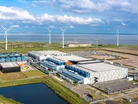
The rapid expansion of AI and digital infrastructure is placing unprecedented strain on global power grids, forcing technology companies to take direct control of their energy supply chains.
A new 21-year agreement between TotalEnergies and Google illustrates how hyperscale operators are increasingly financing and securing dedicated renewable generation to guarantee the continuous power their operations demand.
The deal will see TotalEnergies supply one terawatt-hour (TWh) of certified renewable electricity from Malaysia's Citra Energies solar plant to support Google's data centre operations in the region, highlighting both the scale of energy required and the strategic shift towards vertical integration in power procurement.

Malaysia's corporate green power programme
The Citra Energies solar facility, awarded to TotalEnergies (49%) and local partner MK Land (51%) by the Malaysian Energy Commission in August 2023, forms part of Malaysia's Corporate Green Power Programme (CGPP).
The framework could prove significant for international corporations seeking renewable energy solutions in Southeast Asia.
The CGPP allows corporate consumers to sign virtual Power Purchase Agreements directly with solar developers, potentially reducing traditional grid-related administrative barriers. The structure addresses a critical requirement for multinational technology firms: additionality, ensuring their capital creates new renewable capacity rather than simply redirecting existing supply.
Giorgio Fortunato, Head of Clean Energy & Power, Asia Pacific at Google, says: "We're thrilled to build on our collaboration with TotalEnergies in Malaysia.
"This agreement is a key part of our strategy to make meaningful investments that benefit the economies where we operate. By enabling this new clean capacity, we are supporting local growth of the electricity system hosting our infrastructure."
The Citra plant is scheduled to begin construction in early 2026, with the Power Purchase Agreement taking effect upon Financial Close, expected in the first quarter of that year. This timeline reflects the compressed development cycles increasingly necessary to match digital infrastructure deployment with energy availability.
Supply chain bottlenecks
The energy supply chain currently represents the primary constraint on AI deployment, as grid infrastructure development cannot match the pace of digital expansion.
While hyperscale data centres can be constructed within 18 to 24 months, new grid transmission projects typically require five to ten years due to permitting processes and construction complexity.
This temporal mismatch has created what industry analysts describe as an urgent power supply challenge. The gap between infrastructure timelines continues to widen as technology companies accelerate their AI capabilities and data centre deployments across global markets.

Goldman Sachs research from 2024 forecasts that data centre power demand could grow by 160% by 2030, driven largely by AI workloads that consume considerably more energy than traditional computational tasks.
The International Energy Agency's Electricity 2024 report indicates that data centres, cryptocurrencies and AI consumed approximately 460 TWh globally in 2022, a figure expected to double by 2026.
These projections suggest that reliance on municipal grid capacity may become increasingly untenable for continuous operations. The scale of projected growth has prompted technology companies to seek alternative procurement strategies that guarantee long-term energy security.
Strategic partnerships
The TotalEnergies-Google agreement builds upon previous collaboration between the two companies, including a PPA announced in November to supply renewable power to Google's data centres in the US.
The partnership demonstrates how repeated collaboration between energy suppliers and technology companies can streamline procurement processes.
Sophie Chevalier, Senior Vice President Flexible Power & Integration at TotalEnergies, adds: "We are delighted to strengthen our collaboration with Google through this agreement to supply renewable electricity to their new data centre in Malaysia.
"This PPA illustrates our Company's ability to offer competitive power solutions tailored to the needs of major tech groups, both in mature markets, such as the US and Europe, and in emerging countries like Malaysia. It also contributes to achieving our target of 12% profitability in the power sector."
Malaysia has positioned itself to capture data centre investment following Singapore's 2019 pause on new facilities due to land and power limitations. The overflow demand has concentrated particularly in Johor and Kedah provinces.
Malaysia's National Energy Transition Roadmap targets 70% renewable installed capacity by 2050, potentially transforming national energy policy into a mechanism for attracting foreign direct investment in digital infrastructure.
The convergence of regulatory frameworks, renewable energy development and hyperscale technology deployment could indicate a fundamental restructuring of how global supply chains approach energy procurement and infrastructure planning.
Company portals

Executives

Giorgio Fortunato
Head of Clean Energy & Power, Asia Pacific

Sophie Chevalier
Senior Vice President Flexible Power & Integration