Global Aid: How Logistics Firms are Responding to Venezuela
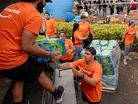
On 24 June 2026, two earthquakes hit Venezuela, measuring at 7.2 and 7.5 magnitude. The damage has cut off communications and power in many areas, with destruction across the nation – in the northern state of La Guaira, 80% of buildings collapsed as a result.
More than 4,500 people are dead, with thousands more displaced or injured.
Now, logistics companies around the world are using their global networks to provide support to those in need.

A need for resources
Getting critical supply to disaster areas takes a significant amount of planning and logistics know-how. It requires rapid and coordinated mobilisation of goods and people, often relying on a pre-positioned relief supplies and public-private partnerships.
Goods need to be stored in strategic areas – close to high-risk regions but not close enough that they are at risk of the impact. Close collaboration between government organisations, NGOs and private companies is critical, helping distribute resources and time support accurately to avoid delays or condensed support.
Access to affected areas is a major challenge in delivering support, as road and infrastructure are often damaged. This requires flexible logistics solutions, multimodal transportation options and flexibility to adapt. Boats, off-road vehicles and helicopters are critical for delivering aid amid natural disasters.
Once there, managing inventory is another significant challenge, with the need to monitor resources accurately to ensure efficiency. Moreover, urgent resources need to be handed out first, with a fair distribution focus to avoid mobs, as well as a way to tide over citizens until more resources can arrive.
Global logistics giants have begun using their inventory management and distribution capabilities, as well as their multimodal expertise in order to support across Venezuela.
The humanitarian air bridge
Amazon has been selected as the corporate partner for the launching of a humanitarian air bridge, making use of Amazon Air Cargo. This makes use of seven weekly flights going into Caracas, the capital of Venezuela.
Through collaboration between Amazon, Amazon Air Cargo, the US State Department, Airlink and the UN World Food Programme, this public-private partnership model will be using each organisation's individual strengths and resources to deliver aid in a cohesive way.
“When more than six million people need help, you look at what you've built and put it to work. We have one of the largest freight operations in the industry — built for reliability, built for scale," explains Peter Larsen, Vice President of Amazon Supply Chain Services.
"Amazon Air Cargo is now tapping its network to deliver emergency supplies into Caracas, seven flights a week, at no cost to the humanitarian organisations on the ground. Same logistics network, same aviation capabilities we use every day to move cargo and packages — deployed to help the people who need it most."
This model relies on:
- The US State Department - for coordination with local authorities
- Amazon - the donation of the aircraft and fuel
- Airlink - the management of cargo allocation, dependant on nonprofit needs
- UN World Food Programme - managing logistics in Venezuela
- Amazon Air Cargo - moving the goods reliably.
The collaborative scale is critical to ensure distribution of necessary goods is streamlined, reaching as many people as possible. Through ongoing communication and expansive logistics capabilities, the organisations are aiming to prevent aid bottlenecks and avoid wrongful allocations.
"This collaboration with Amazon, Airlink and World Food Programme demonstrates what's possible when government and the private sector come together to overcome logistical barriers in a humanitarian crisis. By facilitating access and coordinating with local authorities, we're helping ensure that lifesaving aid reaches Venezuela as quickly as possible," explains Tommy Pigott, US State Department Spokesperson.
Collaboration across logistics
FedEx is also offering relief to Venezuela, using its integrated air and ground network to support those affected. It has a dedicated humanitarian relief flight which transported kits provided by Global Empowerment Mission (GEM).
The shipment, landing in Caracas on July 19, is expected to support 10,000 people. Through collaboration with GEM, it has delivered water, food and hygiene products to communities in La Guaria.
Richard W. Smith, Chief Operating Officer, International, and Chief Executive Officer, Airline at FedEx, says: “Our unmatched air and ground global network gives FedEx the unique ability to respond when critical supplies need to reach communities in crisis. The tireless dedication and united effort of our team members are what make a humanitarian mission like this possible. We are proud to help GEM deliver essential supplies to the people of Venezuela.”
Other collaborative measures have taken place across the logistics industry in order to support Venezuela; DP World – through Air Cargo Hub Punta Cana – has formed a partnership with UniWorld Air Cargo, Grupo Velutini and Athiopica. This collaborative effort is delivering 27 tons of humanitarian aid to communities, using two flights to carry supplies from Punta Cana to Caracas.
The operation was coordinated by the logistics platform Air Cargo Hub Punta Cana, which was developed by DP World and Grupo Puntacana. The platform also ensured logistics management, cargo processing and operational support, whereas Grupo Velutini and Athiopica managed the collection, sorting and consolidation of goods. The aircraft capacity was provided by UniWorld Air Cargo.
"At DP World, we believe logistics is about more than moving cargo — it is about connecting people and supporting communities, particularly when it matters most," says Manuel Martínez, CEO of DP World's operations in the Dominican Republic.
"By working alongside our partners, we were able to leverage our infrastructure and operational expertise to help deliver critical humanitarian supplies quickly and efficiently to those affected by this disaster. This initiative reflects the power of collaboration across business sectors."
Through industry collaboration and logistics expertise from all parts of a project, organisations from around the world are working together to support relief in Venezuela. Logistics companies are navigating complexity, particularly regarding cargo processing and allocation, to ensure streamlined distribution of critical goods.
Logistics projects of this scale are immense, requiring significant planning, coordination and cooperation. These giants, and more, are demonstrating how supply chain expertise can be used to support communities in need.





Executives
Manuel Martinez
CEO DP World Dominican Republic

Peter Larsen
Vice President of Amazon Multichannel Commerce & Fulfilment