
How is the US Military Blockade Affecting Oil Supply?
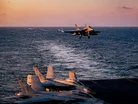
A US naval blockade of the Strait of Hormuz could disrupt Iran's oil exports and strain global supply chains but analysts warn it will not resolve fuel shortages quickly.
Since the war began in late February with joint US-Israeli airstrikes on Iran, shipments of oil and gas leaving the Gulf have slowed sharply.
This has cut world fuel supply by 20%. Insurers' reluctance to cover ships in the region has compounded the issue alongside Iran's threats to target vessels. Iranian tankers had still exported millions of barrels through the Strait of Hormuz until now.
The blockade makes further offloading nearly impossible.
Iran's Persian Gulf trade routes face constraints
With exports blocked, Iran must curtail oil production once storage tanks fill. Satellite data from Kayrros shows tanks at just over 51% capacity. This gives roughly 16 days before hitting the 92 million barrel record from the 2020 COVID-19 pandemic[2]. At 1.8 million barrels per day exported the maths is stark.
Richard Bronze, Head of Geopolitics at Energy Aspects, says Tehran will pump for "10 to 15 days" if exports halt before cutting output across fields.
Iran produces 3.6 million barrels daily, with half used domestically. The fate of the rest now imperils supply chain stability.
Iran has shown financial adaptability so far. Unlike Gulf neighbours holding 350 million trapped barrels, Tehran exported via Hormuz throughout the seven-week conflict.
A US sanctions waiver last month boosted prices and nearly doubled revenues over pre-war levels per Iranian analysts, exceeding 2026 budget goals.
Iran's Oil Minister Mohsen Paknejad said on Monday that sales had been "favourable" and that proceeds would be directed towards "reconstruction of the industry".
The waiver ends 19 April.
Miad Maleki, of the Foundation for Defense of Democracies, estimates daily losses at US$435m under full blockade eroding Iran's gains.
Blockade challenges Iran's supply chain endurance
The regime's resolve against pressure remains strong. Sanam Vakil Middle East Director at Chatham House says the blockade would "put a lot of pressure" on a republic viewing the war as existential. She cautions economic pain does not guarantee surrender.
"The mentality of the regime is one of stubborn resistance at the expense of the population but it will come at a cost – further legitimacy crises and punishment of the people," Vakil said.
"From a psychological perspective they can endure for a longer period than President Trump. This is a test of wills and endurance."
Richard Bronze notes Iran has up to 150 million barrels loaded on tankers outside the strait. This floating stock sustains deliveries for weeks supporting diplomacy.

Escalation risks threaten broader shipping lanes
Tehran has counters. Hamid Hosseini, spokesperson for Iran's Oil Gas and Petrochemical Products Exporters' Union, says "Crude exports cannot simply be stopped."
Analysts flag Houthi disruption of Red Sea routes. Saeed Laylaz warns halted Iranian exports could close Bab al-Mandab Strait where Saudi oil reroutes.
Brenda Shaffer, Senior Fellow at the Atlantic Council's Global Energy Center, calls Washington's delay on Hormuz surprising. She argues the blockade makes war prolongation less viable for Tehran.
Timing hinges on storage and floating barrels for both sides.