Has French Unity Cracked on EU Supply Chain Transparency?
Sustainability regulations inside the European Union (EU) can leave even the sharpest business minds scratching their heads.
Confusion turned to chaos this week as leading French firms publicly walked away from a joint letter calling for the weakening of EU rules on supply chain transparency. The letter, once seen as a forceful rebuke of European regulatory policy, is now a source of unease for some of its original supporters.
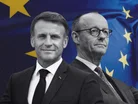
On 13 October, 46 CEOs from major French and German firms signed a letter addressed to French President Emmanuel Macron and German Chancellor Friedrich Merz.
In it, they urge EU leadership to ditch strict supply chain due diligence rules before the end of the year.

These rules form part of the Corporate Sustainability Due Diligence Directive (CSDDD), an EU proposal that requires large firms to identify, prevent and account for adverse impacts on human rights and the environment in their operations and supply chains.
The document also calls for an expansion of the European Commission's Competition Directorate to weigh up global market context when assessing strategic mergers.
Within days, the rebellion appears to have unravelled.
Several French companies now suggest they either did not fully endorse the contents of the letter or were not given the chance to approve it in the first place. That includes Bpifrance, France’s public investment bank, and TotalEnergies, one of the document’s principal backers.
Bpifrance and TotalEnergies clarify their positions
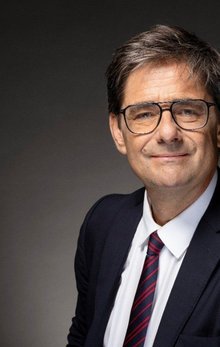
Bpifrance’s CEO Nicolas Dufourcq told POLITICO that the letter may reflect the tone of the meeting held in Evian in early September, but he does not consider himself tied to its contents.
“Not a big effort,” he says, brushing aside any suggestion that he offers his formal support. Although Nicolas attended the meeting in Evian with Macron and Merz, he states that he did not see the final text before its release.
Another French signatory, speaking anonymously, labels the origins of the letter “a little nebulous” and claims they were not informed about the precise wording. While they do not oppose the core message, they admit “the wording is a little strong”.
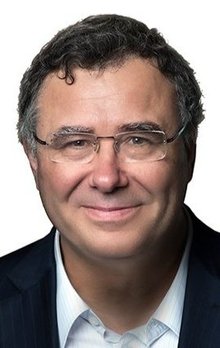
Even TotalEnergies, whose CEO Patrick Pouyanné co-authored the letter alongside Siemens boss Roland Busch, offers clarification.
A company spokesperson says Patrick and Roland acted as Co-Chairs of the Franco-German CEO meeting and were encouraged by both heads of state to share industry priorities.
The letter, the spokesperson explains, simply “summarises the five top priorities and calls for actions in the short term which resulted from the debates between the CEOs”.
German companies hold firm
While French firms are stepping back, German companies remain in lockstep with the letter’s call for change.
Deutsche Börse, Germany’s stock exchange group, says its CEO Stephan Leithner played an active part in the Evian discussion and continues to support the message.
“The letter emerged from the group discussion,” a spokesperson confirms.
Roland echoes this sentiment, calling the push “an initiative spearheaded by companies from Europe’s two largest economies”. He says a central aim is to “secure and strengthen the competitiveness of European industry”.
That competitiveness is at the heart of the backlash to CSDDD. Critics of the directive argue that the rules place disproportionate pressure on European firms while competitors elsewhere face fewer restrictions.
EU’s regulatory approach under pressure
The controversy has triggered broader debate within the business world. Some claim national governments help spark the initiative behind the letter.
Andreas Rasche, Professor of Business in Society at Copenhagen Business School, told POLITICO: “That is quite remarkable, because with this the CEOs shift the blame for their demands onto Berlin and Paris.
"The lack of transparency surrounding this letter is astonishing, almost as astonishing as companies' lack of courage to stand by their own views.”
Beyond Europe, others weigh in with even stronger objections.
Darren Woods, CEO of ExxonMobil, calls the CSDDD “the worst piece of legislation I’ve seen since I’ve been in this job”.
He warns that proposed penalties of at least 5% of global revenue for violations would be “bone-crushing” and declares “Europe is slowly suffocating itself” through regulatory overreach.
The rules, which are still under negotiation, aim to boost corporate accountability by ensuring companies do not ignore human rights abuses or environmental damage across their supply chains. However, opponents say they threaten to overwhelm businesses with compliance burdens, push up costs and undermine European competitiveness in global markets.
The European Parliament is set to vote on the final package of proposals later this year. Whether the bloc’s lawmakers bow to industry lobbying or stick to the original ambition of robust supply chain governance remains to be seen.
What is clear is that the divisions among French and German firms have made the EU’s legislative path even murkier. With some companies already retreating from a public position they signed up to, trust in corporate leadership on sustainability issues risks taking a hit – just when the EU needs it most.




Executives
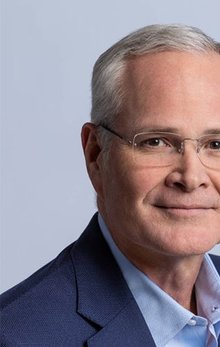
Darren Woods
CEO
Nicolas Dufourcq
CEO - Bpifrance
Patrick Pouyanné
Chairman and CEO
Roland Busch
President and CEO of Siemens AG