Could a New Alliance Clean Up Scope 3 Reporting?

A powerful group of companies including ExxonMobil, BlackRock’s Global Infrastructure Partners, Banco Santander and BASF have joined forces under an initiative called Carbon Measures, aimed at reshaping how carbon emissions are tracked and reported across global supply chains.
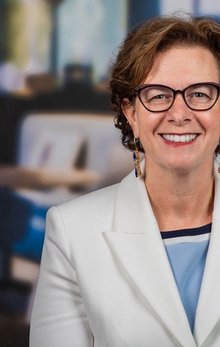
At the heart of this effort is Amy Brachio, former Global Vice Chair for Sustainability at EY, who now heads Carbon Measures. The goal is to build a system that can measure the carbon intensity of specific products with precision, without counting the same emissions more than once.
The companies backing the initiative come from sectors where emissions are high and difficult to track.
Linde, EY and Japanese conglomerate Mitsui also sign on, with the group set to grow from 20 to 100 members over time. That expansion will focus on recruiting firms from high-emissions industries, where the stakes are highest.

The current emissions accounting model most widely used is the GHG Protocol – the Greenhouse Gas Protocol – which has guided reporting since the late 1990s. It separates emissions into three categories.
Scope 1 covers direct emissions from owned or controlled sources; Scope 2 accounts for indirect emissions from purchased electricity; and Scope 3 involves all other indirect emissions, such as those from supply chains.
Critics, including Exxon and BlackRock, argue that the GHG Protocol inflates overall figures by allowing double-counting – when more than one company takes responsibility for the same emissions. The protocol's designers push back, calling double-counting "one of the framework's greatest strengths" because it encourages shared responsibility and "comprehensive" climate strategies.
Carbon Measures takes a different route by proposing a ledger-based system, borrowing from financial accounting. The aim is to attach carbon data to products as they move through a supply chain – steel, electricity, concrete, fuels – creating traceable records of embedded emissions. That way, carbon responsibility follows the product.
"If you are buying a tonne of steel, you need to understand how much carbon went into producing that tonne of steel, so that when it's sold you're not only selling the asset of the steel, but you're selling the liability – so to speak – of the carbon emissions that go along with it," says Amy.
This shift reframes emissions as attributes of products rather than operations. In practice, it would mean carbon footprints are embedded in a product like price or weight, making them part of the value chain.
The initiative expects the framework to take two years to develop and five to seven years to scale. The hope is to introduce common standards to help industries track real emissions reductions rather than just report emissions on paper.
A renewed focus on Scope 3 emissions
A key reason behind the push is Scope 3 emissions – notoriously hard to track, often poorly reported and responsible for the majority of emissions for many large firms. In sectors like banking, oil and chemicals, Scope 3 emissions can make up more than 80 percent of total emissions.
Ana Botin, Executive Chair of Santander, says: "Accurate and transparent calculation of carbon emissions is the foundation for meaningful climate action."
Meanwhile, Francois Jackow, CEO of Air Liquide, believes that standardising product-level carbon data will let investors "reward low-carbon solutions."
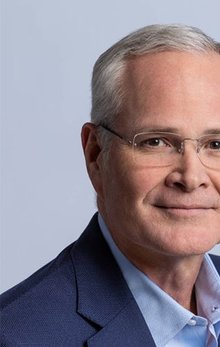
Darren Woods, CEO of ExxonMobil, makes the case bluntly: "The first step to reducing global emissions is to know where they're coming from."
He adds: "Today, we don't have an accurate system to do this."
Darren has advocated for a global system to measure product-level carbon intensity for years and Exxon’s involvement points to an alignment between financial and industrial sectors on the need for more accurate data.
BlackRock’s Global Infrastructure Partners declines to comment on the framework’s details, but its website declares the energy transition as the "single biggest investment opportunity." It also outlines ambitions to use its relationships across business and government to support decarbonisation strategies.
A system still up for debate
The proposal is not without controversy. While the GHG Protocol encourages overlapping responsibility, Carbon Measures wants to treat emissions like inventory – tracked, measured and attributed with precision. That raises questions: could this make companies less likely to act if they're no longer sharing responsibility?
Amy says "precise and comparable data has proven something of a holy grail" in emissions tracking. She argues the existing system "simply won't be sufficient going forward."
Carbon Measures also wants to influence public policy, working to align its standards with national and international regulations such as Europe’s carbon border adjustment mechanism. That mechanism, already raising the pressure on exporters, charges carbon costs at the border for carbon-intensive imports.
If successful, the Carbon Measures framework could shift emissions accounting from an operational to a product-based model – directly impacting how firms assess supply chain carbon intensity. The group's ambition is to build a system credible enough that governments might adopt it when designing corporate regulation.
Whether the framework gets there depends on industry uptake and regulatory alignment.
For now, Carbon Measures opens a new chapter in the decades-long conversation about how to measure and manage emissions, with Scope 3 and supply chains in the spotlight.
Company portals





Executives
Amy Brachio
Chief Executive Officer
Ana Botín
Executive Chair
Darren Woods
CEO
Francois Jackow
CEO