From Gadgets to EVs: Tech Giants Rewire Supply Chains
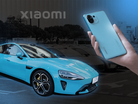
Technology companies are increasingly diversifying their manufacturing capabilities into EV production as traditional smartphone markets show signs of saturation.
The shift could represent a significant transformation in global supply chain dynamics as manufacturers leverage existing expertise in lithium-ion battery technology, software-defined architectures and rapid product development cycles.
The International Data Corporation projects that worldwide smartphone shipments may decline by almost 1% in 2026, prompting manufacturers to seek new revenue streams.
The transition from smartphones to EVs could offer a logical progression, given the substantial overlap in core technologies and supply chain requirements between these two product categories.

Xiaomi's integrated manufacturing approach
Smartphone and hardware business Xiaomi's Auto subsidiary integrates industrial manufacturing, smart software and AI in efforts to "redefine the automotive industry".
The company's first motor vehicle, the SU7, hit the roads in 2024 with a top speed of 265 km/h and Xiaomi HyperOS, allowing the vehicle to function as an extension of the user's smartphone and smart home.
On the debut of the car in 2023, Lei Jun, Founder, Chairman and CEO of Xiaomi Group, said: "Xiaomi has decided to invest tenfold, starting from the development of fundamental core technologies, committing to constructing an outstanding vehicle.
"Through 15 to 20 years of effort, Xiaomi aims to become one of the top five global automakers."
Unlike some competitors, Xiaomi has built its own EV factory with a proprietary die-casting method. This vertical integration strategy could allow the company to maintain tighter control over production quality and supply chain resilience, mirroring the manufacturing approach that proved successful in consumer electronics.
The approach demonstrates how consumer electronics expertise can translate into automotive manufacturing, particularly in areas requiring precision engineering and high-volume production capabilities.
Joint ventures reshaping production networks
Technology and entertainment giant Sony formed a joint venture with Honda in 2022 to produce battery electric vehicles (BEVs). The vehicles are marketed under the AFEELA brand and deliveries of its first model, AFEELA 1, are planned to begin in late 2026.
Honda brings automotive manufacturing and safety expertise to the partnership, while Sony provides software, sensing, network and entertainment technologies. AFEELA 1 is equipped with advanced driver assistance systems and an interactive personal agent alongside an estimated range of up to 483 kilometres.
It also features the Media Bar, a screen on the outside of the vehicle that can display information like charging status, weather or personalised messages. This integration of consumer technology into automotive design represents a shift in how vehicles function as connected devices.
iPhone manufacturer Foxconn launched Foxtron as a joint venture with car company Yulon in 2020. In the same year, Foxconn also created the MIH Open EV Platform, a standardised hardware and software framework that allows other companies to build EVs faster and cheaper using its base.
"Our vision at Foxconn is to work with leading customers around the world to create an interconnected world with smart technologies," says Young Liu, Chairman and CEO of Foxconn, on the launch of its EV strategy in 2020.
"We do that by providing next-generation technology solutions to our customers and partners, in turn supporting them to provide products with the highest value to their customers."
Alongside these efforts, Foxtron has its own range of EVs including SUVs, sedans, buses and pickups. Foxconn's platform-based approach could mirror its contract manufacturing model in electronics, potentially creating new opportunities for supply chain standardisation across the automotive sector.
Component suppliers entering automotive value chains
While not manufacturing the vehicles themselves, some tech giants have begun to supply hardware and software solutions, representing a different supply chain positioning strategy. This approach allows companies to leverage existing capabilities without the capital investment required for full vehicle production.
Huawei has created HarmonyOS Cockpit that features multi-screen displays, voice integration, device connectivity and integration with its intelligent driving systems. Samsung makes camera modules, the Exynos Auto processor series and even EV batteries used inside EVs.
LG creates EV powertrains through LG Magna e-Powertrain, alongside vehicle displays and digital cockpits. OPPO has partnered with manufacturers, including SAIC Motor-owned MG, to integrate OPPO Intelligent Drive into EVs for phone-to-car connectivity.
Vivo offers Jovi InCar, a software solution to connect Vivo phones with car dashboards for smart navigation and voice control. These technology firms' entry into automotive supply chains could indicate a broader convergence between consumer electronics and automotive manufacturing networks, potentially creating both opportunities and challenges for existing tier-one automotive suppliers.