Ford's European Strategy: A Supply Chain Recalibration

Ford Motor Company has unveiled a decisive strategic repositioning for its European operations, centred on industrial optimisation, supply chain localisation and multi-energy manufacturing flexibility.
The plan signals a fundamental shift in how the automaker structures its regional production network to navigate Europe's complex regulatory landscape whilst maintaining commercial viability.
The strategy rests on three operational pillars: strengthening Ford Pro's commercial vehicle ecosystem, launching a new generation of electrified passenger vehicles and recalibrating its industrial footprint for cost efficiency and supply chain resilience.
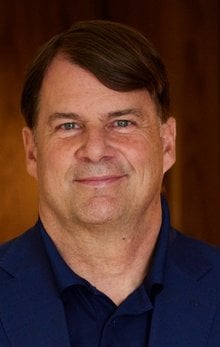
Jim Farley, President and CEO of Ford Motor Company, frames the approach clearly: "As an American company, we see Europe as the frontline in the global transformation of our industry. How we compete here – how we innovate, partner and invest – will write the playbook for the next generation."

Localising production to shorten supply chains
Ford's industrial footprint in Europe is being reconfigured to balance cost efficiency with flexible capacity and localised component production, designed to shorten supply chains and reduce exposure to cross-border logistics vulnerabilities.
The company's UK operations demonstrate this approach. Ford's Halewood plant produces electric drive units following a £380m (US$510m) investment, whilst the Dagenham plant continues to supply advanced engine technology. These facilities support the broader European production network, including Ford Otosan, Ford's joint venture with Koç Holding in Turkey.
New electric vehicle production will be carried out at Cologne's recently developed Electric Vehicle Centre. This distributed manufacturing model allows Ford to manage regulatory compliance across multiple markets whilst maintaining supply chain agility for both electric and hybrid powertrains.
Multi-energy architectures and flexible supply chains
The centrepiece of Ford's plan is a product offensive beginning in 2028, defined by multi-energy flexibility and lower cost profiles. New models are designed to support consumer choice, enabling customers to adopt electrification at their own pace whilst maintaining competitiveness in a fast-shifting marketplace.
Jim Baumbick, President of Ford Europe, emphasises this product-first philosophy: "Our plan is about unleashing the Blue Oval.
"We are leveraging strategic partnerships to ensure competitiveness, but we are obsessing over the product. These will be fun to drive, fully connected vehicles that stand out from the crowd."
The 2028 product wave will introduce multi-energy architectures that enable Ford to balance hybrid and electric offerings based on consumer adoption patterns across European markets.
Strategic partnerships to strengthen supply chain scale
Ford's new European direction builds on its history of strategic partnerships to achieve supply chain efficiencies. The company has benefitted from its collaboration with Volkswagen, whose MEB platform underpins Ford's latest electric vehicles manufactured at the Cologne Electric Vehicle Centre.
The new partnership with Renault Group extends this approach, focusing on shared electric vehicle architecture and potential joint development of light commercial vehicles to improve scale efficiencies.
François Provost, CEO of Renault Group, comments: "Combining our strengths with Ford will make us more innovative and more responsive in a fast-changing European automotive market."
Data-driven fleet solutions and supply chain intelligence
Ford Pro continues to anchor the company's commercial vehicle leadership in Europe, centred on software-enabled productivity and integrated solutions that connect vehicles, telematics, maintenance and fleet management.
The Ford Liive Uptime system delivered an estimated 820,000 additional days of vehicle uptime to European customers in 2024. By converting billions of data points into actionable fleet intelligence, Ford Pro is positioning itself as an indispensable ecosystem for operators who rely on uptime for margin protection.
Jim concludes: "We need to enable everyone to benefit from electrification and letting customers choose – whether that's fully electric or hybrid vehicles. It is about making the transition more attractive and more affordable for all consumers and businesses, stimulating demand rather than stifling it."
Company portals


Executives
Francois PROVOST
CEO
Jim Farley
Chief Executive Officer