
Ferrari Luce: A Pivot to In-House EV Production
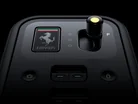
Ferrari's debut all-electric vehicle, the Luce, marks a shift in the Italian manufacturer's supply chain strategy, with the company choosing to manufacture key powertrain components in-house rather than outsourcing to traditional automotive suppliers.
The car has been developed over five years in collaboration with LoveFrom, a creative collective led by Sir Jony Ive of Apple fame and industrial designer Marc Newson.
In Italian, "luce" means light or illumination, which the company says "signifies the brand's unwavering focus on the future".
Benedetto Vigna, Ferrari's CEO, says: "If you want to be a leader, you have to be bold. You don't have to be afraid to explore new paths."
He explains that Ferrari wants to use EV technology to "redefine the limit of possible, audaciously".
Battery and powertrain sourcing
Ferrari has sourced high-performance pouch cells from SK On, a South Korean supplier, for the Luce's 122 kWh battery pack designed to support the car's more than 1,000 bhp output.
The vehicle utilises an 880 volt electrical system, similar to the architecture employed in the Porsche Taycan and Audi e-tron GT, allowing for ultra-fast DC charging at rates exceeding 350 kW.
The Luce uses four electric motors, providing individual torque vectoring for each wheel. While Ferrari is manufacturing the final motor units in-house, they are using axial-flux technology, typically supplied by YASA, now owned by Mercedes-Benz, for Ferrari's hybrid models like the SF90.

Manufacturing strategy and in-house production
A core part of Ferrari's supply chain strategy is the company's new "e-building" in Maranello. Unlike other manufacturers that outsource EV powertrains, Ferrari is manufacturing the motors, battery packs and power inverters in-house to maintain what it describes as "brand DNA" and performance differentiation.
The car is built on an all-new aluminium spaceframe specifically designed for the weight distribution of a 700 kg battery pack. The interior features extensive use of recycled aluminium, made using 100% recycled alloy developed specially for this vehicle.
Gianmaria Fulgenzi, Chief Product Development Officer at Ferrari, says: "Since this was the first time we developed a fully electric vehicle, we filed more than 60 patents."
Component sourcing and material strategy
LoveFrom's involvement has pushed Ferrari toward a supply chain that mirrors high-end consumer electronics rather than traditional automotive interiors. The firm is described as a "creative collective" founded in 2019 by Ive with studios in San Francisco and London.
The interior features extensive use of strengthened glass from Corning, the same supplier behind iPhone Gorilla Glass, used for both the infotainment surfaces and structural interior elements.
The Luce's three-spoke steering wheel is made from 19 CNC-machined parts using the specially developed recycled aluminium alloy. According to Ferrari, it weighs 400 g less than a standard Ferrari steering wheel.
Rather than plastic or carbon fibre, the switches and dials are made from beaded and anodised aluminium, requiring a precision-machining supply chain more common in Swiss watches or premium electronics.
A significant supply chain shift for this model is the move away from large-scale touchscreens in favour of custom-engineered mechanical controls. The Luce's interface focuses on tactility, clarity and intuitive interaction, Ferrari says.
Because the car is electric, the sound supply chain includes electric guitar-style pick-ups integrated into the rear e-axle inverter to amplify and sculpt the motor's natural frequencies into what Ferrari describes as a Ferrari-branded acoustic signature.
"Building a car is an incredibly difficult endeavour and it really takes the passion of so many people," John Elkann, Executive Chairman of Ferrari, explains.
The first car under the Ferrari name was made in 1947 and while the company has produced hybrid cars since 2013, the Luce will be its first BEV. Ferrari's core team producing this car consists of more than 100 engineers.
"Ours is not an electric car," Fulgenzi says, "ours is an electric Ferrari. And those are two very different things."
Company portals
Executives

Benedetto Vigna
CEO

Gianmaria Fulgenzi
Chief Product Development Officer

John Elkann
Executive Chairman