
Examining Purchasing Strategies in European Supply Chains
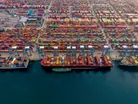
Organisations around the world have been examining their spend and their partnerships, with procurement becoming a core driver of business resilience, diversity and sustainability. Through this, supply chains are going through a period of transformation, witnessing more variation and new value.
A new report from telos has found that a significant number of social economy suppliers are embedded within global supply chains, making a difference both to value and resilience.
The Hidden Impact in Corporate Supply Chains explores how multinational businesses are driving social change in Europe through their purchasing strategies.
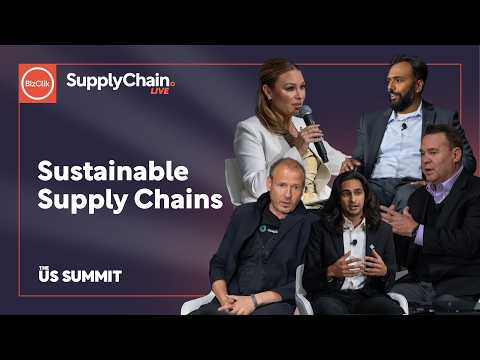
Leaders who are wanting to explore emerging ESG strategies and drive business success can secure their ticket now to hear from industry leaders at Supply Chain LIVE: The London Summit, with a dedicated Sustainable Supply Chains Panel.
A growing demand for sustainability
Social economy suppliers are businesses that reinvest their profits into social or environmental missions. As such, they help businesses reduce inequalities, create new job opportunities for marginalised groups and support sustainability through everyday operations.
Sustainability has moved to the forefront of supply chain strategy, becoming a driver of resilience and an indicator of profitability. Businesses are undertaking deeper considerations of their environmental, social and governance (ESG) strategies in order to operate more responsibly. Climate events have become more destructive, and there is a greater focus on ending exploitation or ethical gaps in the workplace.
According to the 2025 Euromonitor Voice of the Consumer report, approximately 25% of consumers would pay more for products that clearly state their ethical and sustainable operations. As a result, it is now seen as a business risk to not actively work towards strong ESG targets.
telos, a new social enterprise developed by Social Enterprise UK to aid global corporations with their positive impact attempts. It will work to maximise the social, economic and environmental impact of global supply chains, through support in advocacy and advisory.
The report by telos has found that many businesses are actively investing in the European social economy through their purchasing choices, but these decisions remain hidden – despite the high value these investments bring.
“Most companies already have social value in their supply chains — they just cannot always see it," explains Charlie Wigglesworth, founder and CEO of telos.
"This report shows that social procurement in Europe is not a theoretical opportunity. Social economy suppliers are already delivering commercially for major companies. We are calling on more businesses to understand the impact they are having and to work with us to grow the opportunity.”
The hidden impact
The Hidden Impact in Corporate Supply Chains: How Multinational Businesses Are Using Purchasing to Drive Social Change in Europe analyses information from 175,000 corporate suppliers against a database of 3.5 million social economy businesses across Europe. Through this, telos has found that 526 social economy suppliers are already integrated throughout the supply chains of major companies.
This adds up to a total of €71.42m (US$81.5m) in annual spend, as well as having created or supported an estimated 621 jobs. Despite this, it is often missing from standard reporting, meaning that ESG impact is undervalued.
Through these investments and partnerships, the social economy has grown in scale, now representing approximately 8% of Europe's GDP. In its entirety, the European social economy employs 13.6 million people across 2.8 million enterprises.
telos argues that social procurement is becoming a higher priority for organisations, particularly as they aim to create social and environmental value. It is, however, a challenge across the European market, as the diverse social economy is fragmented across countries, terminology, regulations and more.
Global organisations like Bayer, Pfizer and Johnson & Johnson are using extensive knowledge and strong partnerships to support the development of these strategies and enterprises.
“At Bayer, social procurement is a key lever to deliver on our purpose, ‘Health for all, Hunger for none'," explains Florian Vollmer, Head of Procurement Sustainability and Risk Management at Bayer.
"By identifying social economy suppliers, we intentionally integrate partners that create not only economic value but also measurable social and environmental impact, extending our value beyond our own operations and building supply chains that are responsible, inclusive and future-ready.”
The European Union has stated that the social economy is a priority, encouraging organisations to develop frameworks in order to unlock new opportunities.
Through investing in ethical suppliers, organisations around the world are having an impact – often unknown – on the environment and communities. To grow this further, there needs to be greater visibility and a stronger understanding of what constitutes a social economy.
Currently, in Europe, there is a fragmented complexity to the term, as each market uses different terminology or relies on different legal structures. This lack of a regional structure means that barriers remain to making this a more widespread strategy, limiting the growth of these enterprises and limiting the impact organisations can have.
Collaboration, transparency and more structured regulation can help businesses transform their ESG strategies and their sustainable supply chain reporting.
Sustainable Supply Chains at Supply Chain LIVE
Those hoping to gain insights into how to align ESG strategy with business outcomes should attend Supply Chain LIVE: The London Summit. The event is hosted by BizClik and Supply Chain Digital on 8-9 September at the QEII Centre in Westminster. Here, leaders can gain key insights into responsible sourcing, carbon reduction and more.
More than 1,000 attendees will gather to learn from 50+ speakers about the biggest challenges they are facing and the most innovative solutions.
As ongoing volatility and instability change how supply chains operate, business leaders are thinking more about their spend – investing in sustainability and social governance to make a better impact on surrounding communities. Procurement and supply chain leadership is coming further into the forefront of business strategy, with leaders understanding the value arising from strategic investments into the environment.
The Sustainable Supply Chains Panel:
- Date: 8 September
- Time: 10:45-11:30 BST
- Location: Supply Chain Stage



Executives
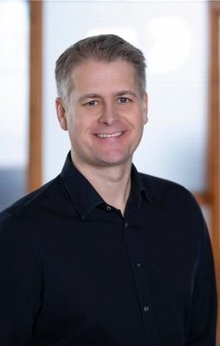
Florian Vollmer
VP, Head of Procurement Sustainability & Risk Management