
Easier Trade for Supply Chains in Modernised EU-Mexico Deal
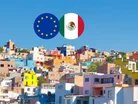
Around the world, trade relationships are being born and expanded upon. Supply chain complexity is reshaping how relationships operate, with previous agreements being outdated.
The EU and Mexico have modernised their partnership in order to enable closer political ties and a growth in trade between the regions.
The EU-Mexico modernised global agreement (MGA) will replace the previous agreement from 2000, supporting new opportunities, sustainable development and greater support for small- and medium-sized enterprises (SMEs).

At a time of growing geopolitical uncertainty, deepening ties with trusted partners is more important than ever.
An updated collaboration
In 2000, an economic partnership, coordination and cooperation agreement was signed between the EU and Mexico. The agreement aimed to strengthen existing relationships between the nations, with a focus on mutual interest and reciprocity.
It also was in place to encourage progressive trade in goods, industrial cooperation and support in the development of energy sectors, as well as mining operations. For 25 years, this agreement was at the heart of the EU and Mexico's trade relationship.
However, during this time, trade has become a much more complex and volatile industry, challenges by one event after another. Global relationships have been changed by COVID-19, wars, political advancements, tariffs and more.
As a result, this agreement is outdated, unable to match the complexity of the market. In January 2025, therefore, the EU concluded negotiations on a modernised Global Agreement with Mexico. Since then, there has been work taking place to conclude the modernised agreement, as well as the introduction of an interim Trade Agreement (iTA).
Now, the MGA and the iTA have been agreed upon. In July 2026, MEPs endorsed the MGA by 479 votes to 119, with 65 abstentions. The iTA was approved by 474 votes to 131, with 60 abstentions. This will cover the trade parts of the MGA exclusive to EU competence, including customs duties, protection of EU innovations and access to Mexican public tenders.
"With today's vote, the European Parliament supports closer ties between Mexico and the European Union," commented David McAllister, AFET Chair, on the day of the agreement.
"Our cooperation is built on shared support for multilateralism, human rights and the rule of law. The agreement updates a framework that has shaped relations between the European Union and Latin America for the past 25 years. It establishes binding commitments on security, migration, digitalisation, energy and climate, while deepening parliamentary links with Mexico’s Congress through the Joint Parliamentary Committee. The next step is swift ratification by all 27 member states."
Streamlined trade flows
The agreement between the nations creates protection for trade, making it easier for goods to move without exploitation. In 2025, EU-Mexico trade was valued at more than €86bn (US$98.6bn), having grown by more than 75% in the last 10 years.
The EU predominantly exports machinery and appliances, chemicals and transport equipment to Mexico, whereas the main goods it imports from Mexico are fuels and mining products, transport equipment and machinery and appliances.
In 2024, trade in services was worth €29.5bn (US$33.7bn), including trade in business services, transport services, telecommunications services and travel services.
With the MGA, MEPs believe that total EU exports of goods and services could increase by 75%, with EU companies saving up to €100m (US$114m) in customs duties every year. The agreement would help rid the partnership of almost all existing tariffs, which will benefit EU farmers and agri-food exporters – currently, Mexican tariffs on products like cheese and port can reach up to 45%.
"The EU remains committed to open, rules-based and mutually beneficial trade," explains Helen McEntee, Minister for Foreign Affairs and Trade of Ireland.
"The modernised trade agreement with Mexico strengthens one of our closest partnerships in Latin America and demonstrates that, by working together, we can deliver greater opportunities and certainty for our businesses, and growth and jobs for our citizens. At a time of growing geopolitical uncertainty, deepening ties with trusted partners is more important than ever.
"I am very ambitious for EU Trade policy over the next six months, and will work to strengthen our trade relationships and diversify our markets, rapidly advancing trade negotiations with important partners in Malaysia, the Philippines, Thailand and the United Arab Emirates, as well as effectively implementing recently concluded negotiations with Indonesia and India."
- The EU and Mexico have had a formal trade relationship since 2000
- In 2025, EU-Mexico trade was valued at more than US$98.6bn
- EU-Mexico trade has grown more than 75% in the last 10 years
- In 2024, trade in services was worth more than US$33.7bn
Help for SMEs
The agreement is expected to benefit more than 45 thousand EU companies who export to Mexico – a significant portion of which are SMEs. It will be particularly beneficial due to the removal of customs duties, more opportunities for services, investments and public procurement, as well as the reduced barriers to trade.
“The European Parliament's vote demonstrates that Europe and Mexico are serious about deepening a rules-based, practical economic partnership at a time when companies are reassessing supply chains and looking for growth in more resilient markets," explains Douglas Davis, Senior Vice President, Americas at Vistra.
"For European businesses, particularly SMEs, the modernised EU-Mexico agreement should make Mexico a more accessible and predictable destination, thanks to lower tariffs, stronger protection for products and innovation and better access to public procurement.
“From a Latin America perspective, the opportunity is significant, but execution is critical. Companies entering or expanding in Mexico will need to navigate local tax, entity, employment, regulatory and compliance requirements with care. Agreements like this can open the door, but turning that access into sustainable growth requires local expertise, strong governance and a clear understanding of both commercial opportunity and regulatory responsibility.”
As the geopolitical landscape becomes increasingly fragmented, this partnership is viewed by MEPs as vital to defend "rules-based international order and promote multilateralism", according to the European Parliament. According to the MEPs, the MGA creates a commitment to fundamental human rights, the rule of law and democratic principles. As a result, it will be driving fair labour across all trade.
Through this agreement, there will be more efficient and resilient trade, greater investments into organisations, more accessible trade for SMEs and fairer practises. This is particularly useful amid the sustainable and digital transitions.
Company portals

Executives

Douglas Davis
Senior Vice President