CEVA Logistics: New Used Battery Maritime Transport Service
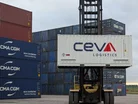
CEVA Logistics has a new secure maritime transport service dedicated to shipping used lithium-ion batteries to mainland Europe.
The service creates a responsible and sustainable solution for used batteries, right as the battery market undergoes rapid expansion.
It acts as a safe and secure reverse logistics solution, making it easier for these batteries to enter recycling systems.

A growing market
CEVA Logistics is a leader in third-party logistics, specialising in in supply chain solutions and reverse logistics. The company offers a range of end-to-end, tailored solutions across multimodal transportation.
It is an active player in the battery market, having its own EV battery reverse logistics solutions. This is the process of moving goods from their final destination back to the manufacturer, either for returns or recycling and disposal.
In recent years, the battery market has grown exponentially, driven by the steady rise of electric vehicles (EVs) and an increase in demand for energy storage solutions.
As battery waste is a major concern, this has made responsible solutions for recycling a necessity. In particular, the safe transportation of batteries from island territories to the mainland, where the recycling facilities are located, has been a key concern.
Bringing its expertise in the battery market and the logistics market, CEVA has deployed its new maritime transport service, which is specifically created to handle used batteries.
This allows CEVA to reroute lithium-ion batteries, no matter their status, so they can arrive in continental Europe to be evaluated and processed into recycling systems.
"Lithium-ion battery recycling is a key issue for Europe, and we are committed to making the battery sector more circular," explains Eric Dessupoiu, VP Finished Vehicle Logistics, CEVA Logistics.
"We’ve leveraged our expertise as a logistics provider in the automotive sector with the launch of CEVA’s Reverse Logistics solution in 2025, and now we’re strengthening the offering with a dedicated maritime transport solution to support the disposition and transport of batteries for recycling purposes."
Sustainability, procurement and supply chain leaders won’t want to miss Procurement & Supply Chain LIVE, taking place at Navy Pier, Chicago, on April 21–22.
Co-located with Sustainability LIVE: The US Summit, the event unites senior decision-makers at a time when supply chains, sustainability and business performance are more interdependent than ever.
Secure your place now for The US Summit – group booking discounts available.
Smart solutions
The solution aims to meet the growing needs of more isolated geographies, which includes island countries or territories. These are still gaining access to the EV market and lithium-ion batteries but do not have the resources to safely and responsibly dispose of them.
At present, they are managing a growing accumulation of used batteries on their land, but the maritime transport service by CEVA allows for a well-planned and sustainable alternative.
As many of these territories do not have local recycling systems, or they have limited capabilities, it is necessary that they can return the used batteries to Europe.
Once there, they will face European regulations, ensuring they are handled carefully and disposed of responsibly. This will support mandatory requirements on collecting and recycling batteries that have been used within the European Union. As part of a partnership with CEVA Logistics, all CMA CGM shipping lines will offer the transport service.
To make sure this service is as safe as possible, CEVA will utilise a custom double-container system. This consists of the consolidation of used batteries into containment vaults, which will then be placed into larger shipping containers. These specific containers are specifically designed to hold and transport battery cargo.
The containers can each hold four vaults, carrying a transport capacity of up to six tons each. In developing this solution, CEVA is attempting to neutralise any risks that come with potential instability when transporting lithium-ion batteries.
Global responsibility
To ensure responsibility, technicians which are trained in chemical, electrical and fire safety take part in each operation. Their core job is to ensure the batteries are safely packed and placed into the containers, with minimal risk for leakage or risk. As well as this, each used battery transport project will undergo a thorough technical and administrative review before it gets shipped. This includes the completion of all tracking declarations and procedures, which are implemented by CEVA's reverse Logistics experts.
Through this solution, CEVA is getting closer to implementing a circular value chain for end-of-life batteries. The new maritime transport service is offering a responsible reverse logistics solution for these batteries. This includes collection, handling, road and sea transportation, temporary storage, diagnosis and dismantling in a Battery Logistics Centre.
This solution is being deployed across Europe, helping with the safe and sustainable disposal of batteries. It became operational in March 2026, following an initial deployment of five adapted containers.
Executives
Eric Dessupoiu
Global Head of Finished Vehicle