
Orbia: The Battery Industry's Supply Chain Challenges
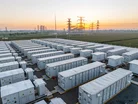
Battery storage smooths the integration of renewable energy into the grid, capturing excess generation and releasing it to stabilise supply.
This flexibility reduces reliance on fossil fuels and lowers emissions across the energy system.
Here, Miki Oljaca, Vice President of Energy Materials at Orbia’s Fluor & Energy Materials business, discusses the supply chain challenges currently being faced by the battery industry.
How is the US battery market responding to trade uncertainty and changing government policies?
Initially the US battery market was tied to electric vehicle adoption, which has ebbed and flowed along with market conditions.
While we still see EV adoption continuing to grow – last year was a record-breaking year for EV adoption in the US – we’re starting to see our business benefit from increasing applications of batteries in stationary energy storage to support grid resiliency and to provide the energy security needed for AI data centres. For example, we see batteries used to store energy during low-cost periods, manage peak load demand and provide resilient power for AI-driven data centres.
There are many other applications that rely on batteries, including defence, medical, industrial and other strategic sectors of US economy.
Despite ongoing trade uncertainty and reliance on Chinese suppliers, the US market continues to grow. Companies that can secure and localise their supply chains are well-positioned to thrive.
What challenges is the US battery industry facing?
The industry has made significant progress in reshoring manufacturing, with major investments in domestic battery production facilities. We need to continue that effort but also work on securing a reliable localised supply chain of battery materials and critical minerals.
This is where Orbia Fluor & Energy Materials is stepping in to help close critical gaps in the supply chain.
Another ongoing challenge is navigating the volatility of emerging battery applications. New markets such as grid storage and power solutions for data centres are growing rapidly but still evolving in terms of application requirements. As an industry, we must remain resilient through market fluctuations and stay focused on the long-term potential and inevitability of battery-powered solutions.

How is Orbia tackling these challenges?
Orbia is addressing key supply chain vulnerabilities through strategic investments in innovation and infrastructure. One example is our custom electrolyte business that is partially supported by the US government. This business supplies electrolytes to specialised domestic battery producers.
Electrolytes are essential to battery performance, allowing batteries to store and release energy. The current electrolyte market is dominated by large-scale producers in China and other countries in Asia, who are hyper-focused on supporting the large electric vehicle battery producers with limited appetite to supply specialised battery producers in North America. Our custom electrolyte business fulfils this need by supplying electrolytes with less than four weeks lead time and with competitive pricing.
Since we launched this business in 2023, we have roughly tripled output and are on pace to double again this year, highlighting pent up demand for domestically produced electrolytes. We expect strong future growth as many battery production plants scheduled to be completed in the US in the next couple years will need a secure domestic supply chain, particularly as the trade war continues to drive uncertainty.
We are also focusing our efforts to establish a domestic supply chain for key battery materials, such as electrolyte salts, binders and anodes, and actively participate in industrial organisations to promote a resilient domestic battery supply chain.
What are the most promising battery technologies for the industry?
Several key innovation areas are poised to shape the future of battery technology:
- Energy Density and Range: Advanced anode materials, particularly those incorporating silicon, are enabling batteries with significantly higher energy density. This translates to longer range and improved performance. Custom electrolyte formulations that include specialised additives (such as Orbia’s OS3) play a critical role in unlocking these benefits by ensuring compatibility and enhancing stability.
- Safety Enhancements: Battery safety is a growing focus, especially given the flammability risks associated with lithium-ion chemistry. Electrolyte innovations (such as Orbia’s Koflyte fluorinated solvents) can dramatically reduce or eliminate flammability improving the safety of battery systems.
- Fast Charging: Reducing charge time is a major driver for adoption. Electrolytes optimised for fast ion transport are central to enabling quicker, more efficient charging without compromising battery life or performance.
The battery landscape is evolving quickly, and we’re excited to be at the forefront – developing technologies that meet current needs while laying the groundwork for a more resilient, electrified future.
Where do you see the US battery industry in five years?
I’m optimistic about the future of the US battery industry.
In the next five years, we will begin to see the tangible results of the significant investments being made today, from manufacturing capacity to supply chain localisation.
This will enable the proliferation of batteries not only in transportation but also in applications like AI, data centres and energy storage as well as more specialised applications such as drones or mobile devices. In short, we’re moving toward a future where anything that can be electrified, will be.
Company portals

Executives

Miki Oljaca
Vice President of Energy Materials at Orbia Fluor & Energy Materials