
Rio Tinto: Scaling Up North America's Scandium Supply Chain

Canada has stepped in to boost the country’s place in the critical minerals race by supporting Rio Tinto’s scandium oxide production at Sorel-Tracy in Québec.
Through a C$25m (US$18m) commitment by the Canada Growth Fund (CGF), production at the site will shift from pilot-scale to full commercial output, strengthening North America’s critical minerals supply chain with domestic capability.
Rio Tinto's facility already holds the title of being North America’s only scandium oxide producer. With the CGF investment, its capacity rises to nine tonnes a year.
By increasing output on home soil, Canada positions itself to compete with Chinese suppliers and reduce reliance on imports.
"The project leverages an innovative process developed in Canada by our scientists," says Sophie Bergeron, Managing Director of Rio Tinto Iron and Titanium and Diamonds.
"Fully supplied from our domestic mining and metallurgical assets to provide a secure, North American supply of this critical mineral.”
Strengthening a fragile mineral supply chain
Scandium’s value sits in its impact on materials. A rare element, it’s used in high-performance aluminium alloys, solid oxide fuel cells and several emerging technologies. Though naturally occurring, scandium rarely appears in concentrated deposits. This makes it hard and costly to extract.
Its classification as a critical mineral by Canada, the US and Australia reflects both its scarcity and strategic importance. It plays a key role in industries that demand materials that can withstand extreme environments, including aerospace and clean energy.
What makes Rio Tinto’s operation stand out is how it extracts scandium. Instead of opening new mines, the company recovers the metal from waste streams left over during titanium dioxide production. The approach avoids new environmental impacts and reduces the cost and complexity tied to traditional mining.
It also means Rio Tinto produces scandium oxide using a domestic supply chain. This is exactly the kind of approach the Canadian government wants to encourage: low-carbon, local and integrated into broader industrial goals.
“Rio Tinto is pleased to partner with CGF and the Government of Canada to expand our Canadian production of scandium oxide, a high-performance material used for advanced manufacturing and energy generation,” says Sophie.

CGF’s strategy targets long-term resilience
The Canada Growth Fund enters this project not as a grant-giving body, but as a strategic investor. Its C$25m contribution comes in the form of a structured financial royalty, designed to share in the long-term value of the project without taking equity.
CGF’s investment model supports commercial scale-up while keeping risk in check for private operators.
Yannick Beaudoin, President and CEO of Canada Growth Fund Investment Management, explains: “With its unique investment mandate, CGF invests into innovative transaction structures that directly support projects of strategic priorities.
“This transaction, completed alongside an established operating partner, enables us to unlock new models for risk-sharing and value creation that advance Canada’s supply chain resilience strategy.”
Two further agreements with the federal government underpin the commercial side of the venture. One is an offtake agreement, where the government agrees to buy a set amount of scandium, giving Rio Tinto a stable customer. The second is a marketing and storage agreement, which helps the government hold and manage scandium until new buyers appear.
This setup reduces risk, supports Rio Tinto’s operations and ensures material is on hand for future use across aerospace, automotive or clean energy technologies.
Scandium's manufacturing edge
Scandium might not be a household name, but its properties matter. In aluminium alloys, it improves strength, flexibility, corrosion resistance and heat performance. These characteristics are vital for industries making lighter and more durable components – from electric vehicles to aircraft.
The same metal plays a growing role in energy technology. In solid oxide fuel cells – used in remote power systems and critical infrastructure like hospitals or data centres – scandium boosts electrical conductivity and overall efficiency.
These benefits tie directly into national goals around clean energy and industrial innovation.
Deborah K Orida, President and CEO at PSP Investments, CGF’s parent organisation, says: “We are delighted to bring PSP Investments’ rigorous investment process, depth of expertise and arm’s length governance model to the execution of CGF’s mandate.”
“CGF continues to provide innovative solutions that enable the development of important projects, improving Canada’s investment climate and contributing to PSP’s foresight on the evolution of the critical minerals supply chain.”
By growing scandium capacity at home, Canada shores up part of a supply chain that remains fragile worldwide. China still produces most scandium, and alternative sources are few and far between. Backing Rio Tinto’s facility helps secure access and encourages further investment in low-impact extraction methods.
At its core, the project shows how domestic capacity and strategic public-private partnerships can work together to build long-term security in vital materials. Canada’s move is not just about one mineral – it reflects a broader push to shape the next generation of supply chains through critical minerals policy.
Company portals

Executives
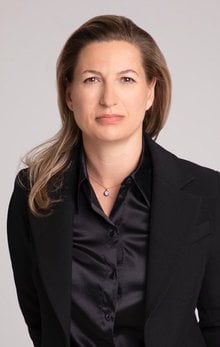
Sophie Bergeron
Managing Director of Rio Tinto Iron and Titanium and Diamonds
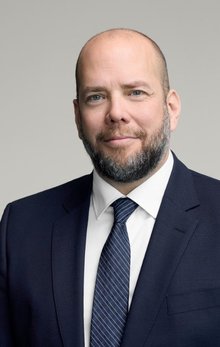
Yannick Beaudoin