Inside Big Pharma’s Strategic Shift to US Onshoring
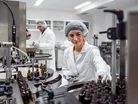
The healthcare manufacturing sector is experiencing a significant transformation as pharmaceutical and medical technology companies accelerate plans to establish production facilities on American soil.
What began as gradual nearshoring efforts has intensified into a comprehensive supply chain restructuring.
Data by KPMG and PwC indicates that healthcare M&A could see substantial growth throughout the year, with 73% of life sciences executives anticipating increased deal activity in 2026.
This manufacturing migration reflects a convergence of factors: evolving trade regulations, the pursuit of regulatory certainty and the vulnerabilities exposed by recent global supply chain disruptions.

Trade policy drives manufacturing decisions
The conversation around US-based pharmaceutical production has persisted for several years, yet recent tariff implementation has accelerated decision-making timelines. Companies are reassessing their global manufacturing networks with renewed urgency.
On 13 January 2026, Johnson & Johnson entered a voluntary arrangement with the Trump administration, committing to reduce medication costs in return for expanded domestic operations.
The agreement positions J&J within the "most-favoured-nation" pricing framework and secures exemption from recently implemented tariffs, conditional upon ongoing investment in US manufacturing.
Joaquin Duato, Chairman and CEO of Johnson & Johnson, explains: "Today's agreement shows that when the public and private sectors work together towards shared goals, we can deliver real results for patients and the US economy."
J&J is one of multiple major pharmaceutical companies pursuing this approach, while AbbVie became the 16th significant drugmaker to finalise a comparable agreement, pledging US$100bn towards US R&D and manufacturing throughout the next decade.
"AbbVie's mission is to make a remarkable impact for the patients we serve around the world through our innovative medicines," says Robert A. Michael, Chairman and CEO at AbbVie.
Geographic diversification
The transition towards US manufacturing extends beyond tariff considerations to encompass operational resilience. Biopharma companies are increasingly requesting dual-site redundancy across different geographic territories to minimise supply disruption risks.
The administration's "most-favoured-nation" framework seeks to address what officials characterise as "global freeloading," where international price controls could result in higher costs for American consumers.
Domestic manufacturing potentially streamlines Food and Drug Administration (FDA) validation processes and quality oversight, offering competitive advantages in regulatory approval timelines.
For example, Celltrion recently purchased a former Eli Lilly site in New Jersey, with plans to double production capacity by 2030 to strengthen its US supply infrastructure.
Investment is also concentrating on high-growth therapeutic categories. BD (Becton, Dickinson and Company) announced a US$110m investment in Nebraska on 13 January to manufacture advanced glass prefillable syringes, responding to increased demand for GLP-1 weight-loss treatments.
Implementation timeline and future outlook
Novartis provides a compelling example of this regionalisation trend. On 9 January, the company revealed its fourth US radioligand therapy manufacturing facility in Winter Park, Florida, forming part of a wider US$23bn investment programme in the country.
Vas Narasimhan, CEO of Novartis, adds: "Building this new facility in Florida marks an important step in fulfilling the promise of RLT for patients.
"Radioligand therapy has fundamentally changed how we approach certain cancers, and our growing US manufacturing network ensures we can continue to deliver these critical medicines with speed and reliability to patients who need them."
The transition to US-based manufacturing capacity will not occur immediately. Industry specialists project a three-to-four-year timeframe for substantial capacity modifications, reflecting extended lead times for facility development, equipment validation and regulatory approval procedures.
Throughout 2026, the pharmaceutical sector is undergoing structural change.
The model of geographically dispersed, vulnerability-prone global logistics is transitioning towards a framework where patient affordability and domestic manufacturing capability are elevated alongside innovation and long-term industry viability.





Executives
Joaquin Duato
Chairman of the Board and Chief Executive Officer
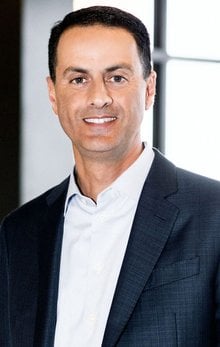
Robert A. Michael
CEO

Vas Narasimhan
CEO