
Why Australia's Coal Logistics is Putting Net Zero at Risk
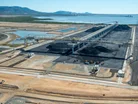
Australia has a long way to go to hit its net zero targets, after recent studies show its coal sector hasn't adapted to climate change needs.
Through its high emissions and poor use of its ports, the coal export industry is proving inefficient in a critical manner.
However, any attempts to become more green have been stopped or disincentivised.

The efficiency issue
Australia has a fragmented coal logistics network which is proving an issue for larger net zero plans.
Every year, Australia exports approximately 352 million tonnes of coal, relying on nine terminals. These terminals are placed along the New South Wales and Queensland coastlines, also using nine rail infrastructure operators.
However, these ports are not being used to their full optimisation, with only a 65% capacity utilisation, which is draining finances, wasting infrastructure and producing more emissions.
Some of the terminals are operating below 50% capacity, which shows the weakness of Australia's coal supply chains.
Port Kembla Coal Terminal (PKCT) services the Southern and Western coalfields of New South Wales, exporting thermal coal to customers worldwide. However, since 2024, it has lost two of its five servicing mines. As a result, three mines are taking on increasingly concentrated costs, which will be unsustainable in the long-term.
After recent bankruptcies, Queensland Bulk Handling (QBH) is down to two shippers, meaning it is now having to send coal elsewhere or accept a 50% rail tariff increase, as it no longer has capacity.
Similarly, Wiggins Island Coal Export Terminal (WICET) has three remaining shippers, but one of them (Coronado Resources) is in a potential liquidity crisis.
Wider challenges
As shippers leave these networks, the ports need to make up the lost costs, which results in remaining operators paying more.
The infrastructure costs get spread across less suppliers, which increases per-tonne charges.
As a result, miners begin to look at alternative, cost-effective solutions. This may be a re-evaluation of their mines or moving to a different port to export from.
Yancoal, a miner for QBH, has said it might have to close its mine due to increased costs.
When ports have upped their prices in the past, mines have begun shipping coal north to Newcastle instead, as it is a more competitively priced export terminal.
As three ports are struggling to reach efficient capacity, IEEFA suggests they should close.
According to Andrew Gorringe, Energy Finance Analyst for Australian Coal at IEEFA: "If the three most vulnerable ports – PKCT, QBH and WICET – were to close, overall system utilisation would increase from 65% to about 70%, with the removal of 55Mt of redundant export capacity, depending on whether mines shut or redirect coal elsewhere."
The barriers
Away from efficiency, attempts to diversify to green hydrogen exports have seemingly failed.
ESG concerns had driven diversification strategies, as financiers and investors led the charge for greener bulk export ports, but a range of project cancellations have seen many of these plans fall through.
Certain green hydrogen projects have been declared uneconomical, such as at Brisbane and Gladstone, preventing them from moving to more sustainable practices.
A major technology overhaul would be required to reduce direct emissions from the coal supply chain, as diesel would need to be replaced with low-emissions alternatives.
Rail freight operations alone have significant emissions, so that industry itself needs a serious change in order to reach net zero by 2050.
Access to affordable technology is limited, however, but the timeline to act is rapidly decreasing.
Moreover, coal supply chain decarbonisation is not as enticing to miners, as the Diesel Fuel Rebate Scheme provides subsidised diesel purchases for large-scale mining equipment and rail tariffs for diesel used in locomotives which deliver coal to the ports.
Australia's climate change contribution mainly comes from Scope 3 emissions as a result of the coal sector, but the need for an organised infrastructure change cannot be ignored.
If people aren't incentivised to go green and there are active barriers in the way, industries are going to struggle to find the benefit.
Without the funding and the backing for an infrastructure change within the coal mining industry, it will be unable to make more sustainable supply chains and will continue producing harmful emissions.