
Suxi Terminal: Is the Future of Fast, Low-Cost Freight Here?
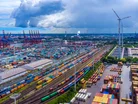
China’s logistics ambitions are taking yet another leap forward with the launch of the country’s first railway container terminal using mixed-mode autonomous driving.
At the heart of this shift is the Suxi container handling station, part of the Yiwu (Suxi) International Hub Port in Zhejiang Province. The facility started operations on 27 June when a freight train carried 100 standard containers set off from there to the Ningbo-Zhoushan Port, the busiest cargo hub in the world by tonnage.
The project is designed to support a more efficient, low-carbon and intelligent freight network by integrating both automated and manual operations in a single railway terminal.
It connects inland production centres directly with a global shipping hub, cutting costs, reducing transit times and introducing an infrastructure model that China intends to replicate.

A dual-mode setup to streamline freight
The Suxi terminal links to the Ningbo-Jinhua Railway and is built to handle up to 660,000 TEUs (twenty-foot equivalent units) annually.
Its design includes a container yard, a dedicated rail loading area, a customs supervision zone and a digital management platform – all focused on moving freight faster and more efficiently.
The real innovation lies in how the yard operates. It becomes China’s first railway container terminal to run with mixed-mode autonomous driving, approved as an experimental zone for automation in railway logistics.
The station blends unmanned systems with traditional processes. This hybrid method allows both automated and human-operated machinery to work in tandem.
Key components include remote-controlled gantry cranes, automated storage facilities and AI-based intelligent transporters—automated vehicles that move containers around the yard. These technologies are supported by a system capable of switching between automation and manual operation, depending on workflow needs.
“This sets a new standard for autonomous operations in China’s railway network,” explains Li Jinsong, Deputy Director at the Hangzhou Railway Logistics Centre.
“The mixed-mode design allows for seamless integration of automated and manual processes, enhancing efficiency while ensuring operational flexibility.”
The supply chain benefits
Beyond the yard itself, the Suxi terminal reshapes the broader supply chain by connecting factories in Yiwu – known as a major manufacturing and wholesale centre – to one of the most important global ports.
Goods sent to the terminal are treated as though they have already arrived at Ningbo-Zhoushan, allowing “one-time declaration, inspection and release,” according to Zhao Jianmin, General Manager of Zhejiang Seaport Yiwu Hub Port.
The practical benefit of this is clear, Zhao adds: “By establishing a logistics corridor connecting Yiwu and Ningbo-Zhoushan, the terminal significantly reduces both transit times and costs.”
This corridor simplifies customs procedures and shifts key processing steps away from the congested port to the inland terminal, speeding up cargo movement and relieving pressure at the coast.
The terminal’s digital backbone and automation also allow for 24/7 operations, giving manufacturers round-the-clock access to export routes.
The ability to scale activity without increasing manual labour supports efforts to bring down overall logistics costs and carbon emissions across the transport sector.
A model for smart and scalable freight logistics
China’s wider logistics strategy includes improving multimodal transport links, building resilience into supply chains and cutting emissions. Mixed-mode autonomous yards like Suxi are part of this.
The model’s combination of automation and flexibility helps reduce delays, optimise workflows and use existing infrastructure more efficiently.
Automation contributes to lower labour and maintenance costs while increasing yard capacity. With fewer human errors and better hazard detection, safety also improves. Energy use is optimised through electric systems that require less downtime and support low-carbon logistics.
By processing more freight with fewer physical upgrades, these yards help China modernise its infrastructure without huge investment.
The idea is to scale the model across the country, particularly in inland regions, to support faster export processes and create tighter links between industrial centres and ports.
China’s logistics sector is already experimenting with unmanned delivery, drone transport and smart warehousing. It's clear that combining automated transporters, AI systems and remote cranes with existing workflows in an operational railway terminal sets a new standard.
The Suxi yard is designed to do exactly that by bringing together the speed and efficiency of automation with the control and adaptability of manual logistics in a single, integrated site.