Artemis II: The Coordination of Complex Global Supply Chains
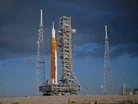
NASA's Artemis II mission, launched on 1 April 2026, represents one of the most complex supply chain operations in aerospace history. The Orion spacecraft, created by Lockheed Martin, will carry the first crewed mission of the Artemis Programme aboard a rocket, marking a key step towards long-term return flights to the Moon.
The development of this advanced deep space craft has required coordination across a vast network of suppliers, contractors and international partners, demonstrating the intricate logistics required for modern space exploration. The Artemis II flight will test NASA's current deep space capabilities and Space Launch System (SLS) through an operation that depends on more than 2,700 suppliers across 47 US states.
This sprawling supply network encompasses everything from propulsion systems to flotation devices, with each component requiring precise delivery schedules and quality standards to ensure mission success. The mission represents a critical milestone in humanity's return to lunar exploration and demonstrates the scale of coordination required for deep space missions.
The complexity of the supply chain reflects the technical challenges of deep space exploration, where every component must meet exacting standards for safety and performance in extreme conditions.

Sustainability, procurement and supply chain leaders won’t want to miss Procurement & Supply Chain LIVE, taking place at Navy Pier, Chicago, on April 21–22.
Co-located with Sustainability LIVE: The US Summit, the event unites senior decision-makers at a time when supply chains, sustainability and business performance are more interdependent than ever.
Secure your place now for The US Summit – group booking discounts available.
Lockheed Martin leads spacecraft production
As NASA's primary contractor for the Orion spacecraft, Lockheed Martin oversees the design, development, testing and production pipeline that feeds into the Artemis missions. The company manages supply chains for advanced propulsion and launch abort systems, cutting-edge avionics, rigorous ground testing and precision docking capabilities.
Lisa Callahan, former Vice President and General Manager of Commercial Civil Space at Lockheed Martin, says: "Orion is a new class of spaceship, uniquely designed for long-duration deep space flight, that will return astronauts to the Moon and eventually take the first humans to Mars and bring them all back safely.
"Orion will accelerate scientific discovery of our solar system and will be the cornerstone of the defining space achievement of this era."
Beyond Artemis II, Lockheed Martin is continuing to develop and assemble Orion spacecraft for future Artemis missions, including III, IV and V, establishing production continuity across its supplier base.
The company's role extends beyond manufacturing to include systems integration, ensuring all components from various suppliers work together seamlessly for mission success.
Northrop Grumman supplies critical safety systems
Northrop Grumman serves as a prime contractor for the SLS, producing the launch abort motor and the attitude control motor for the Orion spacecraft's launch abort system (LAS). The company's supply chain responsibilities extend through its subcontractor Thales Alenia Space Italia, which collaborates on the design and development of the habitation and logistics outpost.
This habitation module represents one of two gateway habitation modules where astronauts will live, conduct science and prepare for missions to the lunar surface.
Adam Lyons, Chief Engineer for the LAS Abort Motor at Northrop Grumman, says: "After the vehicle is launched and you're flying through the first portion of the mission, you're not only overcoming gravity with that massive amount of fuel, you're also facing aerodynamic forces.
"The atmosphere pushes back on the vehicle, wanting to slow it down and break it. We need a way to get away from the launch vehicle if something were to go wrong."
The launch abort system represents a critical safety component, designed to protect astronauts in the event of an emergency during launch or ascent.
Northrop Grumman's expertise in propulsion systems and safety mechanisms makes the company an essential partner in ensuring crew safety throughout the mission.
Coordinating aerospace manufacturers and global suppliers
Aerojet Rocketdyne, a subsidiary of American defence company L3Harris, functions as one of NASA's primary contractors for SLS. The company supplies eight auxiliary engines and 12 reaction control thrusters for the Orion crew module, as well as the jettison motor for the LAS.
Aerojet Rocketdyne also manufactures the high-pressure helium tanks that inflate Orion's flotation system.
John Honeycutt, SLS Programme Manager at NASA's Marshall Space Flight Centre, says: "This contract allows NASA to work with Aerojet Rocketdyne to build the rocket engines needed for future missions."
The contract also allows for the procurement of additional engines for other NASA exploration programmes, establishing supply chain flexibility for future missions. The full list of contractors includes Axiom Space, Bechtel, Blue Origin, Boeing, Amentum, Jacobs, Lanteris Space Systems (Maxar Space Systems), Northrop Grumman and SpaceX.
Orion's European Service Module is built by its main contractor Airbus, while the project also includes collaboration with the Japan Aerospace Exploration Agency, Canadian Space Agency and the Mohammed Bin Rashid Space Centre of the United Arab Emirates. This global supplier network contributes to the lunar spaceport at NASA's Kennedy Space Centre, Orion, the SLS rocket, Gateway space station, human landing systems and spacesuits and mobility systems tailored for the Moon.
The technologies and manufacturing processes behind the Artemis spacecraft and its ground operations will facilitate NASA's planned missions to deep space, to the Moon and eventually to Mars.
Company portals











Executives

Adam Lyons
Chief Engineer for the LAS Abort Motor
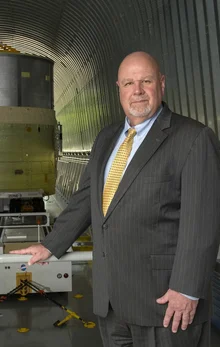
John Honeycutt
SLS Program Manager at NASA
Lisa Callahan
Retired Lockheed Martin Executive and Dog Lover