
APMT and DP World: A Strategic Red Sea Partnership
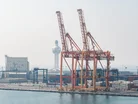
APM Terminals has announced that it will acquire a 37.5% minority stake in DP World's Southern Container Terminal at Jeddah Islamic Port, in a partnership that could position the facility as a regional Red Sea hub for carrier affiliate Maersk.
DP World will maintain its 62.5% majority stake and continue to lead terminal operations.
The investment marks APMT's first direct terminal presence on the Red Sea itself, despite holding existing stakes in Port Said, Egypt and Salalah, Oman.
The timing is particularly notable given that most liner shipping continues to avoid the region due to ongoing hostilities, with vessels instead routing around the Cape of Good Hope.
The diversion has severely affected Saudi ports. King Abdullah Port has seen an 80% decline in container volumes, while Jeddah has lost up to a third of its TEU totals.

Vertical integration shapes terminal strategy
The partnership demonstrates the growing trend of vertical integration between shipping lines and terminal operators.
According to the 2026 Global Container Terminal Operators Outlook published by Drewry Maritime Research, carriers are increasingly pursuing ownership stakes in port facilities to mitigate volatility experienced during 2024-2025.
KPMG's Global Ports and Terminals Sector Report 2025 indicates that carrier-aligned facilities could achieve 12% higher berth productivity in 2026 compared to independent terminals. For independent operators like DP World, partnering with carrier affiliates has become essential to guarantee throughput.
The Jeddah deal secures traffic across SCT's docks while supporting the Gemini Cooperation alliance between Maersk and Hapag-Lloyd. These alliances are shifting toward hub-and-spoke models, controlling 100% of trans-shipment at "fortress hubs" to ensure schedule reliability exceeding 90%.
Carrier involvement in Jeddah terminals is not unprecedented. Cosco holds a 20% stake in the Red Sea Gateway Terminal, while Mediterranean Shipping Company's terminal arm, Terminal Investment Limited, part-owns King Abdullah Port 100km north.
Substantial capacity development
APMT's investment coincides with substantial terminal development. In May 2024, DP World commenced construction on the US$250m Jeddah Logistics Park, a 415,000 m² facility offering extensive storage and distribution capacity under a 30-year Mawani agreement.
The first phase of SCT's redevelopment completed in December 2024, more than doubling capacity from 1.8 million TEU to 4 million TEU. The US$800m (£611m) project includes provisions to expand to 5 million TEU with additional ship-to-shore cranes as demand increases.
This expanded capacity provides APMT and Maersk the opportunity to develop Jeddah into a regional hub with significant scaling potential, particularly as carriers demonstrate renewed appetite for Red Sea routing through ad hoc sailings and limited service reinstatements.
APMT CEO Keith Svendsen called the port "a vital gateway to the Kingdom of Saudi Arabia and a key hub in our customers' supply chains."
"We are pleased to invest in the SCT and to deepen our presence in Saudi Arabia through this strategic step," he said.
"This investment secures long-term access to quality infrastructure and strengthens our ability to support customers with reliable, scalable capacity in the Kingdom."
DP World CEO Yuvraj Narayan, who replaced Sultan Ahmed bin Sulayem on 1 February 2025, said the investment "reflects the confidence global industry leaders place in DP World's capabilities and the world-class terminal we have developed in Jeddah Islamic Port."
"Saudi Arabia is a strategic market for DP World, and Jeddah Islamic Port has been central to our growth in the Kingdom for more than two decades," he added.
"Since securing the concession in 2019, we have transformed the terminal into a modern, high-capacity gateway, further strengthening Jeddah's position as a leading Red Sea hub in support of Saudi Arabia's Vision 2030."
Industry anticipates Red Sea resumption
The partnership aligns with broader industry expectations of a Red Sea transit resumption.
Rico Luman, Senior Sector Economist for Transport and Logistics at ING, identifies this potential return "as arguably the most important development to watch for in the global shipping market next year," suggesting "it's not a matter of 'if', but 'when'."
Resuming Red Sea transit could save more than 3,000 nautical miles and approximately 10 days on the Asia-Northwest Europe route, freeing roughly 6% of global fleet capacity while reducing fuel consumption and emissions.
The strategic positioning of both DP World and APMT in Jeddah demonstrates confidence that Red Sea routing will resume, with the expanded terminal capacity designed to capture increased volumes when normal transit patterns return.
Company portals



Executives

Keith Svendsen
CEO

Yuvraj Narayan
Group CEO