Transitioning ports to electric fleets is vital for environmental, economic and social benefits.
Electrification reduces greenhouse gas emissions, air pollution and noise, improving health in nearby communities, which often face environmental burdens.
While upfront costs are often high, electric equipment lowers long-term expenses through energy efficiency and reduced maintenance. It also attracts sustainability-focused businesses and creates jobs.
Here, Supply Chain Digital takes a look at the ports and terminals around the world which are going electric in search of increased sustainability and efficiency.
10. Port of Gothenburg
Founded: 1620
Port Authority: The Gothenburg Port Authority
Cargo Volume TEUs: 1 million
The Port of Gothenburg, Scandinavia’s largest logistics hub, is advancing fleet electrification for sustainability.
APM Terminals prioritises electric trucks for faster processing, with three major terminals adopting similar measures. Meanwhile, haulage firms like DFDS and Skaraslättens Transport are expanding electric fleets as charging infrastructure grows.
Wallenius Wilhelmsen’s €6.1m terminal upgrade underscores ongoing efforts to modernise and support electrification.
9. Port of Hamburg
Founded: 1189
Port Authority: The Hamburg Port Authority
Cargo Volume TEUs: 5.8 million
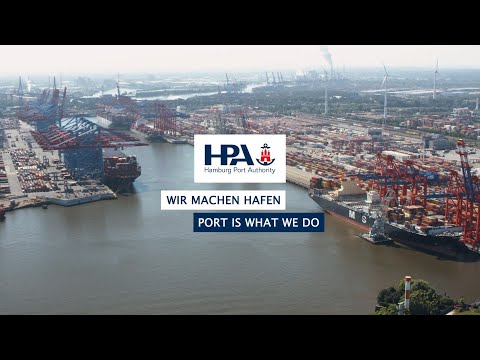
The Port of Hamburg is advancing electric fleets to cut emissions and boost sustainability.
Flotte Hamburg is adopting clean propulsion technologies and retrofitting vessels. In June 2024, it ordered two electric workboats for transport and inspections.
By 2025, all major terminals will have shore power, fast-charging points will support electric trucks and nearly 100 automated guided vehicles will switch to lithium-ion batteries for efficiency.
8. Port of New York and New Jersey
Founded: 1921
Port Authority: The Port Authority of New York and New Jersey (PANYNJ)
Cargo Volume TEUs: 8 million
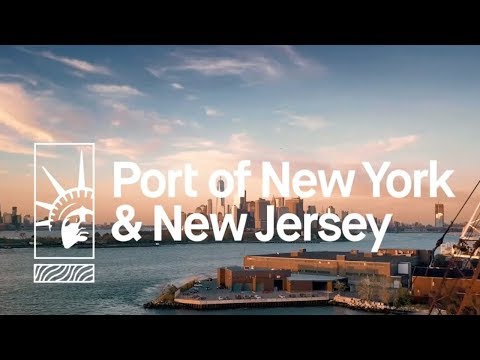
The Port of New York and New Jersey is transitioning more than 2,000 vehicles to zero-emission alternatives and expanding charging infrastructure, aiming for net-zero emissions by 2050.
JFK Airport is adding 24 fast chargers, while partnerships with Revel, NYPA, and NREL support drayage truck electrification.
By 2030, PANYNJ plans to cut direct emissions by 50%, integrating sustainability into leases, procurement and operations.
7. Port of Long Beach
Founded: 1911
Port Authority: The Board of Harbor Commissioners
Cargo Volume TEUs: 9 million
The Port of Long Beach is accelerating fleet electrification to reach zero emissions by 2035, aiming to convert all cargo-handling equipment by 2030 and trucks by 2035.
In late 2024, 60 hyper-fast chargers were installed and North America’s largest heavy-duty charging station opened.
Companies like Amazon and WattEV are deploying electric trucks, while joint investments expand regional charging infrastructure.
6. Port of Los Angeles
Founded: 1907
Port Authority: The Los Angeles Board of Harbor Commissioners
Cargo Volume TEUs: 9.3 million

The Port of Los Angeles is transitioning to electric fleets as it bids to reach zero emissions by 2035, replacing 28 internal combustion vehicles at Pier 400 and deploying battery-powered top handlers at Yusen Terminal.
Plans include 425 battery-electric cargo-handling units and 300 new charging stations, supported by a $412 million EPA grant.
Collaborations with Volvo, California's voucher programme for zero-emission trucks and the Port of Long Beach are funding regional charging expansion.
5. Port of Antwerp-Bruges
Founded: 1811
Port Authority: The Antwerp-Bruges Port Authority
Cargo Volume TEUs: 12 million
The Port of Antwerp-Bruges is advancing electric fleets to reach carbon neutrality by 2050, introducing six energy-efficient tugs, including Europe's first fully-electric RSD tugboat, Volta 1.
Charging infrastructure is growing with Milence's central hub and facilities from Van Moer Logistics, including dedicated charging for Volta 1.
A series of partnerships with industry leaders are developing green corridors for electric heavy-duty transport across the region.
4. Port of Rotterdam
Founded: 1270
Port Authority: The Port of Rotterdam Authority
Cargo Volume TEUs: 15.3 million

The Port of Rotterdam is advancing electric fleet adoption to achieve net-zero CO₂ emissions, focusing on electrifying regional transport, with companies like Innocent Drinks and DFDS deploying e-trucks.
APM Terminals is modernising equipment, including hybrid straddle carriers, and in 2025 opened its first e-truck charging station at Waalhaven.
Partnerships with ABB E-mobility and TRE are expanding infrastructure, with the port expecting 2,000 electric trucks by 2030 and 50 charging points for sustainable logistics.
3. Port of Vancouver
Founded: 1912
Port Authority: The Vancouver Fraser Port Authority (VFPA)
Cargo Volume TEUs: 31 million
The Port of Vancouver is adopting electric fleets to reduce emissions and promote sustainability. New additions include electric vans and pickup trucks and an all-electric ATV, with more vehicles expected in 2025.
Charging infrastructure is growing, with 26 new stations in 2024 and public fast chargers by 2025, supported by a US$22.5m clean energy infrastructure grant.
The port’s Electrification Roadmap, developed alongside BC Hydro, aligns with its goal of carbon neutrality by 2050.
2. Port of Singapore
Founded: 1819
Port Authority: The Maritime and Port Authority of Singapore
Cargo Volume TEUs: 37 million
The Port of Singapore is working towards net-zero emissions in its domestic harbour craft sector by 2050, with trials under way for the Hydromover, the country’s first fully-electric cargo vessel, featuring swappable batteries and a 25-ton capacity.
PSA International and MPA are electrifying cranes, machineryvand vessels, while charging infrastructure expands with a pilot e-HC station at Marina South Pier, aiming for nationwide deployment by 2025.
Partnerships with Yinson GreenTech, Pyxis Energy and others support fleet electrification, with a mandate for all new harbour craft to be electric or net-zero fuel-compatible by 2030.
1. Port of Yantai, China
Founded: 1398
Port Authority: The Yantai Port Group Co
Cargo Volume TEUs: 122 million
The Port of Yantai in Shandong, China, is accelerating its transition to electric fleets for sustainable operations.
In collaboration with QIJI Energy, Hutchison Ports Yantian launched the world’s first on-dock chassis battery-swapping station, reducing charging time to just five minutes, serving 100 electric trucks and cutting annual diesel consumption by over 2,000 tonnes.
The port uses battery-swapping trailers, achieving a 40.5% year-over-year freight volume increase, with 286 charging stations and 1,206 charging piles developed by State Grid Yantai, supporting green logistics and China’s 2060 carbon neutrality goals.
What's more, collaborations with QIJI Energy and BYD are further driving the adoption of green logistics in support of China's 2060 carbon-neutrality goals.
Explore the latest edition of Supply Chain Digital Magazine and be part of the conversation at our global conference series, Procurement & Supply Chain LIVE.
Discover all our upcoming events and secure your tickets today.
Supply Chain Digital is a BizClik brand.