Allianz: Geopolitics Increasing Risks in the Shipping Sector
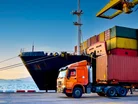
The shipping industry is navigating a complex geopolitical landscape shaped by trade tensions, regional conflicts and strategic chokepoints.
Rising instability in the Red Sea has disrupted routes through the Suez Canal, forcing vessels to reroute around the Cape of Good Hope and increasing costs and delays.
US-China trade frictions and sanctions have added pressure to global supply chains, while Western sanctions on Russia continue to alter energy and commodity flows.
Similarly, in Asia-Pacific, tensions over Taiwan and the South China Sea pose risks to critical shipping lanes, and climate regulations and environmental policies are prompting shifts in port infrastructure and fuelling strategies.
As shipping remains integral to global commerce, operators must remain agile, balancing security, efficiency and compliance in an era of uncertainty and fragmentation.
Strategic diversification of routes, fleet resilience and diplomatic engagement are becoming essential to navigating today’s volatile maritime environment.
Fast-changing geopolitical landscape is creating new risks and challenges
Releasing its annual Safety and Shipping Review, Allianz Commercial stresses that, for an industry already juggling the energy transition and the legacy of the Covid-19 pandemic, the fast-changing geopolitical landscape is creating new risks and challenges.
With 90% of international trade transported by oceans, increasingly volatile and complex operating environments are causing concern among the shipping industry.
This is particularly true as the industry continues to see the potential for large claims from traditional risks such as fires, collisions and groundings, which continue to be the main drivers for total losses of large vessels.
“The relevance of political risk and conflict as a potential cause of maritime loss is increasing with heightened geopolitical tensions,” says Captain Rahul Khanna, Global Head of Marine Risk Consulting, Allianz Commercial.
He adds: “Total losses from traditional causes may have reduced over time, but we could be in a position where this positive trend is potentially offset by war and other political-related exposures.
"As an industry, we are in a better position with regards to traditional risks, but there is a renewed focus on geopolitical risks.”
US-China trade conflict bring uncertainty and challenges
With China being the biggest target when it comes to protectionist measures of the US administration, with tariffs reaching 145% – before both countries agreed to reduce them for 90 days – these developments have significantly impacted global maritime trade.
While the future of US trade-focused policies remains uncertain, another increasing challenge for both maritime and insurance is ‘shadow fleets’ - a collection of vessels, often oil tankers, that evade detection, primarily by disguising ownership, changing flags and other tactics to avoid sanctions and other regulations.

Since the start of the war in Ukraine, the size of the shadow fleet has grown significantly. Today, around 17% of the world tanker fleet is thought to belong to the shadow fleet and have been involved in tens of incidents around the world, including fires, collisions and oil spills.
“Although recent sanctions are making it harder for these vessels to trade, the shadow fleet continues to pose a serious risk to maritime safety and the environment, as many are likely to be older vessels that are poorly maintained and inadequately insured,” says Justus Heinrich, Global Product Leader, Marine Hull, Allianz Commercial.
He adds: “In case of an oil spill involving a shadow fleet tanker, cleanup costs could be as much as US$1.6bn.”
Fires and mis-declared cargo
Allianz highlights fires and mis-declared cargos as major concerns for hull and cargo insurers.
The company reports that there were seven total losses reported across all vessel types during 2024, with the total number of incidents reaching a decade high of 250.
Around 30% of these fire incidents occurred on either container, cargo or roll-on roll-off vessels. More than 100 total losses of vessels have been caused by fires in the past decade.
As the electrification of the global economy continues, increasing the number of lithium-ion batteries and battery energy storage systems being transported, efforts are underway to mitigate the risks associated with this type of transportation.
Efforts include regulatory changes and technological advancements aimed at addressing mis-declared cargo.
“There is little doubt the shipping industry is becoming more resilient against the risks associated with large vessels, although we can by no means say they are under control,” explains Captain Rahul.
He adds: “However, only 27 total losses during 2024 underlines the positive trend. To put this into perspective: there are over 100,000 ships (100GT+) in the global fleet. However, uncertainty and multiple risks persist.
“Cyber-attacks and GPS interferences are increasing. Ceasefires have raised hopes, but the Red Sea security threat and supply chain disruption will likely remain. Meanwhile, the green transition requires much work. The coming years will be decisive and will determine the path of the sector and global trade.”
Explore the latest edition of Supply Chain Digital Magazine and be part of the conversation at our global conference series, Procurement & Supply Chain LIVE.
Discover all our upcoming events and secure your tickets today.
Supply Chain Digital is a BizClik brand.