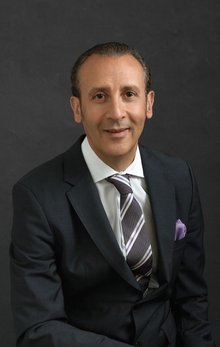
The Supply Chain Interview: Jamal Chamariq, Estée Lauder
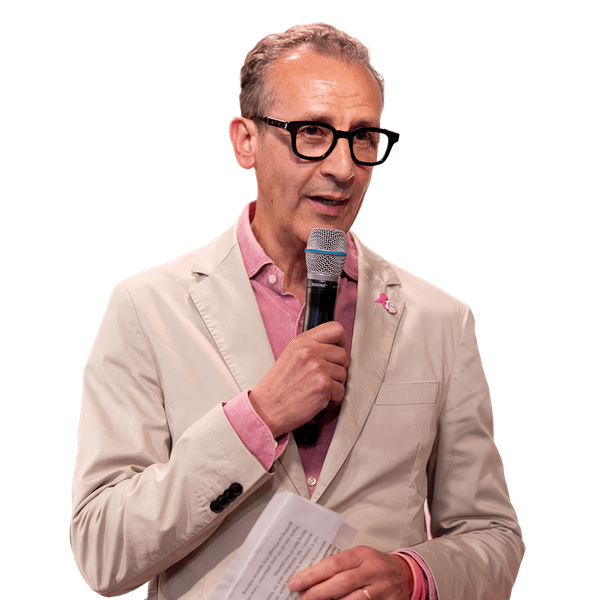
The Supply Chain Interview: Jamal Chamariq, Estée Lauder
Global supply chains have faced significant pressure in recent years to adapt to changing regulations, ongoing volatility and the rising demand from consumers. For a luxury cosmetics organisation such as The Estée Lauder Companies (ELC), understanding a consumer base’s wants and delivering it on time is crucial.
In the industry of makeup, skincare, perfume and hair care, leaders need to anticipate the wants of their consumer base – after all, products are not made in a day.
To stay ahead of consumer demand and anticipate emerging trends, leading manufacturers are embracing AI and automation more than ever. This technology, however, is not a one-size-fits-all, and applying it incorrectly can be more of an issue than not utilising it at all.
Manufacturers, therefore, need to be smart about how they use this smart-technology – and ELC is one of those using it with authority.
Leading the transformation is Jamal Chamariq, Senior Vice President, Global Supply Chain at ELC. His main responsibilities lie across the EMEA, UK & Ireland regions, as well as emerging markets and travel retail worldwide.
Jamal leads the end-to-end supply chain operations for the company, which includes overseeing procurement, manufacturing, engineering, planning, fulfilment, customer service, sustainability and quality assurance.
“In practical terms, that means my focus is ensuring that our value chain helps the company move with speed, agility and discipline — staying close to consumers, delivering exceptional quality and building resilience in a very dynamic global environment,” Jamal says.

Gaining a global perspective
Jamal has spent more than 30 years working across supply chain and operations leadership, working across a range of different industries and geographies. His global experience has seen him in teams throughout North America, Asia Pacific, EMEA and Latin America.
Most of his career has been at ELC, having joined in 2004, but Jamal has held senior roles across manufacturing, distribution and procurement at Sanofi and Yves Rocher. Since joining ELC, he has taken on greater leadership responsibilities, helping drive operations as the business evolved.
“Supply chain is fascinating because it sits at the crossroads of strategy and execution: it is where you turn ambition into reality, and where resilience, innovation and teamwork really get tested,” he says.
His experience has shaped Jamal into the leader he is today, helping him gain new perspectives and understand that the strongest supply chains are not a singular entity, but are “part of an ecosystem that is connecting teams, regions and stakeholders."
Throughout his career, Jamal has seen his fair share of global disruption, but this has helped him understand that businesses need to keep learning and adapting in order to ensure operational excellence.
“Let’s not forget that in moments of pressure, people are critical in driving alignment and stability that lead to resilience,” Jamal adds.
Amid challenging moments, Jamal has grown to view volatility as a structural concern, no matter what the cause of disruption is.
He says: “Whether the disruption is coming from shifts in demand, geopolitical complexity or organisational transformation, the answer is to build a system that is ultimately more resilient and less prone to overreaction.”
For Jamal, the answer lies in the simplicity of things. Through cutting out the complexity, improving visibility and clarifying ownership, there can be greater alignment and stability within the business which can result in a more resilient operation.
This has shaped how ELC operates today, with a focus on developing a faster, more resilient and more connected value chain which can support its global brands.
Strong supply chains are never built around one function or one tool - they are part of an ecosystem that is connecting teams, regions and stakeholders.
The role of technology
For 20 years, Jamal has worked his way through ELC’s supply chain, starting at the company as Executive Director Global Sourcing. Since then, he has worked across New York, Hong Kong and Zurich, gaining experience leading teams and understanding both domestic and international supply chain operations.
“For us, transformation always starts with the business model — not with technology for its own sake,” Jamal says.
His goal is to develop a value chain that is more consumer-centric and can respond to the changing demands and pace which they desire. The ‘Beauty Reimagined’ project is ELC’s way of operating as a “dynamic value chain” which is engineered for resilience and embeds better decision-making into everyday operations.
The core aim is to strengthen execution and simplify end-to-end workflows across the enterprise. For this to occur, there needs to be a movement away from siloed operations and towards a more connected operating model. At ELC, Jamal and his team are “standardising workflows, strengthening data foundations and integrating digital capabilities directly into execution — where they remove friction and improve outcomes.”
In its new product launches, ELC is using AI-driven alerts and automation to “reduce manual intervention, improve visibility and accelerate decision-making.” By doing this, the company is seeing shortened cycle times and greater reliability in its manufacturing processes.
At its Whitman, UK site, ELC is combining advanced manufacturing, skilled teams and embedded digital capabilities into its operations, resulting in 40% reduced lead times, meaning faster new product launches.
Throughout this, Jamal emphasises the human element explaining; “AI is an enabler, not a replacement. We often talk about human + machine because the goal is not to remove accountability from people; it is to remove friction from their work so they can focus on judgment, quality, craftsmanship and problem-solving.”
For Jamal, AI is a tool that needs to be used practically and pragmatically, only being implemented when it can serve a purpose and improve efficiency. This includes anomaly detection, improving planning through greater signal detection and scenario modelling.
Maintaining its global position
The Estée Lauder Companies was founded in 1946 by Mrs. Estée Lauder and her husband, Joseph. For more than 75 years, the company has been driven by the Lauder family’s dedication to innovation and a strong understanding of consumer demand.
Over the years, the company has grown into a global giant, becoming the second largest cosmetics company in the world. The company, however, has not gotten to this place only by creating desirable products, but by having a strong operating model which can match speed, quality and consistency across the world.
Jamal has a major role in ensuring this can happen, stating, “our company-wide transformation, Beauty Reimagined, is our strategic plan to become a more consumer-centric, faster and more agile organisation, while strengthening long- term profitability.” This means that ELC is operating with more accountability and innovation than ever before. Jamal prioritises improving speed to market, strengthening quality and service and building greater reliability across the company.
“Several trends are reshaping supply chains today,” Jamal explains. Companies are beginning to understand that stronger execution, simplification and regional balance are driving strong business performance amid today’s complex demands.
As AI becomes a key topic of consideration for manufacturers of every size, for Jamal, the main question is “whether it improves decision quality and execution.” However, he affirms that the human element is more critical than ever. He adds: “As systems become more advanced, the difference increasingly comes from people — their judgment, alignment and ability to act on insight.”
Let’s not forget that in moments of pressure, people are critical in driving alignment and stability that lead to resilience.
Future considerations
ELC has grown immensely over the years, driven by ongoing innovations and a strong portfolio of brands. Jamal believes the future lies with “scaling and executing the transformation consistently across the organisation.”
Within the supply chain, teams will be looking to shorten cycles throughout innovation, planning and manufacturing, while also working on improving decision quality. For Jamal, the use of AI is not only about reacting faster to volatility, but about reducing noise and making more deliberate value chain decisions.
“As consumer trends evolve more quickly, the ability to translate insights into production and availability — at speed and at scale — becomes a real competitive advantage,” Jamal explains.
As pace of operations continue to increase, technology is becoming a vital tool for ELC, helping teams undergo transformation at scale in order to develop a more aligned value chain.
Did you know?
Company portals

Executives
Jamal Chamariq
Senior Vice President Global Supply Chain - EMEA, UK&I and Travel Retail Worldwide