

Sheri Hinish on Leadership, Equity and the Work that Remains
Sheri Hinish on Leadership, Equity and the Work that Remains
While supply chain has long been regarded as the kind of work that keeps the lights on but rarely commands a seat at the leadership table, a new generation of executives is changing the narrative entirely.
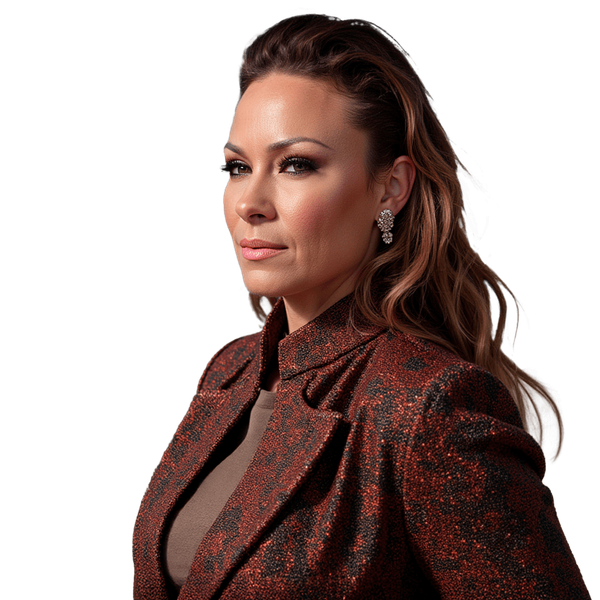
Among them is Sheri Hinish, widely known as the Supply Chain Queen, a strategist, author and founder who has spent the better part of two decades redefining what supply chain leadership can look like when it is driven by conviction, curiosity and an unrelenting belief in its power to do good in the world.
Sheri's path into the industry was not a straight line. Growing up as a first-generation college student in a household where the language was “jobs, not careers,” supply chain was never part of the plan.
"Supply chain wasn't something I dreamed about as a kid or even heard of until my twenties," Sheri recalls. "It found me."
What began in integrated demand planning and procurement quickly revealed itself as something far more expansive. Sheri discovered a natural ability to see connections others overlooked, tracing the ripple effects of a sourcing decision in Southeast Asia all the way to a community outcome thousands of miles away.
"I fell in love with the complexity of how things actually get made and moved around the world," she says. "But more than that, I started to see the human experience woven through all of it, and how innovation could be used to amplify impact and drive more responsible decisions."
That perspective shaped a career that took her from industry roles to the highest levels of global consulting. At IBM, Sheri rose to Senior Executive, leading global sustainability and supply chain practices before moving to EY as a Global Consulting Leader.
Along the way, she pursued advanced degrees at Rutgers and a Master's at Harvard, all while asking the questions that made boardrooms uncomfortable: why are we optimising for cost instead of long-term value? Why isn't climate resilience on the CFO's dashboard? Why are we still treating sustainability as a compliance exercise instead of a competitive advantage?
Those questions became the foundation of a philosophy and, eventually, a brand. The "Supply Chain Queen" moniker began as a nickname, a recognition from peers of the rare confidence Sheri brought to rooms where women were frequently the only voice present. She trademarked it, built Supply Chain Revolution Global LLC around it and transformed it into a platform for the ideas she believes will fundamentally reshape the industry.
"Five years ago when I was last on the Supply Chain Digital cover, I was talking about the potential," Sheri reflects. "Now I'm the living proof that supply chains are a force for good to transform our world, with the right leadership, investment, policy and cooperation."

The cost of systemic exclusion
The statistics are stark and Sheri does not allow them to remain abstract. Women represent 40% of the supply chain workforce, yet senior leadership parity, by current projections, remains nearly five decades away. For Sheri, the diagnosis is clear.
"Let's be honest about why: the pipeline isn't the problem," she says. "Women are entering supply chain in strong numbers. The problem is what happens between middle management and the C-suite."
What she describes is not a visible barrier but an invisible architecture, built from decisions about who receives sponsorship rather than mere mentorship, who is handed P&L responsibility and who gets assigned to high-visibility transformation programmes versus steady-state operational roles. The 2025 Gartner and AWESOME survey found the percentage of female Chief Supply Chain Officers dropped six points to just 11%, the lowest figure recorded since 2019.
"That's not a plateau; that's regression," Sheri adds.
Representation is declining across every level of management, the early-career pipeline is contracting and the supply chain gender pay gap widens to 23% after twenty years of experience. One in three women have considered downshifting or leaving the workforce entirely, yet only 29% of organisations hold direct accountability for increasing women in leadership on their management scorecards.
Add to that, the wider workforce landscape of the moment; in January, Catalyst revealed a potentially devastating truth – that more than 455,000, or nearly half a million, women left the US workforce between January and August in 2025.
"You can't manage what you don't measure," Sheri says, "and most companies are still treating gender parity as an aspiration rather than a KPI. Diversity shouldn't be a dirty word or politicised. It is a discipline of ensuring that the voices shaping the world's agenda are as varied as the world itself."
When the lens widens to include women of colour, the picture deteriorates further. For every 100 men promoted to manager, only 74 women of colour make that same step, compared to 93 women overall. For Black women specifically, that number has fallen to 60. Women of colour hold just 7% of C-suite positions and the pay disparities only further the picture: Black women earn 66 cents and Latinas 58 cents for every dollar paid to white men.
"When we talk about the 48-year timeline to parity, we need to be clear-eyed that for women of colour, the timeline is even longer and the structural barriers are compounded," Sheri says. "Not just glass ceilings, but systemic barriers."
For Sheri, the solution lies in making the sponsorship of women a leadership performance metric, redesigning the pathway to senior leadership so it no longer demands 24/7 availability that penalises those carrying caregiving responsibilities, and requires those who hold power to actively redistribute opportunity.
"Not 'be allies,'" she says. "Redistribute. That means giving up a board seat, advocating for a woman to lead the next billion-dollar transformation and holding yourself accountable when your leadership team doesn't reflect its workforce, the communities it serves, or the supply chains that keep your business operational."
Rewriting the leadership playbook
For Sheri, the conversation about future-ready leadership begins with a concept she has developed herself: AQ, the agility quotient.
"We've spent decades rewarding IQ and technical mastery in supply chain leadership," she explains. "We've more recently acknowledged EQ or core skills, because there's nothing soft about them, as important. But what the next decade actually demands is the ability to operate with grace in ambiguity."
Geopolitical fragmentation is redrawing trade routes. AI is transforming every function. Climate events are disrupting operations with escalating frequency. The leaders who will thrive, she argues, are not those with the best 2022 playbook but those who can write a new one in real time.
"The corporate archetype is broken," she says. "It's time to stop rewarding the loudest voice in the room and start rewarding the one who can navigate complexity without losing humanity in the process."
Reclaiming power for the invisible workforce
It is not only within the corporate sphere that these conversations should be taking place. In fact, Sheri's conviction sharpens when the conversation turns to Tier 2 and Tier 3 supplier networks. Women make up the majority of workers in many of these facilities, in garments, agriculture, electronics assembly, yet they remain largely invisible in corporate supply chain strategies that rarely look beyond Tier 1.
"The conversation about women in supply chain can't stop at corporate headquarters, LinkedIn banners and the soup-du-jour 'women in insert X' panels," she says.
When margin pressure is applied at Tier 1, it cascades downstream and it is women in upper-tier supplier networks who frequently absorb the cost through longer hours, unsafe conditions and suppressed wages. Extending living wage commitments beyond direct suppliers is structural accountability, not idealism. The second intervention is visibility through gender-disaggregated data across extended supply networks. The third is presence.
"Co-design solutions with the women themselves," Sheri says. "Partnering, being present, listening, learning and incorporating ancestral wisdom and techniques in and across your supply chains starts locally and scales globally."
The tension between surface-level commitment and structural change runs into a troubling pattern she has identified. Women now hold 63% of sustainability executive positions, just as the US market is pulling back from ESG and DEI commitments.
"This is the glass cliff, and it's not accidental," she says. "Women were elevated into sustainability leadership roles at the exact moment those roles became the most politically exposed and resource-constrained positions in corporate America.
Her advice? "Own your voice and story.
"If your entire professional identity is tied to a title that a CEO can eliminate with a press release, you're vulnerable."
That vulnerability is something many workers are feeling in the era of automation. PwC’s ‘Will Robots Really Steal Our Jobs?’ report explains manual roles in manufacturing were traditionally male-dominated, but as robots take over these tasks, the roles become more about supervising technology – potentially removing the barriers women faced to those roles, due to assumptions about physical strength.
Sheri reframes this conversation: "The bigger, harder truth is that robotics and automation can replace human workers altogether, regardless of gender.”
The question is no longer simply whether women can access these roles. It is whether those roles will exist at all – and whether women are being positioned for the technical roles that replace them or left behind twice.
"In a world where every company will have access to the same AI tools and data infrastructure, the competitive advantage won't be who has the best algorithm," she says. "It will be who can ask the most insightful questions, anticipate the second-order consequences and build trust across complex stakeholder networks."
Disrupting the 48-year timeline
Part of securing these roles is going beyond allyship. Sheri advises readers to conduct a “sponsorship audit” – meaning leaders should ask themselves the following questions:
- Which high-visibility opportunities did you actively advocate for a woman to lead in the last six months?
- When did you last recommend a woman for a role when she was not in the room?
- What specific action will you take in the next 30 days to sponsor a woman's career advancement?
"If the answers are vague or uncomfortable, that's the point," she says.
For the Supply Chain Queen, awareness and intention have had their time. Now, the focus should be on the much more difficult work of accountability.
"I don't have 48 years of patience left," she says. "And neither should you."
Company portals
Executives

Sheri R. Hinish
Supply Chain Queen, Founder