WEF: True Gender Parity is More Than a Century Away
The World Economic Forum's (WEF) Global Gender Gap Report suggests that achieving complete gender parity could take another 123 years at the current pace of progress.
The index's 19th edition analysed gender equality across 148 global economies, revealing that the worldwide gender gap stands at 68.8% in 2025.
This is an increase of just 0.4 percentage points from the 2024 figure of 68.4%.
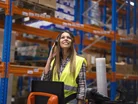
Across global supply chains, where women make up only about 41% of the workforce and under 25% of leadership roles, progress toward parity is an important lever for accelerating productivity and innovation at scale.
Saadia Zahidi, Managing Director of the WEF, says that the report “arrives at a decisive moment, with the world in flux as technological breakthroughs, geopolitical conflict and economic uncertainty are creating unprecedented challenges as well as bringing new opportunities”.
“Amid such change, gender parity is both a principle and a strategy,” she adds.
“Economies that tap into the full spectrum of their talent and human capital are best positioned to navigate an era of transformation and accelerate productivity and prosperity.”
In supply chains, this means embedding gender equity into digital transformation and skills development—areas now central to resilience and performance in global trade networks.
At Sustainability LIVE: The Net Zero Summit, co-located with Procurement & Supply Chain LIVE: The Net Zero Summit, Sustainability Magazine will be hosting discussions all about gender parity, including the Women in Sustainability Panel.
Secure your tickets to attend now and save more than £200 with our Early Bird offer.
Regional gender parity analysis
For the 16th year running, Iceland has maintained its leading position in the WEF's rankings, having closed 92.6% of its gender gap.
Since 2022, it has remained the sole economy to close more than 90% of its gap.
European nations occupy eight of the top ten positions, with Finland, Norway and Sweden ranking behind Iceland.
The UK rose to fourth place with 83.8% of its gender gap closed, whilst Moldova made its first appearance in the top ten in seventh position.
Northern America topped the regional rankings with 75.8% of its gender gap closed.
The Middle East and Northern Africa recorded the lowest global ranking at just 61.7% parity, though the region has demonstrated gradual improvement with its political empowerment score more than tripling since 2006.
These regional disparities are mirrored in supply chain sectors, where Nordic economies also lead in women’s participation across logistics, manufacturing and sustainability leadership roles.
Women in senior leadership
The WEF's report indicates that female representation in senior leadership roles continues to trail behind their educational accomplishments.
Women now surpass men at tertiary education levels globally, yet only 29.5% of tertiary-educated senior managers are women.
The proportion of women in top management increased from 25.7% in 2015 to 28.1% in 2024, but progress has considerably slowed since 2022.
Women remain predominantly concentrated in lower-paying, people-centric sectors such as healthcare and education.
“At a time of heightened global economic uncertainty and a low growth outlook combined with technological and demographic change, advancing gender parity represents a key force for economic renewal,” Saadia says.
“Economies that have made decisive progress towards parity are positioning themselves for stronger, more innovative and more resilient economic progress."
Political representation challenges
Political empowerment maintains the widest gender gap, with only 22.9% parity achieved globally.
Women constitute fewer than one-third of parliamentary speakers worldwide and remain considerably underrepresented in cabinets relating to economy, infrastructure and defence.

Latin America and the Caribbean achieved second place globally for political empowerment at 35%, with 15 economies having had a female head of state within the past five decades.
Sub-Saharan Africa improved its political empowerment score to 22.2%, with women now holding 40.2% of ministerial roles and 37.7% of parliamentary seats across the region.
Implementation and care economy
The report highlighted a near-universal "implementation gap" between gender-equal legislation and the infrastructure required to enforce them.
Even economies with advanced legal frameworks demonstrated significant disparities in practical support for gender equality measures.
Women are 55.2% more likely than men to take career breaks, lasting an average of 19.6 months compared to 13.9 months for men, primarily due to parenting responsibilities.
The report concluded that the care economy remains underleveraged as an economic solution to both demographic and workforce transitions.
According to data from 100 economies tracked continuously since 2006, the countries progressing fastest towards parity include Bangladesh, Ecuador, Ethiopia, Mexico and Saudi Arabia.
Closing this implementation gap could unlock talent in logistics and operations—where flexible scheduling, parental leave and caregiving support remain critical for retaining women across frontline and planning roles.
Women in sustainability
At Sustainability LIVE: The Net Zero Summit, Sustainability Magazine will be hosting discussions all about gender parity, co-located with Procurement & Supply Chain LIVE: The Net Zero Summit.
The two-day event is set to take place at the Queen Elizabeth II Centre in Westminster, London, between the 4-5 March 2026, bringing together sustainability experts from around the globe for a series of enlightening panel discussions, engaging workshops and unparalleled networking opportunities.
Diversity, equity and inclusion will be high up on the agenda, especially during the panel on Women in Sustainability.

This panel will showcase the leadership, innovation and impact of women advancing sustainability across all kinds of industries, and you can expect to hear personal stories, strategic insights and lessons from the field as some of the world's most influential changemakers share how they are shaping inclusive and effective approaches to climate action.
Explore how diverse leadership is driving real progress at Sustainability LIVE: The Net Zero Summit in Spring.
Secure your tickets to attend now and save more than £200 with our Early Bird offer.
Company portals
Executives
Saadia Zahidi
Managing Director and Member of the Managing Board