
Global Delivery Giants: Driving a Zero-Emission Future
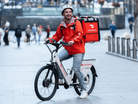
Major food and grocery delivery companies have launched the Deliver-E Coalition – an industry alliance focused on zero-emission delivery logistics.
The joint effort aims to electrify the two and three-wheeler vehicles used for millions of doorstep deliveries, beginning with a global push to phase out internal combustion engines in favour of cleaner alternatives.
Together, Deliver-E’s founding members – Delivery Hero, DoorDash, iFood, Mr D, Swiggy, Uber, Wolt and Zomato – operate in 96 countries. Their combined reach sees an estimated six billion deliveries each year via two- and three-wheelers.
The platforms are now pledging to shift their fleets to zero-emission alternatives, primarily electric bikes, mopeds and three-wheelers, through shared learning and collaborative logistics planning.
“Deliver-E is industry leadership in action,” explains Sheila Aggarwal-Khan, Director of the UN Environment Programme (UNEP)’s Industry and Economy Division.
“Zero-emission two- and three-wheeler vehicles are ready to scale: they are cleaner, quieter, and increasingly cost-effective. Through Deliver-E, companies will share what works and move faster together than any one company could alone.”
A global response to local delivery challenges
Deliver-E was formed in response to both environmental pressures and the operational challenges linked to the global boom in e-commerce.
In 2021 alone, e-commerce across 43 economies generated US$25tn – 15% higher than pre-pandemic figures. This growth drives a sharp rise in last-mile deliveries, particularly in cities already struggling with traffic, noise and pollution.
Urban delivery logistics are under scrutiny. According to a UN study, if left unchecked, emissions from delivery services in the top 100 cities worldwide could climb by more than 30% in the next few years.
It also predicts congestion is projected to rise by 14%, healthcare costs by 12% and daily commutes could stretch by around five minutes. Further projections suggest deliveries may account for up to half of urban transport emissions by 2030.
Against this backdrop, the coalition's founding charter commits its members to “dramatically speed up the implementation of zero-emission deliveries by shifting to electric vehicles, bicycles and other means of zero-emission two- and three-wheeler deliveries, thereby unlocking economic, social and environmental benefits for all stakeholders and the wider society".
Electrification offers tangible cost savings as well. UNEP-backed studies show switching from fuel-powered two-wheelers to electric bikes can lower last-mile delivery costs by roughly 25% and slash emissions by close to 90%.
A pathway to clean delivery
The Deliver-E Coalition focuses on operations. Members aim to make electric fleets the new standard for local delivery – not just in dense urban centres but in smaller markets too.
The coalition’s early priority is to speed up the roll-out of electric two- and three-wheelers, coordinated under UNEP’s Global Electric Mobility Programme.
The programme acts as the coalition’s Secretariat. It supports governance, oversees technical discussions, facilitates member collaboration and publishes shared progress. It also links the coalition with wider networks, from policymakers and financiers to fleet aggregators and original equipment manufacturers (OEMs).
Deliver-E’s core strategy centres on “a platform for knowledge exchange” where firms “share learnings and expertise for an industry-wide electrification effort". These are more than statements – the coalition intends to exchange real data on vehicle use, charging patterns and fleet management, and to align on steps that make the transition achievable at scale.
The charter also calls for a network of experts and partners across the logistics ecosystem, including technology providers, manufacturers and public sector bodies, who can support solutions to common roadblocks.
“Members shift to zero-emission deliveries to contribute to reducing greenhouse gas emissions, reducing air and noise pollution, enhancing the resilience of the livelihoods of drivers, and accelerating the wider electrification of mobility and transportation,” states the Coalition Charter.

Matching consumer expectations
Consumer demand is part of the shift. Surveys suggest more than 70% of shoppers prefer sustainable delivery options, giving firms both a logistics challenge and a brand opportunity. People want faster, cleaner, quieter deliveries and, increasingly, they want them made with electric vehicles.
By pooling resources, sharing insights and building common ground with governments and suppliers, the Deliver-E Coalition aims to close the gap between what’s needed and what’s currently possible in sustainable urban logistics.
The plan is long-term, but the work begins now. Members focus on creating a shared evidence base and evaluating technologies already in use. They assess practical improvements across markets and commit to regular reporting.
Deliver-E builds momentum not through declarations but by linking industry needs with viable logistics strategies. The result could change how delivery platforms operate across nearly 100 countries – and how their millions of riders do business every day.
Company portals



Executives

Sheila Aggarwal-Khan
Director of the UN Environment Programme (UNEP)’s Industry and Economy Division