Top 10: Circular Supply Chains
Consumers have begun prioritising sustainability within their consumer habits, meaning companies are now meeting these expectations by implementing sustainable practices into their operations.
For many, this includes circular supply chains. Circular supply chains reduce waste and keep materials and products in use for as long as possible through repairing, reusing and recycling. This creates a closed loop system, meaning better efficiency, lower costs and lower environmental impact for the company.
Today, Supply Chain Digital takes a look at the Top 10 circular supply chains.
10. HP
Employees: ~58,000
CEO: Enrique Lores
Founded: 1939
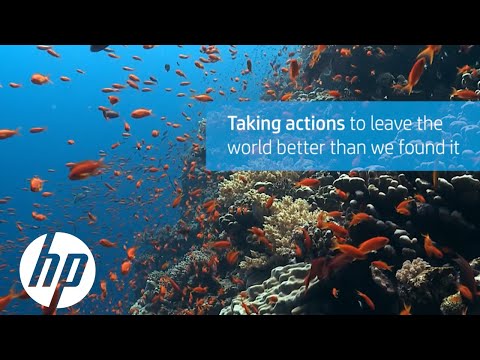
In 2024, HP received the North America Company of the Year award for circular economy performance.
Since 2019, the company has used more than 4bn pounds of reused, recycled and renewable materials in its products and packaging. It is currently at 43% circularity for its products and packaging, with aims to reach 75% by 2023.
HP takes ocean-bound plastics to create supply chain innovation, including the repurposing of discarded fishing nets into the HP EliteBook 1040 G11.
9. Caterpillar
Employees: ~112,900
CEO: Joe Creed
Founded: 1925
Caterpillar has a remanufacturing and rebuild business which provides its customers with cost savings at the same time as extending life cycles of products. The Cat Reman programmes returns end-of-life products to same-as-new conditions, reducing waste and minimising the need for raw materials.
Each returned part goes through careful cleaning and inspection. Parts which can be salvaged are then brought back to life, meeting latest performance specifications. It is good for the consumer, good for the business and good for the environment in one process.
8. Apple
Employees: ~164,000
CEO: Tim Cook
Founded: 1976
Apple uses only recycled rare earth elements in all of its magnets, as well as recycled cobalt in its batteries. From design to disassembly, Apple embeds recyclability and responsibility into its operations.
It designs its products with recycled and renewable materials, sources all manufacturing electricity from renewable energy, packages its products with lower emissions and maximises the materials it recovers from recycled products. Consumers can do their part by trading in used Apple products for money back or for recycling.
7. Signify
Employees: ~30,800
CEO: As Tempelman
Founded: 2016
Signify develops eco-friendly products which can be reprinted, refurbished, reused and recycled. It is committed to sending zero manufacturing waste to landfill, increasing its circular revenues to 32% by the end of 2025 and phasing out plastics from consumer packaging.
Signify products are already energy efficient, but they include exchangeable and upgradable parts and upgradable firmware. They are easily recyclable for items which cannot be reused. It also has circularity services and circularity systems to reduce excess.
6. Renault Group
Employees: ~98,000
CEO: François Provost
Founded: 1898
Renault Group part-owns The Future is NEUTRAL, a circular economy automotive company. It uses recycled materials and reused parts for its cars and batteries, developing a closed-loop circular economy. It was initiated by Renault Group to introduce circular solutions to every step of the automotive sector.
Renault Group is also applying circular economy principles to its electric vehicle batteries, offering repair solutions for batteries which fail during their automotive life and as well as end-of-life recycling.
5. Dell Technologies
Employees: ~120,000
CEO: Michael S. Dell
Founded: 1984

Since 2007, Dell has recovered more than 1.3bn kg of used electronics as part of its circularity project. By 2030, the company aims for more than half of its products to be made from recycled, renewable or reduced carbon emissions material.
96.4% of Dell’s packaging is made from recycled or renewable sources, showing that it is embedding circularity across all of its supply chains. Dell also offers recovery and recycling services so customers can retire their old products and Dell can reuse materials.
4. Schneider Electric
Employees: ~160,000
CEO: Olivier Blum
Founded: 1836
Schneider Electric follows three key circularity principles: use better, use longer, use again. 32% of Schneider Electric products are made using recycled materials, with an aim of hitting 50% by the end of 2025. It uses machine learning and GenAI-driven maintenance in order to improve productivity and reduce resource consumption.
Through condition-based repairs, digital maintenance and equipment modernisation, Schneider Electric can extend asset life by up to 25%.
3. Cisco
Employees: ~90,400
CEO: Chuck Robbins
Founded: 1984
Cisco has worked hard to successfully integrate circular economy principles into all of its new products and packaging. In a multi-year effort, Cisco has implemented a reuse, repair and recycling model to keep materials in use for as long as possible.
It has been building efficient and resilient supply chains by rethinking product and packaging design from the start. By designing new products with circularity in mind, Cisco has been able to hit its 100% target for 2025.
2. Patagonia
Employees: ~3,600
CEO: Ryan Gellert
Founded: 1973
Patagonia has been championing circularity for more than 10 years, launching its Worn Wear programme in 2013. Customers who have tears or damaged items can clean and hand in their product and Patagonia will repair it for free.
This reduces consumption and ensures items stay in use for longer. Since its online launch in 2017, more than 130,000 used items have been kept in circulation through this scheme. Patagonia also has a trade-in program and a resale network.
Its circular supply chain provides its consumers with the opportunity to do their bit for the environment.
1. IKEA
Employees: ~219,000
CEO: Jesper Brodin
Founded: 1943
IKEA has circularity in its supply chain, with four main commitments which drive this sustainable measure. In 2024, the company repurchased more than 495,000 used IKEA products and resold them, through its Buyback Service. The company is working on innovations with its materials, such as increasing the use of renewable content in polyurethane foam for its mattresses and sofas.
IKEA is working towards an absolute decoupling of new, non-renewable material use and a significant increase in recycled and renewable materials within IKEA products.
By 2030, IKEA’s goal is for its products to be designed from the beginning with the intention of reusing, repairing, refurbishing and recycling them. It aims to achieve an average circular fulfilment score across its entire range of 90%, with at least half of its products scoring 100%.
Company portals







Executives
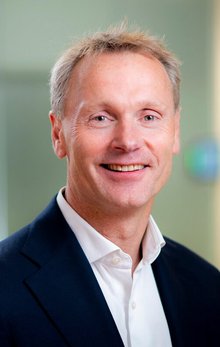
As Tempelman
CEO
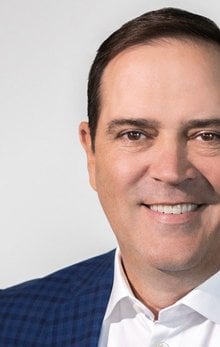
Chuck Robbins
Chair and CEO
Enrique Lores
President & CEO
Francois PROVOST
CEO
Jesper Brodin
Chair
Joe Creed
Chief Executive Officer
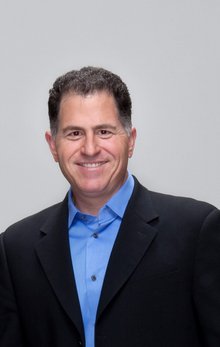
Michael Dell
CEO
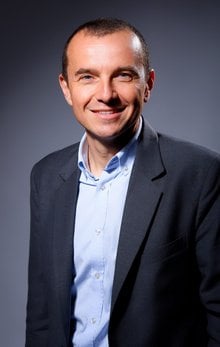
Olivier Blum
Chief Executive Officer
Ryan Gellert
CEO
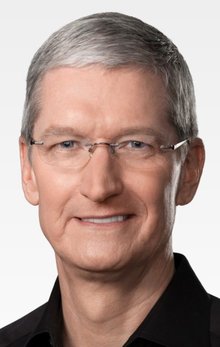
Tim Cook
Executive Chairman