
Ocado: Streamlining Supply Chains with AI Robotics
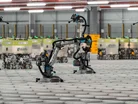
Ocado is taking a direct approach to one of the most complex problems in logistics; how to make grocery fulfilment more efficient.
While robotic arms have long been used in warehouses, traditional models struggle with the irregularity of grocery items. That’s why Ocado is deploying AI-powered systems to handle the picking and packing process, especially for fragile and unusually-shaped goods.
The automation tech runs on a system known as On-Grid Robotic Pick (OGRP), a solution combining computer vision, machine learning (ML) and smart sensors. These robotic arms aren’t just handling products—they’re learning from every pick.
By observing human demonstrations and applying machine learning principles, the robots adapt in real time to different types of groceries. Unlike static automation, this flexible, data-led intelligence is designed to perform in the changing environment of an online grocery warehouse.

Ocado is upfront about the benefits of this approach. In a company blog, the team says: “OGRP is already providing efficiency at scale for our partners. In 2024, we picked over 30 million items using OGRP and saw huge productivity gains with just a small number of arms installed.
"Over the next year, we anticipate scaling rapidly. Our experience operating this tech at scale in these environments will continue to differentiate us.”
- Increased picking accuracy
- 24/7 operation
- Handling of fragile and varied items
- Improved labour productivity
- Optimised packing density
- Reduced labour dependency
Grocery fulfilment puts AI to the test
Unlike sectors dealing with standardised items, grocery logistics demands the ability to deal with thousands of stock keeping units (SKUs). Each SKU may require a different technique for handling.
From frozen goods to ambient and chilled products, the robotic systems must navigate multiple storage conditions while still ensuring items aren’t damaged or packed inefficiently.
It’s not enough for a robot to simply move something from point A to point B. In grocery fulfilment, AI must handle everything from soft fruit to glass jars without causing waste or damage. That means robotic systems must learn to apply the right grip, judge size and weight visually and act with precision, even in a fast-paced environment.
Ocado tackles this by combining multiple strands of AI. Reinforcement learning allows robots to improve performance based on outcome data. Behaviour cloning lets them mimic the way humans work.
Together, these techniques allow each robot to operate independently while contributing its learnings to a wider fleet.
This approach means knowledge is shared across the system. If one robot learns how to handle a tricky item, that data can inform the actions of others. That speeds up deployment, reduces errors and helps Ocado maintain high throughput without expanding physical warehouse space.
Smart sensors and AI models fuel the transformation
The technology isn’t just mechanical. The robotic arms rely on advanced machine vision to identify objects, assess packaging and find the best grasp points. This is combined with sensor input to fine-tune grip pressure and movement. These decisions happen on the fly, driven by ML models trained on a vast range of grocery items.
Pressure sensors monitor resistance to help the arms decide how firmly to hold items, while motion sensors allow for smoother movement through the pick-and-pack process. Together, these tools reduce the risk of damage and ensure fragile items are handled carefully.
Ocado’s use of diffusion models, a type of AI often associated with generative systems, takes the process a step further.

Diffusion models generate outputs by learning patterns and gradually improving predictions. In logistics, that means these models can help the system generalise skills, apply them to new situations and increase overall efficiency.
Ocado states: “Our teams continue to leverage the latest breakthroughs in machine learning.
"To expand OGRP’s picking capabilities and understand how to generalise these skills beyond its current applications, we are exploring diffusion – a model which underpins the Gen AI revolution. This will allow us to tap into previously unattainable efficiency levels, as we continue redefining supply chains worldwide.”
From warehouse floor to global impact
The impact of this technology goes beyond the warehouse. Ocado’s robotic arms offer a clear example of how AI can handle practical, everyday tasks with a high degree of autonomy and learning.
Instead of simply replacing human labour, the system reassigns workers to other areas, extends picking hours and increases efficiency without increasing physical space.
This is not just automation—it’s smart supply chain adaptation. The company’s emphasis on fleet-wide learning helps reduce individual system failures and speeds up performance across international operations.
Ocado’s application of generative AI to physical logistics also sets an example for industries looking to integrate machine learning into operational infrastructure.
By solving the logistics challenges of online grocery delivery, Ocado provides a roadmap for applying intelligent automation to high-variation, high-demand sectors. Its mix of AI techniques, combined with a scalable hardware system, shows how supply chains can be made more resilient, adaptive and intelligent.
Explore the latest edition of Supply Chain Digital Magazine and be part of the conversation at our global conference series, Procurement & Supply Chain LIVE.
Discover all our upcoming events and secure your tickets today.
Supply Chain Digital is a BizClik brand.