Questions Linger Over Forced Labour in Solar Supply Chains
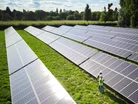
Legislation that prevents companies linked to forced labour – particularly in Chinese solar supply chains – from receiving public funds through Great British Energy could be weakened.
Despite concerns relating to slave labour in Chinese solar panel production, Labour MPs are being encouraged to do away with a clause that was inserted into the energy bill.
The move has sparked controversy over whether the UK should focus on ethical standards in its renewable supply chains or trade relations with China. There have been longstanding concerns that the solar panels likely to be purchased by Great British Energy may be produced using Uyghur forced labour—an allegation denied by the Chinese government.
Labour MP Alex Sobel wants to introduce an amendment that allows the independent anti-slavery commissioner Eleanor Lyons to assess whether a credible evidence threshold has been met.
The Business and Trade Select Committee stresses the need to make progress on the UK’s sustainable goals: “It is well evidenced that the renewable sector is heavily dependent on companies sourcing from areas like Xinjiang in China and that forced labour is endemic in the region through involuntary labour transfer schemes.
“The Great British Energy Bill provides an ideal vehicle to ensure that the green transition is not built on the back of contemporary slaves.”
The Great British Energy Bill
The Great British Energy Bill lays the framework for creating Great British Nuclear and Great British Energy. The bill is part of the UK’s government’s wider plan of reaching net-zero, long-term energy security and reducing consumer bills.
Ultimately, it will aid the UK in minimising reliance on fossil fuels by improving domestic clean energy generation and contributing to the net-zero emissions target.
Great British Nuclear and Great British Energy will facilitate, encourage and participate in:
- Reduction of greenhouse gas emissions from energy produced from fossil fuels
- Improvements in energy efficiency
- Production, distribution, storage and supply of clean energy
- Measures for ensuring the security of the supply of energy

The bill completed its passage through the House of Commons in October 2024 and was passed to the House of Lords, before a second reading took place in November. It will allow the Secretary of State to offer financial assistance to Great British Energy.
It is hoped the revised energy structure will improve energy independence, enhance clear energy development, create jobs and ensure UK billpayers, taxpayers and communities experience the benefits of clean energy.
However, some fear the potential removal of the forced labour close will damage the UK's progress in achieving green and clean energy.
The controversy
Sobel’s proposed amendments are sparking controversy due to the consequences it could have on UK-China relations and wider political tension in the Labour Party.
The amendment has the backing of Helena Kennedy, Labour peer and human rights barrister, and some Conservatives.
“The UK has been crystal clear that the UK will not tolerate slave-made goods and appreciates more must be done to root them out," Sobel explains. "Great British Energy provides us with the opportunity to not only pursue our green transition but bolster our national security, but only if we are to reduce our dependence on China.
“Ensuring our solar supply chains are free from slavery would also see the UK take a leading position on human rights, as a force for good.
“We have listened to the government arguments and tabled an amendment which would provide a practical solution to this issue, assuring we are aligned with actions in Europe and the US.”
The amendment comes at a time when the UK wants to rebuild trade ties with China, with Chancellor Rachel Reeves and Foreign Secretary David Lammy recently visiting China. Critics in government are concerned the move could damage access to Chinese-made solar panels, which play a key role in the UK’s green energy plans.
Opponents to the amendment fear it will damage international cooperation, whereas supporters stress it will help safeguard public funds from not supporting forced labour.
Former Conservative Exports Minister Lord Offord says: “The UK’s Modern Slavery Act 2015 requires companies to take responsibility for their supply chains, yet we know that modern slavery remains a serious issue in the global energy sector, particularly in the sourcing of solar panels, batteries and raw materials such as lithium and cobalt.
“This amendment does not create unnecessary bureaucracy or hinder investment; it simply ensures that taxpayers’ money does not fund exploitation.”
How can this be resolved?
A balanced approach that embraces ethical standards whilst securing key international relationships and energy goals is vital to tackle this controversy.
If Sobel's amendment is implemented with legal clarity and a clear and transparent process for finding ‘credible evidence’, it can help avoid arbitrary decisions that would damage international ties.
Introducing a transition period for companies to demonstrate forced labour-free supply chains would give suppliers time to adjust, while allowing the UK to remain committed to its values without disrupting the immediate rollout of Great British Energy.
Such a period would also allow companies to adjust with ease and begin to showcase their labour-free supply chains to prevent disruption to the rollout of Great British Energy.
Firms can enhance energy security while addressing forced labour issues by supporting British firms to diversity solar and battery supply sources to minimise dependence on high-risk regions.
The UK can maintain trade partnerships and progress towards a sustainable energy future by integrating strategic diplomacy with legislative rigour and practical timelines.
The wider impact on supply chains
The controversy over forced labour clauses in the Great British Energy Bill points to greater pressure on UK supply chains to maintain ethical standards.
If the amendment is passed, companies will need to prove there is no forced labour along their supply chains.
While meaning companies face greater compliance demand and transparency measures, it could also disrupt access to low-cost Chinese components.
This may help to enhance ethical standards and supply chain resilience in the long term.
Ultimately, the dispute points to rising tension between green energy goals, human rights and international diplomacy.
Explore the latest edition of Supply Chain Digital Magazine and be part of the conversation at our global conference series, Procurement & Supply Chain LIVE.
Discover all our upcoming events and secure your tickets today.
Supply Chain Digital is a BizClik brand.