
Inside Formula 1’s Net Zero Logistics Gear Shift
Motorsport operates at a relentless pace, where deadlines come as fast as the cars themselves.
In Formula 1, the next race is always just around the corner, leaving little room for delay. This urgency extends beyond the track as the sport pushes towards its ambitious sustainability goals.
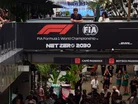
With its latest 2024 Impact Update, Formula 1 confirms it remains on course to achieve net zero carbon emissions by 2030.
Ellen Jones, Head of ESG at Formula 1, highlights the progress made: “Innovation and community drove Formula 1’s work in 2024. We are thrilled to outline our progress and continued work in this space.”
“Formula 1 as a sport is uniquely positioned to take action through our global reach and technological leadership.”
Sustainable fuels driving change
F1 cars currently use E10 fuel, which consists of 10% renewable ethanol and 90% traditional fuel.
However, a major shift is planned for 2026, when all F1 cars will switch to 100% sustainable fuel. This fuel is designed so that the amount of carbon emitted during its use matches the amount captured during its production, making it effectively carbon-neutral.
To develop this next-generation fuel, F1 has worked with Aramco and the FIA, testing more than 39 different blends. The transition is already underway in junior categories—F2 and F3 cars ran on 55% Aramco advanced sustainable fuel in 2024, with a full switch to 100% sustainable fuel set for 2025.
Additionally, all FIA medical and safety cars operated on 40% sustainable fuel throughout 2024.
Sustainability efforts also extend to tyres. Throughout the 2024 season, all F1 cars used FSC-approved Pirelli tyres, ensuring they met strict forest sustainability standards.

Cutting emissions in F1’s global logistics
While F1 cars are at the heart of the sport, they account for just 1% of its total carbon footprint. The real challenge lies in logistics—the transport of equipment, personnel and infrastructure across continents for a 24-race season.
Recognising this, F1 has invested heavily in alternative fuels to reduce emissions from air and road transport.
In 2024, it worked with DHL and Qatar Airways to increase the use of sustainable aviation fuel (SAF), cutting aviation-related emissions by more than 8,000 tCO₂e—equivalent to a 19% reduction compared to traditional jet fuel.
On the ground, F1 has begun testing low-carbon energy generation systems. These were deployed at the Red Bull Ring, the Hungarian Grand Prix and the Italian Grand Prix in Monza.
From 2025, this initiative will expand across all European races, reducing emissions by more than 90% through the use of hydrotreated vegetable oil (HVO), biofuels, solar panels and battery storage systems.
Smarter race scheduling for lower emissions
Shipping tonnes of equipment around the world for each Grand Prix has a significant environmental impact. To address this, F1 has restructured its race calendar to reduce unnecessary travel and optimise logistics.
Stefano Domenicali, President and CEO of Formula 1, explains: “The change will make the future flow of our calendar not only more sustainable, but logistically more sensible for our teams and personnel.
"Our net zero by 2030 commitment continues to be a priority for us as a sport and it is thanks to changes like this that we are on track to hitting our goal.”
For the 2024 season, the Japanese Grand Prix moves from September to April to align with the Asia-Pacific races, while Azerbaijan’s race is now closer to Singapore’s to streamline travel between events.
The Qatar Grand Prix shifts to the penultimate slot in the season to sit alongside Abu Dhabi, reducing long-haul flights.
Looking ahead to 2026, further refinements will see the Canadian Grand Prix take place earlier in the year, while Monaco’s race moves to the first full weekend in June. This change consolidates the European leg of the season, eliminating an additional transatlantic crossing.
Explore the latest edition of Supply Chain Digital Magazine and be part of the conversation at our global conference series, Procurement & Supply Chain LIVE.
Discover all our upcoming events and secure your tickets today.
Supply Chain Digital is a BizClik brand.
