How Amazon and Neste are Making Air Freight Sustainable
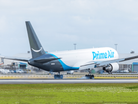
Amazon is stepping up efforts to cut emissions across its air operations with a new sustainable fuel deal with Neste.
The company has agreed to purchase 7,500 tonnes of sustainable aviation fuel (SAF), which will be used at Amazon Air cargo operations in California.
It’s part of Amazon’s wider climate plan to reach net zero carbon emissions by 2040, but the move is also about strengthening the supply chain needed to deliver that target.

Securing fuel supply for lower carbon air freight
Neste, one of the main producers of renewable fuel globally, will deliver the SAF to two key West Coast airports: San Francisco International Airport (SFO) and Ontario International Airport (ONT), with Amazon becoming the first company to use SAF at ONT.
The deliveries build on a partnership first launched four years ago, when Neste supplied SAF to Amazon at Germany’s Cologne Bonn Airport.
Neste’s SAF is made from renewable waste materials and can cut greenhouse gas emissions (GHG) by up to 80% over its lifecycle when used in its purest form. When blended with conventional jet fuel - as Amazon plans to do - it still reduces emissions by up to 50%.
This mix of renewable and traditional fuels reflects how most SAF is currently used in aviation due to infrastructure and engine certification limits.
Neste’s supply into California leans heavily on local logistics. SAF is pumped directly to aircraft at SFO through existing pipelines.
At ONT, it’s delivered by Diesel Direct trucks running on renewable diesel. This layered supply approach offers both flexibility and reliability, which is vital as demand for SAF grows.
Carl Nyberg, Senior Vice President of Commercial Renewable Products at Neste, says the agreement with Amazon is not just about volume but visibility: “We are excited to provide SAF to Amazon Air at two major airports in California.
"This milestone sends a positive signal that SAF is available to airlines and cargo operators, like Amazon Air at these airports.”
Building a practical green fuel network
Neste’s current production capacity stands at 1.5 million tonnes annually, with plans to expand that to 2.2 million tonnes by 2027. However, SAF still makes up only a small slice of the global aviation fuel market.
Scaling up will depend on partnerships like this one and investments in infrastructure that allow the fuel to flow efficiently.
The logistics behind SAF delivery are complex and not always visible to consumers. At SFO, the airport developed the country’s first dedicated SAF pipeline system back in 2020.
That setup allows SAF to be mixed, stored and moved into aircraft using existing facilities, avoiding the need for carbon-heavy ground transport.
The airport also formed the Sustainable Aviation Fuel Stakeholders Working Group in 2018, uniting fuel suppliers, airlines and regulators to coordinate the rollout of SAF.
ONT doesn’t have the same infrastructure yet, but hosting its first SAF deployment could be the first step.
With Amazon and Neste showing that the fuel can be delivered and used there, the airport is now positioned to attract further investment in sustainable aviation systems.
That could be critical for smaller airports trying to remain relevant in a low-carbon future.
Carl points to the broader benefits: “Our supply chain solution for these California gateways builds on our existing SAF supply capabilities on the West Coast in the US and leverages our partnership with Diesel Direct to transport SAF by trucks running on renewable diesel.”
He adds: “This demonstrates how renewable fuels can help our customers easily reduce greenhouse gas emissions across different transportation modes.”
Amazon Air sets the pace in air cargo decarbonisation
As one of the largest air cargo operators in the US, Amazon Air’s use of SAF at SFO and ONT marks a shift in how logistics companies approach aviation emissions.
Air freight is a tough sector to decarbonise, and SAF is one of the few practical solutions currently available.
By securing SAF through a trusted partner and integrating delivery into existing supply networks, Amazon avoids disruption while pushing its environmental agenda forward.
The company has committed to reaching net zero carbon across all its operations by 2040, a decade ahead of many global climate goals. Switching to lower-emission fuels for aircraft is one of the most visible and challenging parts of that mission.
The use of SAF also places pressure on other logistics firms and airport operators to act.
As more businesses face regulations on emissions and sustainability reporting, the role of supply chain decisions becomes clearer.
From fuel production to airport pipelines, every link in the chain counts.
And Amazon’s actions send a clear message to the industry: sustainable options aren’t coming – they’re already here.
Explore the latest edition of Supply Chain Digital Magazine and be part of the conversation at our global conference series, Procurement & Supply Chain LIVE.
Discover all our upcoming events and secure your tickets today.
Supply Chain Digital is a BizClik brand