
Girteka's Path to Decarbonisation in Transport and Logistics
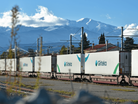
Intermodal provides businesses with reliable, low-emission transportation alternatives – even for temperature-sensitive shipments.
Girteka is among those enhancing the sustainability of logistics by integrating rail and road transport, optimising long-distance deliveries across its ever-expanding European network, which includes Spain, Italy, France and Germany.
In 2024, the Lithuanian company's use of intermodal solutions rose by 35% compared to 2023, handling more than 24,000 full truckloads.
Growing demand for intermodal
Demand for intermodal transport continued to rise in 2024, reflecting the logistics sector’s commitment to sustainability.
Industries such as food and beverages, cosmetics and pharmaceuticals are increasingly turning to intermodal to cut emissions while ensuring product integrity and precise deliveries.
Girteka’s advanced digital tools, such as real-time cargo visibility and remote trailer monitoring, help maintain delivery quality. The combination of rail transport and HVO (Hydrotreated Vegetable Oil) fuel for first- and last-mile journeys demonstrates the potential of sustainable solutions.
This approach reduces CO₂ emissions by up to 90% without compromising efficiency or reliability.

Measurable carbon savings
Girteka's intermodal operations deliver tangible reductions in emissions. In 2024, the company eliminated more than 23.6 million kg of CO₂, underscoring the effectiveness of intermodal transport in achieving sustainability targets.
By covering long distances with trains capable of carrying up to 50 trailers at once, businesses benefit from both environmental and operational efficiencies. Girteka acts as a key facilitator, coordinating with customers, intermodal providers and other supply chain stakeholders to maximise sustainability.
With digital tools tracking emissions for each journey, customers receive accurate reports on their carbon footprint. This level of precision surpasses industry averages, enabling businesses to address their Scope 3 emissions — those generated by supply chain activities — with greater accuracy and confidence.
Collaborative action for decarbonisation
Decarbonising supply chains requires collective effort. Girteka, in partnership with customers and intermodal providers, works to optimise transport networks by leveraging its expertise in large-scale logistics.
It's an approach that allows businesses to analyse supply chain structures and implement the most effective sustainable solutions based on individual objectives.
EU policies, such as the 'Greener Freight Transport Package', aim to remove infrastructure and regulatory barriers, further promoting intermodal transport. Meanwhile, technologies like the Internet of Things (IoT) and real-time tracking simplify integration, making sustainable logistics more accessible.
With the right support, companies can redesign their supply chains to meet both environmental and business goals.
"Today, we see the real benefits of collaboration in logistics," says Larisa Senkevičienė, Intermodal Business Development Manager at Girteka.
"By co-creating sustainable solutions, we can reduce emissions significantly while maintaining high-quality, on-time delivery."
Scaling sustainable practices
As 2025 progresses, Girteka continues to invest in digital tools and expand intermodal operations.
Strengthening partnerships with rail providers and adopting alternative fuels, such as HVO100 or battery-electric vehicles (BEVs) for first- and last-mile transport, are key to achieving full supply chain decarbonisation.
The company's success in 2024 proves that sustainable logistics is not only possible but also effective. By combining innovation, collaboration, and responsibility, Girteka reduces emissions while maintaining exceptional service standards.
"Sustainable logistics is no longer just a possibility – it’s a reality that benefits businesses, the planet and future generations," Larisa concludes.
"Intermodal solutions showcase that by working together, the logistics industry can meet environmental challenges head-on, shaping a greener, more efficient future."
Explore the latest edition of Supply Chain Digital and be part of the conversation at our global conference series, Procurement & Supply Chain LIVE.
Discover all our upcoming events and secure your tickets today.
Supply Chain Digital is a BizClik brand.