Revolutionising ELV Plastics Recycling for a Circular Future
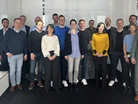
The Global Impact Coalition (GIC), a CEO-led platform originally founded by the World Economic Forum, has launched the Automotive Plastics Circularity pilot – the first initiative of its kind. Seven major players in the chemical and recycling industries are involved: BASF, Covestro, LyondellBasell, Mitsubishi Chemical Group, SABIC, SUEZ and Syensqo.
The project focuses on tackling a key sustainability issue in the automotive supply chain: the recycling of plastics from End-of-Life Vehicles (ELVs). It comes amid growing pressure from regulators and industry leaders to develop more sustainable plastic solutions.
Yet, progress has been slow. The EU has introduced regulations like the Packaging and Packaging Waste Regulation (PPWR) and the Single-Use Plastics (SUP) Directive, but broader global agreements, such as the 2024 Global Plastics Treaty, have stalled.
In the meantime, demand for plastics remains high, with global thermoplastics production set to hit 445.25m metric tons this year.
While alternative materials, including bioplastics, are often discussed, they lack the cost efficiency, durability and scalability of traditional plastics. This leaves recycling as the most viable option, but in the automotive sector, it is far from straightforward.

The challenges of ELV plastics recycling
Recycling rates for ELVs in the EU stand at 89.1%, yet only 19% of plastics from these vehicles are recycled.
The complexity of modern automotive design plays a significant role in this low rate. Vehicles contain a vast array of plastic types, often blended with adhesives, metals and glass fibres, making sorting and processing difficult. Over time, exposure to chemicals, UV radiation and heat degrades many of these plastics, further limiting their recyclability.
Another major challenge is the presence of hazardous substances such as heavy metals and flame retardants. These materials require specialised treatment to ensure safe handling and environmental protection. Additionally, a lack of standardised labelling for automotive plastics complicates the sorting process, making recycling less economically viable.
As a result, much of this plastic waste ends up in landfill or incineration, despite its potential to be repurposed.
"Each year, over 800m metric tons of ELV plastics in the EU alone are incinerated or landfilled, resulting in significant environmental and economic losses," says Charlie Tan, CEO of the Global Impact Coalition.
"This pilot is a key first step to transform this waste into valuable resources, enabling the automotive industry to significantly increase the rate of closed-loop recycled plastics. This collaboration represents a turning point for the industry.
“Recycling ELV plastics has long been a challenge, with less than 20% of these materials recycled today. By uniting players from across the automotive value chain—from auto makers to dismantlers, sorters, recyclers and the chemical industry—we are connecting the links to close the loop on plastics.”
The automotive plastics circularity pilot
The GIC’s pilot, set to take place in the Netherlands and Germany, aims to overcome plastics challenges by testing new methods of dismantling, sorting and recycling ELV plastics under real-world conditions.
The process begins with dismantling and shredding plastics from 100 ELVs, which are then categorised into 10 polymer types and automotive parts. These materials are sent to participating companies for recycling using their specialised technologies.
To ensure efficiency, the project partners have engaged dismantlers, shredders and sorting facilities to establish a connected recycling network.
Companies like BASF are bringing their own innovations to the table. Its ChemCycling project, for example, focuses on converting plastic waste into new raw materials.
If successful, this pilot could shape future sustainability regulations within the EU and beyond, proving that large-scale, closed-loop recycling is both viable and economically feasible.
“The goal of this pilot is to move beyond theoretical discussions and test real-world solutions for ELV plastics recycling," adds Dr Lars Kissau, President, Net Zero Accelerator at BASF.
"By focusing on advanced sorting and recycling technologies, we aim to prove that high-quality, closed-loop systems are not only possible but scalable for global impact."
Towards a circular automotive supply chain
The Automotive Plastics Circularity project aligns with the EU’s proposed ELV regulations, which set a target for 25% of plastics in new cars to be recycled by 2030, with at least 25% of that coming from closed-loop recycling.
The pilot is a direct response to these targets, aiming to reduce reliance on landfilling and incineration while demonstrating the economic and environmental benefits of a circular model.
By improving sorting and recycling processes, the initiative seeks to create a sustainable business model that can be expanded worldwide. The pilot will first scale up within Europe before extending to other key markets for ELV plastics recycling and production.
The GIC is encouraging more automotive and recycling industry players to join the effort, reinforcing the need for a collaborative approach.
“Automotive sustainability hinges on addressing materials that have long been overlooked,” adds Yves Rannou, Co-CEO of SUEZ and COO at Recycling & Recovery.
"This pilot is the beginning of a transformative journey for the entire automotive and plastics value chain.”
Explore the latest edition of Supply Chain Digital Magazine and be part of the conversation at our global conference series, Procurement & Supply Chain LIVE.
Discover all our upcoming events and secure your tickets today.
Supply Chain Digital is a BizClik brand.