FedEx: Building on Circular Supply Chains in Net Zero Push
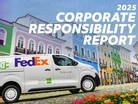
FedEx is pressing ahead with its net-zero plans, setting the pace on fleet electrification and logistics innovation while scaling greener operations across its vast supply chain.
Its 2025 Corporate Responsibility Report details how the company is cutting emissions, investing in new fuels and improving efficiency across both air and ground networks, all while pushing for greater circularity in packaging and delivery.
FedEx’s global network includes more than 100,000 suppliers and supports around 730,000 jobs. Connecting more than 220 countries and territories, the company links markets that together generate more than 99% of global GDP. That scale brings complexity - and a large carbon footprint - but FedEx is working to change how it moves goods around the world by cutting emissions and embedding sustainability into its core logistics services.
Targeting carbon across the chain
The company is reducing carbon emissions in several areas of its operations, especially through its climate strategy, which covers direct emissions (Scope 1), indirect emissions from purchased energy (Scope 2) and selected indirect emissions along the supply chain (Scope 3).
In the financial year 2024 (FY24), FedEx reduced Scope 1 emissions by 6.1% year-on-year. This includes a 4.9% cut in jet fuel emissions from its aircraft, thanks to fleet modernisation and better efficiency.
Since 2005, aviation emissions intensity (the amount of emissions per unit of activity) has dropped 31% and the company is aiming for a 40% reduction by 2034.
Overall Scope 1 and 2 emissions intensity now stands at 179.50 metric tons of CO₂ equivalent per million USD in revenue, down 58% from FY09 levels, despite daily package volumes rising by an average of 121%.
FedEx’s fuel-saving programmes are also delivering financial returns. Conservation efforts and aircraft upgrades saved approximately 140 million gallons of jet fuel in FY24, which the company estimates has avoided around US$400m in fuel costs.
A key part of the emissions-reduction strategy is the shift to sustainable aviation fuel (SAF). FedEx plans to have 30% of its jet fuel come from SAF blends by 2030.
As Richard Smith, Chief Operating Officer, and Fedex Airline CEO, explains: “As the world’s preeminent express transportation company, our initial US deployment of this fuel advances our sustainability goals and bolsters the aviation industry’s efforts to source and use more SAF.”
But less than 1% of jet fuel produced globally in 2024 was SAF, highlighting the challenges of scaling up.
To address unavoidable emissions, FedEx has invested US$100m in the Yale Center for Natural Carbon Capture, supporting research into long-term carbon removal, including enhanced weathering—a method using basalt to sequester CO₂ while also improving soil quality.
The company has also expanded its emissions reporting to include Scope 3 categories 3, 4 and 6, which refer to fuel and energy-related activities, upstream transportation, distribution and business travel. FedEx has committed to science-based targets, pending validation.
Electric fleets and smart infrastructure
FedEx operates more than 200,000 vehicles, covering pickup and delivery (PUD), long-haul and off-road use. From a 2005 baseline, vehicle fuel efficiency is now 40% better. While a target of 50% improvement by 2025 is unlikely due to restructuring under the Network 2.0 initiative, progress on fleet electrification continues.
In FY24, the company deployed more than 8,000 electric vehicles, including e-cargo bikes and trikes in Canada, the UK and Taiwan. After running pilots, FedEx placed an order for 150 Shyft Group Blue Arc electric trucks with larger cargo space to better support logistics needs.
The aim is for 50% of new PUD vehicle purchases to be electric by 2025, moving to 100% by 2030. By 2040, the full PUD fleet, including contractors’ vehicles, is expected to be electric.
To support this transition, FedEx is expanding its charging infrastructure and working with regulators and utilities to scale grid capacity. It’s invested more than US$2.5m in RMI’s GridUp tool, which helps energy providers forecast demand from electric transport.
Karen Blanks Ellis, Chief Sustainability Officer and Vice President of Environmental Affairs, FedEx, says: “Our aviation network represents the largest amount of FedEx fuel use globally and, as a result, is our biggest opportunity to drive down emissions.
"As we work toward our goal of carbon-neural operations by 2040, we need the SAF market to continue to grow to meet industry demand.”
Facilities contribute around 6% of FedEx’s emissions. The company wants to source all facility electricity from renewables by 2040, targeting 500 GWh by 2028 and 1,300 GWh by 2033. In FY24, 31 GWh of solar power came from 34 sites, with 8 MW more solar capacity scheduled for FY25. Energy intensity across operations dropped to 3.19 terajoules per million USD in revenue.
On the packaging front, a mesh bag project at FedEx Ground hubs prevented 50 million plastic bags from ending up in landfill and saved US$20.4m.
Packaging and customer-focused circular tools
Handling more than 17 million shipments each day, FedEx is using that scale to promote more sustainable practices among customers.
Its FedEx Sustainability Insights tool, now live in more than 100 markets, gives businesses estimated CO₂e emissions data for their shipments. More than 13,000 customers have accessed the platform since July 2023, helping with Scope 3 emissions planning and reporting.
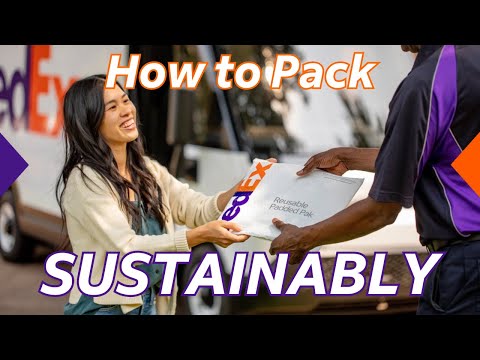
FedEx also prioritises circularity in its own packaging. In FY24, 74% of packaging materials were sourced from third-party certified sustainable suppliers. Reusable solutions like the Reusable Padded Pak and Reusable Pak are available, and FedEx continues to work with the Circular Supply Chain Coalition. This initiative backs the recovery and reuse of rare earth elements, builds remanufacturing centres and supports high-skill job creation in local communities.
To help customers cut emissions and delivery failures, the fdx ecommerce platform uses AI to reroute packages, optimise returns and predict delivery times.
Explore the latest edition of Supply Chain Digital Magazine and be part of the conversation at our global conference series, Procurement & Supply Chain LIVE.
Discover all our upcoming events and secure your tickets today.
Supply Chain Digital is a BizClik brand.