ERM: Supply Chain Pressures Shift Sustainability Approaches
From tariffs to transport delays, the world’s supply chains are under pressure.
The first quarter of 2025 is testing how companies balance sustainability with resilience, as global trade continues to face disruption.
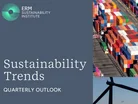
In its latest 'Sustainability Trends Quarterly Outlook,' environmental consultancy ERM explores what this means for long-term business planning.
Organisations from Apple to Rio Tinto are adapting in real time, reflecting the reality that sustainability is core to managing modern supply networks.

Supply chain disruption pushes firms to adapt
Trade friction is biting hard across sectors. Widening US tariffs and countermeasures from China, Canada and the EU are driving up input costs and delaying production timelines. For many companies, this turbulence is forcing tough decisions about where to make and move goods.
Apple and Danish pharmaceutical group Novo Nordisk are actively diversifying where they manufacture, investing more in domestic capacity to reduce exposure to overseas risks. Walmart, meanwhile, is reacting by pressuring suppliers to cut prices, despite ongoing regulatory and logistical complications.
Energy markets are also feeling the squeeze. The report highlights that more than 90% of US lithium-ion battery imports come from China. This means the solar and storage sectors are particularly vulnerable to tariff impacts, threatening supply bottlenecks at a time when demand for clean energy is increasing.
ERM is urging businesses to account for these risks while still pushing ahead with long-term energy transition plans. This includes not just securing supply but navigating geopolitical risk and rising protectionism.
As Gerard Spans, Global Head of Digital Services at ERM, puts it: “Corporate decarbonisation efforts have shifted from setting long-term goals to finding ways to accelerate action to not only meet those ambitious targets, but to unlock measurable business value.”
Financial sector recalibrates its climate stance
Supply chain pressures are mirrored by shifts in sustainable finance. Banks and asset managers are facing political pressure and regulatory uncertainty, which has led some major players to exit global sustainability coalitions like the Net-Zero Banking Alliance and Net-Zero Asset Managers Initiative.
Still, financial activity linked to environmental outcomes is not disappearing. Institutions like BBVA and Standard Chartered are announcing new multi-billion dollar climate finance plans. Others are moving in more targeted directions. Goldman Sachs’ Biodiversity Bond and BNP Paribas’ venture fund focused on nature highlight how capital is following more specific environmental aims.
The report also singles out partnerships, including ERM’s work with Salesforce to expand Net Zero Cloud services.
According to Gerard: “Working together, ERM and Salesforce will enable companies to integrate sustainability into their operations, helping them to enhance business resilience and drive competitive advantage.”
At the same time, cities and regulators are introducing stricter climate rules for investors. While this increases compliance costs, it also pushes firms to embed sustainability into investment decisions – especially when climate impacts are already disrupting assets and infrastructure.
Climate goals shift as operations meet reality
As businesses adjust their supply chains and finances, many are rethinking climate goals. ERM finds that companies including Shell, IKEA and Wells Fargo are slowing or scaling back climate commitments, citing operational complexity and unforeseen supply chain barriers.
Others are doubling down. TotalEnergies, the LEGO Group and Rio Tinto are maintaining or even strengthening their targets, with an eye on economic resilience and future regulatory expectations. This divergence shows how climate strategy is becoming more tailored to operational context.
"Transforming environmental liabilities and legacy assets is fundamental to the sustainability goals of many organisations," says Susan Angyal, ERM’s Regional CEO for North America.
Her point reflects a broader trend: organisations are focusing less on pledges and more on execution, especially where legacy infrastructure or supply chains are concerned.
Walmart offers one example. By selling compost made from its own food waste, it not only cuts disposal costs but creates a new product. Snack company KIND is using subsurface irrigation to save water, increasing efficiency while delivering environmental benefit. These kinds of initiatives link climate action directly to operational improvements.
In energy, some businesses are looking to nuclear power as a more stable source to meet demand. Policy is also helping shape the response, with the EU’s Omnibus and Clean Industrial Deal creating clearer compliance paths and encouraging clean tech investment.
Susan explains how this shift plays out in practice: “Bringing together the expertise of ERM and NewFields Environmental Division will help clients to tackle an increasingly complex set of environmental challenges while harnessing the growing importance of environmental data for decision-making and value creation.”
Businesses in 2025 are making strategic, sometimes difficult changes, but the direction is clear: sustainability is now inseparable from resilience.
Supply chain pressures may be intensifying, but they are also accelerating the integration of environmental goals into the heart of corporate strategy.
Explore the latest edition of Supply Chain Digital Magazine and be part of the conversation at our global conference series, Procurement & Supply Chain LIVE.
Discover all our upcoming events and secure your tickets today.
Supply Chain Digital is a BizClik brand.