How UK Backed £14.2bn Sizewell C will Boost Supply Chains
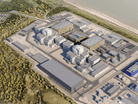
The UK Government is investing £14.2bn (US$16.4bn) in a new nuclear power station in Suffolk, with Sizewell C now given the green light.
The major energy project is designed to support Britain’s clean energy goals and revive the country’s ageing nuclear infrastructure.
Beyond power generation, it promises to deliver thousands of new jobs and strengthen British supply chains with a focus on domestic businesses.

Sizewell C is a 3,200 megawatt electrical (MWe) power station made up of two reactors. It aims to meet future electricity demand through low-carbon sources, with nuclear playing a central role.
Construction began in January 2024, with the total build expected to cost up to £30bn (US$40.5bn).
This project goes beyond energy output as the government’s backing will stimulate a domestic supply chain, supporting 3,500 UK-based suppliers.
Already, the company behind Sizewell C has signed £330m (US$445.1m) worth of contracts with local firms. About 70% of the work is predicted to be awarded to British businesses across areas such as construction, welding and hospitality.
At its construction peak, the site will provide employment for 10,000 people, including 1,500 apprenticeships. Nuclear roles in the UK pay above the national average, and the government says it will continue working closely with trade unions such as GMB, Unite and Prospect.
Julia Pyke and Nigel Cann, joint Managing Directors of Sizewell C, say this phase "marks the start of an exciting new chapter for Sizewell C, the UK’s first British-owned nuclear power plant in more than 30 years".
They add: "It’s a privilege to be leading a project that will create over 10,000 jobs, secure Britain’s energy future and revitalise the UK’s nuclear industry."
An industry returning to scale
Although the UK was once a global leader in nuclear technology, having launched the world’s first commercial nuclear station in 1956, no new plant has opened since 1995. All existing reactors apart from Sizewell B are set to retire by the early 2030s.
Sizewell C is one of eight sites initially proposed for nuclear expansion in 2009 by then Energy Secretary Ed Miliband. Now back in government as Energy Secretary, he says: "We will not accept the status quo of failing to invest in the future and energy insecurity for our country.
"We need new nuclear to deliver a golden age of clean energy abundance, because that is the only way to protect family finances, take back control of our energy and tackle the climate crisis. This is the government’s clean energy mission in action – investing in lower bills and good jobs for energy security."
The government's wider plans include developing small modular reactors (SMRs), with Great British Nuclear preparing to announce winners of its SMR competition. These compact nuclear reactors are being positioned as a cheaper and quicker option for nuclear energy, and the UK aims to be among the first in Europe to establish an SMR fleet.
Clean energy, secure jobs
The push towards nuclear power forms part of the UK’s broader plan to reach net zero carbon emissions by 2050, with a cleaner energy mix in place by 2030.
Nuclear power produces electricity with near-zero direct CO2 emissions and delivers consistent output, unlike wind or solar which depend on weather.
Compared to renewables, nuclear also uses far less land and up to 90% of waste can be recycled, although it still generates highly radioactive by-products and depends on finite uranium supplies.
Cooling reactors also requires large quantities of water, and uranium mining can release harmful materials such as arsenic and radon. Still, advocates say nuclear offers energy security and resilience.
Jeremy Stain, Nuclear Business Leader at Arup, highlights the international momentum: "Other countries are moving quickly, and many are already actively pursuing advanced nuclear technologies as part of their decarbonisation strategy, so it is positive to see the UK aiming to match that ambition."
The government's ambitions extend to nuclear fusion, with £2.5bn (US$3.3bn) earmarked for research and development over five years. This includes investment in the STEP (Spherical Tokamak for Energy Production) programme in Nottinghamshire.
Chancellor of the Exchequer Rachel Reeves says: "We are once again investing in Britain's renewal, with the biggest nuclear building programme in a generation. This landmark decision is our Plan for Change in action.
"We are creating thousands of jobs, kickstarting economic growth and putting more money in people’s pockets."
Tom Greatrex, Chief Executive of the Nuclear Industry Association, agrees: "This new nuclear programme will give the country the jobs, the economic growth and the energy security we need to ensure a secure and reliable power supply for the future.
"This announcement shows the government is serious about new nuclear, and realising the economic benefits that come with it, and will be welcomed in communities the length and breadth of Britain."
Explore the latest edition of Supply Chain Digital Magazine and be part of the conversation at our global conference series, Procurement & Supply Chain LIVE.
Discover all our upcoming events and secure your tickets today.
Supply Chain Digital is a BizClik brand.