McDonald's: How Green Can Fast Food Supply Chains Really Be?
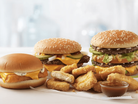
The golden arches are impossible to miss, but what about McDonald’s green credentials?
The world’s largest fast food chain is making a concerted push toward sustainability, but with its colossal supply chains stretching across continents, can it ever really become a sustainable business?
"We’ve not cracked it yet," answers Beth Hart, Chief Sustainability Officer of McDonald’s, speaking about the company’s relationship with regenerative agriculture and sustainability.
"We've got to distil it down to some very practical measures," she adds. "And I think it's going to take all of us to do that effectively."
Shifting supply chains for a greener future
McDonald’s has been rethinking its supply chain practices, which is no small task for a company serving millions daily.
The chain’s approach to animal welfare shows how it is trying to meet changing consumer expectations. By the end of 2023, McDonald’s achieved its target of sourcing 100% cage-free eggs in the US two years ahead of schedule.
"We believe that serving safe, quality food requires sourcing animals that are properly cared for throughout their lives," the company explains about this transition.
Yet while cage-free sounds better, critics argue it does not necessarily equate to cruelty-free. This distinction highlights the complexity McDonald’s faces across its entire supply chain.
Sourcing ethical ingredients for such a large volume of products involves compromises that smaller businesses might avoid. The sheer scale of McDonald’s operations means every change is magnified and scrutinised.
Animal products aside, McDonald’s is also trying to clean up its sourcing more broadly. From packaging made of recycled or certified materials to aiming for renewable energy in its supply network, the company is pressing ahead.
However, with thousands of suppliers involved, ensuring consistent sustainability standards remains a towering challenge.

Reinventing restaurants with circular thinking
In France, McDonald’s has launched an experiment it calls a "circular restaurant design."
The concept focuses on reusing, repurposing and recycling building materials to lower waste and carbon emissions.
Instead of starting from scratch, McDonald’s France salvages decor, furniture and construction elements from existing restaurants, aiming to "close the loop" on construction waste.
This model offers an interesting blueprint for how fast food chains might reduce their physical footprint.
However, any gains from recycling must be weighed against the chain’s continued expansion, with thousands of new outlets popping up worldwide each year. A new restaurant, even built from old bricks, still consumes resources and energy.
Efforts to reimagine the physical space do matter, but critics argue that truly sustainable building practices must include a serious conversation about limiting growth. The question lingers: Can a company keep expanding and still call itself sustainable?
Community efforts and the sustainability paradox
Beyond large-scale changes, McDonald’s has introduced environmental initiatives at the community level.
In the UK and Norway, local teams have organised "litter patrols" around restaurants, partnering with environmental groups to clean up public spaces. The idea is straightforward: take responsibility for the waste created near McDonald's outlets.
In the US, McDonald’s introduced new crew uniforms made from recycled polyester derived from plastic bottles.
"These uniforms are made in collaboration with designers who understand the importance of durability, comfort and a little flair," McDonald’s says.
It is a small but highly visible effort to reduce plastic waste and show staff and customers that the brand is serious about its green promises.
One major move came in 2024 when the company replaced its plastic-lid McFlurry cups with lid-free versions across the US, aiming to slash plastic use even further.
It ties into McDonald's broader pledge that "McDonald's is committed to making 100% of its primary guest packaging come from renewable, recycled or certified sources by the end of 2025." With the deadline less than a year away, the pressure is on to meet this ambitious goal.
Still, the larger issue remains the so-called fast food sustainability paradox. Serving millions of low-cost meals at lightning speed requires intensive farming, heavy packaging and enormous energy consumption.
Explore the latest edition of Supply Chain Digital Magazine and be part of the conversation at our global conference series, Procurement & Supply Chain LIVE.
Discover all our upcoming events and secure your tickets today.
Supply Chain Digital is a BizClik brand.