BMW Leads the Charge in Sustainable Battery Recycling
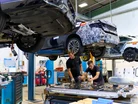
The BMW Group is no stranger to demonstrating how strategic partnerships can drive sustainability in the automotive industry. Through its collaboration with SK tes, the automotive giant is integrating cutting-edge recycling techniques into its supply chain.
The initiative not only supports a circular economy for batteries but also aligns with the company's broader sustainability goals. By actively participating in the recycling process, BMW provides critical feedback to SK tes, helping refine and optimise recycling practices.
SK tes has earned international recognition for its innovative recycling methods, including the Business Intelligence Group’s Sustainability Service of the Year award and the UN Global Compact’s Apex Award.
The partnership sees BMW sending high-voltage batteries from its European development, production and market operations to SK tes, where they are processed into reusable materials. This collaboration is a significant step towards creating a closed-loop system for battery production.
Turning used batteries into new resources
SK tes' battery recycling process starts with dismantling and shredding old batteries, which concentrates the materials into a compound known as black mass. Black mass contains vital metals like nickel, lithium, and cobalt. These metals are recovered through a chemical process called hydrometallurgy, which is highly effective in isolating secondary raw materials of high purity.
Reclaimed materials are then fed back into the production of BMW’s new GEN 6 drive trains, creating a sustainable cycle of reuse. This system not only reduces dependency on finite natural resources but also minimises waste.
Jörg Lederbauer, VP Circular Economy, Spare Parts Supply High Voltage Battery and Electric Powertrain at BMW, highlights the significance of this closed-loop system: "Partnerships like this increase our efficiency in terms of the circular economy. In the closed-loop process, all partners mutually benefit from their experiences."

The process underlines the importance of collaboration in addressing the environmental challenges of battery production and disposal. By recovering and reusing critical materials, BMW and SK TES are setting a benchmark for sustainable manufacturing in the automotive industry.
Circular economy: BMW’s vision
BMW's commitment to sustainability is built on the principles of Re:Think, Re:Duce, Re:Use and Re:Cycle. These principles guide the company’s efforts to conserve resources across the entire lifecycle of its vehicles, from design and production to dismantling and recycling.
BMW’s Recycling and Dismantling Centre has been a leader in this area for more than three decades, developing processes to recover valuable parts and materials at the end of a vehicle’s life. This ensures that cars not only serve as a means of transport but also as a source of raw materials for future manufacturing.
The company designs vehicles with recyclability in mind, ensuring that components like batteries and electronics can be easily dismantled and repurposed.
By embedding circularity into its operations, BMW is working to minimise waste, lower emissions and reduce its environmental footprint. Closed-loop systems also make the company’s supply chains more resilient by reducing reliance on virgin materials.
Nadine Philipp, Vice President Sustainability Supplier Network at BMW, explains how circularity is central to the company’s strategy: "The promotion of circular economy is an important strategic topic for the BMW Group.
"The development of recyclable products, the increase of secondary materials in our components, and the closing of loops play an equally important role. And by the means of circular economy we are also increasing our resilience in the supply chains."
BMW’s partnership with SK TES exemplifies this vision, combining technical innovation with a commitment to sustainability. By adopting circular economy practices, the BMW Group is leading the charge towards a more resource-efficient and environmentally responsible future for the automotive sector.
Explore the latest edition of Supply Chain Digital and be part of the conversation at our global conference series, Procurement & Supply Chain LIVE.
Discover all our upcoming events and secure your tickets today.
Supply Chain Digital is a BizClik brand.