
Spain and Portugal Blackout Exposes Supply Chain Fragility

Spain and Portugal both experienced widespread power outages on Monday (28 April) that brought daily life and critical industries to a standstill
Cities such as Madrid, Lisbon, Porto and Barcelona were plunged into blackout. Trains ground to a halt, traffic lights failed and the Madrid Open tennis tournament was interrupted.
At the heart of it all lay a fragile energy infrastructure and a network of supply chains deeply exposed to disruption.
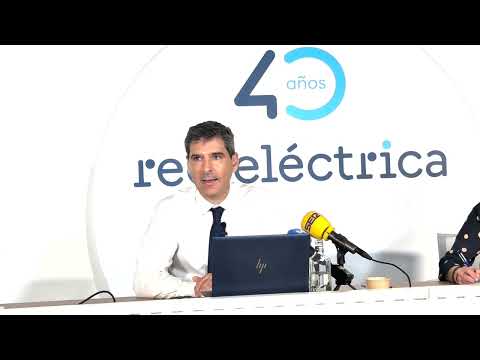
Spain’s electricity network operator Red Eléctrica de España (REE) described the event as “el cero” – the zero. It explained: “Red Eléctrica and industry companies are working in a coordinated manner to restore power supply throughout the country as quickly as possible. We have activated the procedures planned for restoring power; in this phase of the work, the goal is to power the generating sets so they can start up and spread power to the grid and other sets.”
By 7am local time on 29 April, REE reported that 99.95% of demand had been restored.
Energy imports leave Portugal exposed
While the precise cause remained unclear, the incident highlighted the risks of interdependence within European power systems.
Portugal’s national grid operator Redes Energéticas Nacionais (REN) stated that the blackout stemmed from a voltage fluctuation in the Spanish grid.
At the time, Portugal was importing electricity from Spain. The disturbance triggered automatic shutdowns at several Portuguese power plants – a protective measure designed to prevent equipment damage during irregular voltage conditions.
REN said: “The blackout was the result of a significant voltage fluctuation in the Spanish grid while Portugal was importing energy from Spain.” These shutdowns were expected behaviour from protection systems, but the heavy reliance on imports left Portugal vulnerable.
Although cyberattack speculation circulated briefly – including a comment from Juanma Moreno, President of the Regional Government of Andalusia – Spanish officials dismissed this as the cause. Prime Minister Pedro Sánchez urged the public to be cautious of disinformation.
The incident also caused minor outages in parts of southern France, further underlining how closely integrated the region's energy grids are.
Renewables under scrutiny
The blackout occurred at 12:33pm, during a period when Spain’s grid was heavily reliant on renewables.
In the hour before the outage, solar energy provided 60.24% of available electricity, while wind contributed 10.6%, according to data from ElectricityMaps. The country was also exporting or storing a portion of its electricity – 8.65% went to hydro storage, 7.5% to Portugal, 2.57% to France, 2.09% to Morocco and 0.36% to Mallorca.
Spain's renewable energy capacity is geographically distributed, making it unlikely that a single weather event could disrupt output at scale. Still, a sudden drop in solar or wind generation could create imbalances, especially if combined with technical instability in the transmission system.
In terms of stable sources, hydro contributed 10.11%, nuclear 9.69%, natural gas 6.76% and biomass 1.61% – a total of 28.17% from non-intermittent sources. That left a large portion of the grid exposed to the variability of weather conditions.
In the hours following the outage, solar continued to supply around 60% of electricity, with 12% imported from France. As the recovery progressed, natural gas began to fill the gap. By 6am on 29 April, gas accounted for more than 50% of power generation, a substantial increase from its usual share.
Supply chain and industrial impact
The outage hit key industries hard. Spain and Portugal's manufacturing base – particularly in sectors such as motor vehicles, food production and chemicals – is highly sensitive to power interruptions.
Without robust backup systems, factories shut down, halting production. Rail transport stopped across Spain, while countless small and medium businesses faced downtime.
The interconnected nature of the European power supply chain also creates wider exposure, meaning that disruptions in one country can quickly have knock-on effects elsewhere.
Andrew Gordon, Managing Director UK&I at Eaton, argues that organisations need to treat energy continuity as strategic infrastructure: “Not only is it about prevention, but also how quickly and safely businesses can restore power when disruption strikes.
"Right now, organisations across Spain and Portugal will be working to get back up and running again to ensure financial and reputational damage is kept to a minimum.
Even for those unaffected, this should be a wake-up call to make sure they are investing in the right technologies that can safeguard them from such costly and disruptive situations.”
Explore the latest edition of Supply Chain Digital Magazine and be part of the conversation at our global conference series, Procurement & Supply Chain LIVE.
Discover all our upcoming events and secure your tickets today.
Supply Chain Digital is a BizClik brand.