Did Surging Supply Chain Cost and Risk Stop Ørsted Hornsea 4
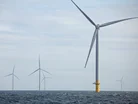
Ørsted’s decision to cancel Hornsea 4 reflects a wider trend across the offshore wind industry, where rising costs and supply chain strain are reshaping plans.
Though the project had received government approval and a long-term price guarantee through the UK’s Contract for Difference (CfD) scheme, the economics no longer stack up for the Danish energy giant.
Hornsea 4 was set to be Ørsted’s fourth wind farm in the Hornsea zone, located 69km off the Yorkshire coast.
With an intended capacity of up to 2.4 gigawatts (GW), it would have delivered clean energy at scale. But Ørsted now says it will not move forward with the project in its current form.
Group President and Chief Executive Rasmus Errboe explains: “Our capital allocation is based on a strict and value-focused approach and after careful consideration, we’ve decided to discontinue the development of the Hornsea 4 project in its current form, well ahead of the planned Final Investment Decision later this year.”
“I’d like to emphasise that Ørsted continues to firmly believe in the long-term fundamentals of and value perspectives for offshore wind in the UK," he adds.
"We’ll keep the project rights for the Hornsea 4 project in our development portfolio and we’ll seek to develop the project later in a way that is more value-creating for us and our shareholders.”
Supply chain pressure proves decisive
The decision to walk away from Hornsea 4 comes down to supply chain pressures, rising capital costs and growing uncertainty around project delivery.
Ørsted makes clear that conditions have worsened since the project secured its CfD contract in September 2024, which guarantees a fixed power price for 15 years.
Despite that price certainty, Ørsted says that supply chain costs continue to increase. This includes everything from materials and logistics to vessel availability and labour.
Higher global interest rates have also played a role, increasing the cost of financing large infrastructure schemes like offshore wind farms.
Combined with what the company calls “an increase in the risk to construct and operate the project on the planned timeline”, the entire business case has come under strain.
These pressures add up to what Ørsted calls “execution risk”, meaning the likelihood that the project fails to deliver returns on time or within budget. That risk, paired with reduced value creation, is what ultimately led to Hornsea 4’s cancellation.
The company holds on to key project components - seabed rights, grid connection agreements and the all-important Development Consent Order - keeping the door open for a future relaunch if conditions improve.

Wider wind sector feels the strain
Ørsted’s retreat from Hornsea 4 is not an isolated event. The offshore wind sector across Europe and the US is grappling with the same cost and supply issues.
In October 2023, Ørsted cancelled Ocean Wind 1 and 2 off the US coast, citing delays from suppliers and a deteriorating business case. Those projects, like Hornsea 4, had already been awarded contracts and received political backing.
Other firms are also feeling the pressure. Swedish energy company Vattenfall halted its Norfolk Boreas development in July 2023, citing a 40% rise in costs driven by the ripple effects of higher global gas prices.
“Higher inflation and capital costs are affecting the entire energy sector, but the geopolitical situation has made offshore wind and its supply chain particularly vulnerable,” said Vattenfall Chief Executive Anna Borg.
Vattenfall went on to sell Norfolk Boreas to German utility RWE, which has since revived the development.
In this environment, the Hornsea 4 announcement came as part of Ørsted’s Q1 2025 earnings report.
The company reported a positive quarter, with earnings before interest, tax, depreciation and amortisation (EBITDA) of US$1.3bn, up 18% from the same quarter last year. It also celebrated the completion of Germany’s Gode Wind 3, bringing its total offshore wind capacity to 10GW.
That said, Ørsted’s share price tells another story. Since peaking in 2021, the company’s market value has dropped by around 80%.
The cancellation of Hornsea 4 alone is expected to cost the company between US$529m and US$681m in 2025. It estimates the EBITDA impact will be between US$454m and US$529m.
Projects may return, but not on current terms
Despite the setback, Ørsted is not abandoning the UK offshore wind market altogether.
It plans to hold on to its rights to Hornsea 4 in the hope of revisiting the project under improved conditions. The key will be whether supply chains stabilise and capital costs return to manageable levels.
Until then, Hornsea 4 joins a growing list of offshore wind projects shelved or sold off due to spiralling development costs.
It highlights how even government-backed schemes and price guarantees can’t always shield complex energy infrastructure from wider market realities.
Explore the latest edition of Supply Chain Digital Magazine and be part of the conversation at our global conference series, Procurement & Supply Chain LIVE.
Discover all our upcoming events and secure your tickets today.
Supply Chain Digital is a BizClik brand.