
MSC Antonia Incident: The Risks From Electronic Warfare
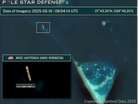
The MSC Antonia, a 7,000 TEU container ship operated by MSC, has been run aground in the Red Sea near Jeddah, Saudi Arabia, since 10 May 2025.
The cause of the incident is widely suspected to be GPS jamming or spoofing, a form of electronic interference that disrupts navigation systems and can cause vessels to deviate from their intended course or misinterpret their location.
Industry analysts and maritime intelligence firms, including Windward, have identified erratic vessel tracking data and spoofing patterns consistent with GPS interference in the region.
The UK Maritime Trade Operations (UKMTO) had recently warned of widespread navigation disruptions in the Red Sea, affecting multiple vessels and forcing reliance on backup navigation methods.

Dramatic escalation in electronic warfare at sea
This incident highlights a significant escalation in GPS jamming capabilities, with recent data showing that the average distance vessels "jump" on AIS when jammed has increased dramatically—from 600 km in Q4 2024 to 6,300 km in Q1 2025.
The Red Sea, along with other regions such as the Baltic, Black Sea and Persian Gulf, has become a hotspot for these kinds of cyber threats.
The MSC Antonia, built in 2009 and registered in Liberia, previously made headlines in August 2024 after losing 46 containers in bad weather off South Africa. As of now, MSC has not commented on the extent of any damage to the vessel, and tugs have been seen attempting to refloat it.
The incident underscores growing concerns about maritime cyber risks and the vulnerability of commercial shipping to electronic interference in geopolitically tense regions.
Increasing dangers to global shipping
In response to this, Captain Steve Bomgardner, Vice President of Shipping and Offshore at Pole Star Global, believes this is further evidence of just how treacherous major waters have become.
"I've seen first-hand how the surge in jamming, spoofing and other AIS tampering has made our oceans more dangerous," he says.
"A case like this was bound to happen sooner or later. I'm grateful that, on this occasion, every seafarer came through unharmed.
"In reviewing the data, we also concluded that the vessel's AIS was subject to GPS jamming. This happens when a threat actor introduces fake signals which the GPS unit picks up as genuine, therefore giving the vessel's crew an inaccurate picture of where they are.
"This instance highlights the need for good watch keeping and to raise awareness across the maritime community regarding the risks from electronic warfare."
Captain Bomgardner serves as the Vice President of Shipping & Offshore at Pole Star Global. With 20 years of global leadership experience in the Oil & Gas and Maritime Industries, he is a seasoned business leader and master mariner.
His extensive expertise encompasses operations, project management, business development and corporate strategy. He is particularly focused on driving new technology initiatives related to Environmental, Social and Corporate Governance (ESG) and Corporate Social Responsibility (CSR) to foster organisational growth.
"While most attacks we have seen in the past twelve months display sophisticated jamming by placing the vessel in a precise location, the jamming in this instance was unsophisticated," he adds.
"However, this reinforces the point that any form of electronic warfare, no matter how sophisticated, presents a danger to the very seafarers that our economies rely upon."
Explore the latest edition of Supply Chain Digital Magazine and be part of the conversation at our global conference series, Procurement & Supply Chain LIVE.
Discover all our upcoming events and secure your tickets today.
Supply Chain Digital is a BizClik brand