How Unilever is Combining Lean and Agile Approaches to SCM
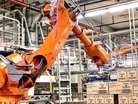
Unilever’s manufacturing site in Mannheim, Germany, has evolved significantly since its origins as a soap factory in 1899. Today, it stands as a world-class operation producing Dove Bars and serves as a critical distribution centre for products belonging to its Home Care, Personal Care and Beauty and Wellbeing divisions.
The site demonstrates Unilever’s ongoing investment in advanced technology and digital transformation to meet changing consumer needs and bolster sustainable business growth.
“This global powerhouse is setting the pace for operational excellence," explains Factory Director Silvia Rissel.
"By deploying cutting-edge technologies, we’re continually improving productivity and efficiency. We’re able to respond to shifts in customer and consumer demand, equip our workforce with digital skills and limit our impact on the environment.”
Prioritising efficiency and sustainability
Mannheim plays a crucial role within Unilever’s global network of four production sites supplying Dove Bars worldwide. Digital twin technology connects these locations, enabling real-time data sharing for optimised operations.
Operating 24/7, the factory has embraced automation and digitisation to become leaner and more efficient, consistently improving overall equipment effectiveness (OEE) – a key metric for productivity.
One standout innovation uses digital technology to monitor production by counting the number of Dove Bars on the line and coordinating this with incoming packaging supplies. It's an automated system that ensures precise stock tracking and uninterrupted production.
Recent investments have further enhanced the factory’s capabilities, including solar power initiatives to improve energy efficiency and redesigned packaging lines that use 100% paper packaging for Dove Bars. This change eliminates around 500 tons of plastic waste annually.

A commitment to superior quality
Mannheim is a leader in quality assurance programmes designed to maintain the highest standards for Dove Bars across global markets.
A key initiative involves piloting AI-enabled cameras capable of inspecting up to 800 bars per minute, surpassing the speed of existing production lines. These cameras are scheduled to go into full operation later this year.
Marcela Melero, Chief Growth Officer for Dove Personal Care, North America and Dove Masterbrand, highlights the importance of these efforts: “We believe in crafting unmissably superior products and our Dove Beauty Bar is a great example. While ordinary soaps can strip skin of essential moisture, Beauty Bars contain moisturising cream to hydrate the skin alongside mild cleansers to wash away dirt and germs.”
She adds: “Our production sites are essential in creating these iconic bars and ensuring we get them into the hands of consumers in more than 180 countries around the world.”
An industry-leading distribution hub
Mannheim also hosts one of Unilever’s largest and most advanced distribution centres. Originally a modest storage facility, it was transformed in 1999 into a modern warehouse equipped with an automated management system that tracks and controls inventory with minimal operator input.
The facility can store more than 36,000 pallets and manages goods from 30 plants across Europe. At peak capacity, it can handle four million cases (24 million units) and ship 320,000 pallets (more than 60 million units) annually.
The centre boasts a 99.8% customer case fill on time (CCFOT) rate, well above the typical logistics benchmark of around 95%. This achievement is crucial for ensuring product availability in stores, supporting Unilever’s growth.
Looking ahead, Unilever is investing in new ‘layer picking’ automation to further improve efficiency. This advanced system, which enables the picking of full product layers instead of individual cases, is set to be operational by 2026. The upgrade will increase picking capacity by 50% during peak seasons and is expected to generate more than €1m (US$1.04m) in annual savings.
Silvia concludes: “We’re accelerating digitisation and new technologies across our operations to enhance productivity and deliver products quicker, with the same unmissable quality that our consumers have come to trust. With initiatives like plastic-free products, solar energy and apprenticeships fostering young local talent, there’s a bright future for our manufacturing site at Mannheim.”
Explore the latest edition of Supply Chain Digital Magazine and be part of the conversation at our global conference series, Procurement & Supply Chain LIVE.
Discover all our upcoming events and secure your tickets today.
Supply Chain Digital is a BizClik brand.