Do UK Trade Deals Mark a Shift in Supply Chain Priorities?
The UK government has signed new trade agreements with India, the United States and now the European Union, signalling a reorientation of Britain’s trade policy.
Prime Minister Keir Starmer says the latest deal with the EU represents "another step forwards" and is "good for our jobs, good for our bills and good for our borders."
The deal softens post-Brexit trade arrangements with the EU, Britain’s largest trading partner. It includes a 12-year agreement giving EU boats access to UK waters, in exchange for a permanent reduction in border checks and trade frictions.
British food exporters, who have struggled with red tape, will benefit from eased access to European markets. This could bring down prices for consumers and simplify supply chains.

The deal's fishing arrangement means EU and UK vessels will have reciprocal access until 2038, with the EU previously having been granted access until 2026 under the 2019 withdrawal agreement.
Government sources say this will support small British food producers, who until now have often been locked out of the European market due to paperwork burdens.
British supermarkets are expected to see cost savings from fewer trade barriers, which may reduce prices on the shelves. It also reopens European e-gates at airports to British passport holders, speeding up travel and potentially aiding tourism-dependent sectors.
Economists say while the UK stops short of rejoining the single market or customs union, closer alignment with the EU could have a larger impact on the UK’s economy than the deals signed with India and the US.
However, the Prime Minister faces opposition from Conservative leader Kemi Badenoch, who calls the 12-year fishing agreement "three times longer than the government wanted," and Reform UK’s Richard Tice who thinks he has "sold out British fishing."
Trade and defence under discussion
The agreement also outlines deeper UK-EU cooperation on defence. Britain will participate in joint procurement under a €150bn (US$167bn) EU defence fund, opening the door for UK firms like BAE, Rolls Royce and Babcock to bid for contracts.
The pact strengthens security coordination, with shared aims in areas such as Ukraine and cyber threats.
Business Secretary Jonathan Reynolds calls the reset "promising" and highlights that gaps in the UK's EU relationship, including food trade and passport checks, are being addressed. He argues the deal reduces bureaucracy and provides practical benefits where both sides already share standards.
Youth mobility is another point of negotiation. A "reciprocal" scheme is in the early stages, allowing young people from the UK and EU to work and travel in each other’s countries for up to two years though details, including age limits and quotas, have not been finalised.
Balancing trade growth with political risk
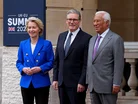
Starmer met the European Commission President Ursula von der Leyen and European Council President Antonio Costa in London to finalise the deal.
Talks ran into late Sunday night, with fishing rights among the final sticking points resolved at around 22:30.
For the PM, the agreement is both an economic and political balancing act. The 2016 referendum laid bare divides over migration, sovereignty and trade. Although polls suggest a majority now regret leaving the EU, there is little appetite to rejoin.
He hopes this reset can shift focus from ideological battles to practical benefits, saying: “It’s time to look forward — to move on from the stale old political fights and to find common sense, practical solutions that improve the lives of British people."
Explore the latest edition of Supply Chain Digital Magazine and be part of the conversation at our global conference series, Procurement & Supply Chain LIVE.
Discover all our upcoming events and secure your tickets today.
Supply Chain Digital is a BizClik brand.