Tesla, BYD & CATL: Solar Storage’s Supply Chain Challenge
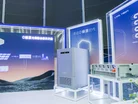
The rise of solar-plus-storage is no longer just a technical trend—it’s now a major supply chain story.
Tesla, BYD and CATL are not only producing batteries to back up solar power, but also influencing how global energy systems manage production, transmission and distribution.
Global power capacity keeps leaning towards renewables—particularly solar photovoltaic (PV) and wind. That’s been the case for several years, according to the United Nations’ 2025 Energy Transition Report. The pace of fossil fuel displacement remains sluggish.
“Despite this, renewable energy is not replacing fossil fuels in energy systems at the pace and scale needed,” the report says.
So what’s slowing things down? Not solar tech itself. It’s the infrastructure that supports it—especially batteries.

Dr Fatih Birol, Executive Director of the International Energy Agency (IEA), doesn’t mince words.
“The electricity and transport sectors are two key pillars for bringing down emissions quickly enough to meet the targets agreed at COP28 and keep open the possibility of limiting global warming to 1.5 °C,” Fatih says in the IEA’s 2024 Batteries and Secure Energy Transitions report.
He adds: “Batteries will provide the foundations in both areas, playing an invaluable role in scaling up renewables and electrifying transport while delivering secure and sustainable energy for businesses and households.
“The combination of solar PV and batteries is today competitive with new coal plants in India. And just in the next few years, it will be cheaper than new coal in China and gas-fired power in the United States. Batteries are changing the game before our eyes.”
And that change is tangible. Global battery storage capacity was just 2 GW in 2015.
By 2023, it reached 89 GW—a 4,350% increase, according to the UN report. Meanwhile, the cost of battery systems for grid use dropped by 93%.
China’s dominance in renewable hardware production plays a major role in pushing prices down.
In parallel, the average cost of electricity generation for utility-scale solar PV dropped by 68%, making storage-plus-solar not only cleaner but cheaper.
Tesla, BYD and CATL push storage to industrial scale
Tesla’s journey into the solar space began in 2016 with its acquisition of SolarCity. The company’s suite of solar products - Tesla Solar Roof, solar panels and the Tesla Solar Inverter - is backed by battery storage units like Powerwall and Megapack.
Powerwall serves the home, storing electricity for later use or during grid outages. The Megapack is much bigger, designed for grid-scale installations. Tesla says it has now installed more than 10 GWh of Megapack storage globally.
China’s BYD is also covering energy end to end, from production to storage. It makes rooftop solar panels for homes, as well as larger setups for businesses and industrial clients. For storing that energy, BYD offers systems like the Battery-Box HVE.
In February 2025, BYD Energy Storage and the Saudi Electricity Company signed a deal for a record-breaking 12.5 GWh battery storage project—one of the world’s largest. BYD says it will deliver 15.1 GWh in Saudi Arabia overall.
It described the move as “a solid and crucial step forward in their collaboration in the renewable energy sector, injecting strong momentum into the development of Saudi Arabia's renewable energy industry”.
This deal isn’t just about energy. It reflects how solar-plus-storage projects are now major logistical operations—requiring raw materials, battery components and solar equipment to move across continents at speed and scale.
CATL cements dominance with modular energy storage
Then there’s CATL. Founded in 2011, the Chinese firm is now the world’s largest manufacturer of both EV and stationary energy storage batteries. Unlike Tesla and BYD, CATL is focused squarely on cells and systems—not vehicles or panels.
Its energy storage products are modular, industrial and built for scale. The EnerOne is a liquid-cooling outdoor unit that balances high energy density with a small footprint. The TENER system includes zero capacity degradation for the first five years—a claim few others make.
CATL’s positioning goes beyond hardware. Its systems are designed to integrate directly into the grid, manage transmission loads and stabilise consumption. It’s energy tech, but also infrastructure tech.
As more solar and wind gets installed, the bottleneck shifts to storage—and therefore to supply chains.
Who makes the batteries? Where are they assembled? What raw materials are needed? Who controls the logistics? The answers to these questions will shape not just energy markets, but geopolitics too.